
Carrozzeria Fissore
AT A GLANCE
- Founded
- 1921
- Closed
- 1984
- Historical city
- Savigliano
- Country
- Italy
THE STORY
Overview
Carrozzeria Fissore was an Italian coachbuilding and industrial bodywork company based in Savigliano, in the province of Cuneo, Piedmont. Founded as a family enterprise by the brothers Bernardo, Antonio, Giovanni and Costanzo Fissore in the early 1920s, it developed from a wheelwright and commercial-vehicle workshop into a maker of custom passenger-car bodies, specialised transport vehicles, advertising vehicles, prototypes and low-volume automobile bodies. Family historical research dates the establishment of the coachbuilding enterprise to 1921, while some later accounts give 1920; Bernardo’s earlier wheelwright activity is recorded from 1914. The historic Carrozzeria Fissore is distinct from the separate Rayton Fissore enterprise established in the 1970s.
Origins and the Savigliano workshops
Bernardo Fissore initially worked on carts and agricultural vehicles before the brothers organised their own workshop. They operated in Savigliano, an industrial centre whose railway engineering works provided specialised metalworking skills. In 1927 the business moved to Via Chianoc, where woodworking, panel beating, painting and upholstery were organised as distinct activities. An early relationship with the Ford dealer Chiaffredo Flesia & Sons involved adapting Ford chassis for utility and transport duties. Period accounts also describe special coachwork on Fiat 501 and 503 chassis, including formal bodies and commercial conversions.
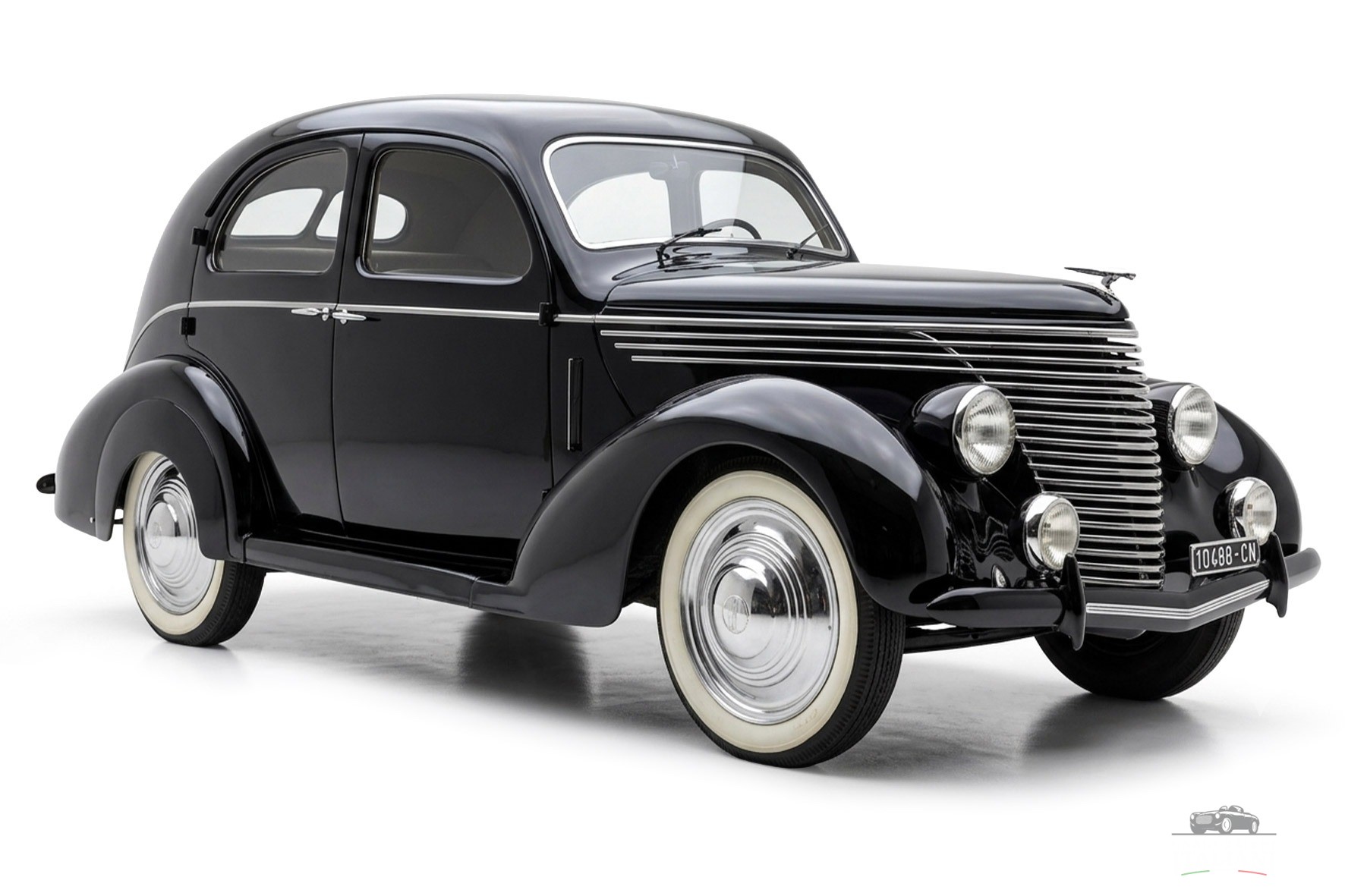
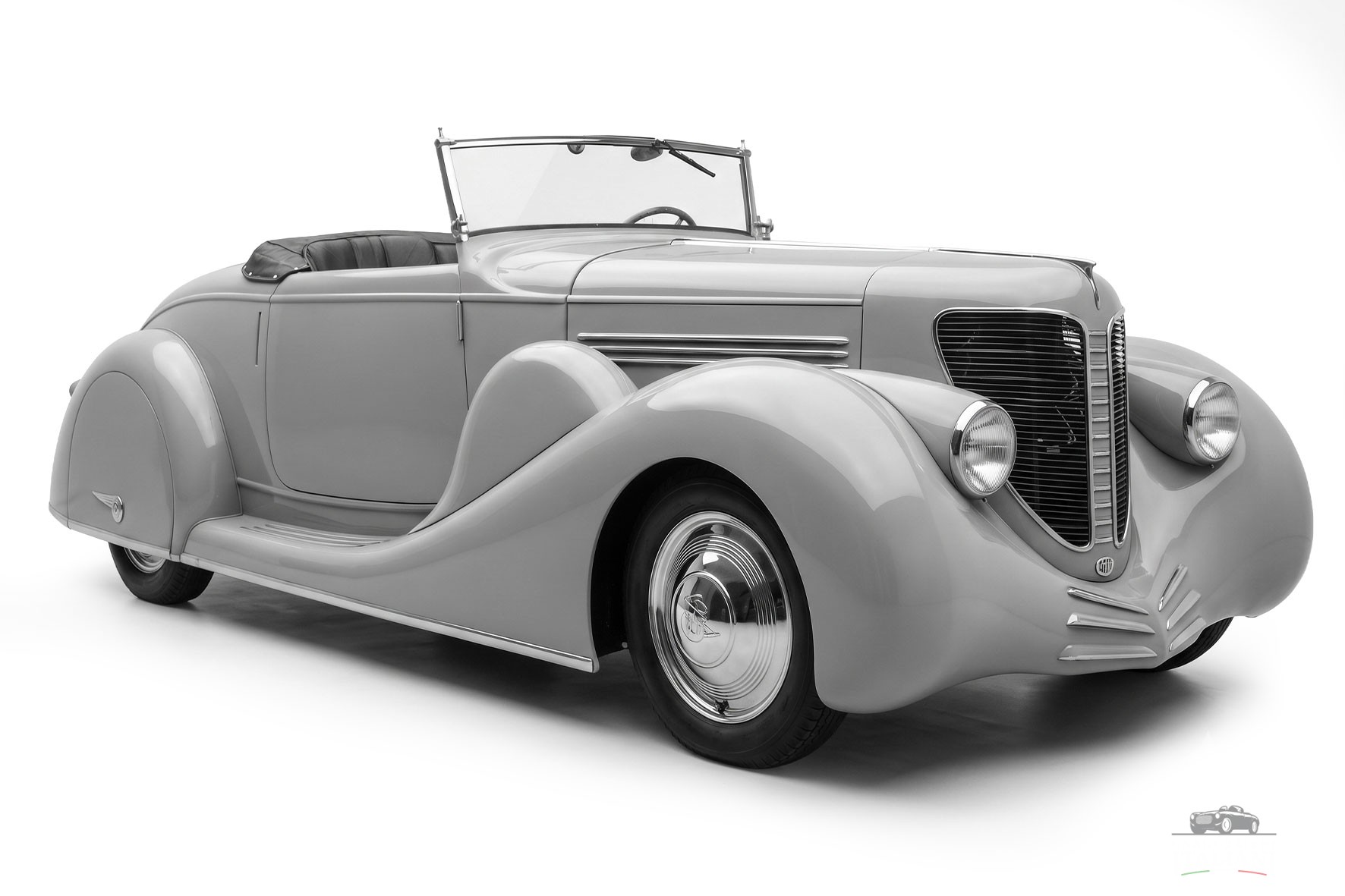
In 1935 the family acquired premises on Via Torino, adapting the buildings for larger-scale production. A formal company registration is reported in 1936, a later milestone than the foundation of the family workshop. Bernardo retained a leading management role. The firm’s pre-war work included special Fiat passenger-car bodies, such as the 1937 Fiat 508 Balilla Berlina and Fiat 524 Spider, as well as small buses, postal and funeral vehicles, delivery trucks and other commissioned transport bodies. Individual production totals and chassis numbers cannot be inferred from these broader categories.
Wartime production and post-war reconstruction
During the Second World War the factory supplied and repaired specialist and military transport equipment. Its relationship with the Turin bodybuilder Candido Viberti brought subcontracted work to Savigliano, including Lancia-based heavy vehicles and specialised mobile units. After 1943 the workshops were affected by military occupation and demands for vehicle repair; the company nevertheless retained its production facilities and much of its workforce. Post-war reconstruction brought renewed demand for buses, commercial bodies, ambulances, hearses and specialist vehicles. Historical architectural archives preserve a 1947 project for enlargement of the Savigliano plant, but the existence of a design document does not establish that the enlargement was executed.
Fissore developed a speciality in mobile advertising. Some commissions used purpose-built shapes, exaggerated product imagery or functional promotional equipment rather than conventional saloon-car bodies. This category remained part of its output alongside refrigerated transport, service vehicles and commercial conversions. The company’s breadth of industrial work is as significant to its history as its later sports-car projects.
Fiat-based coachwork and the technical office
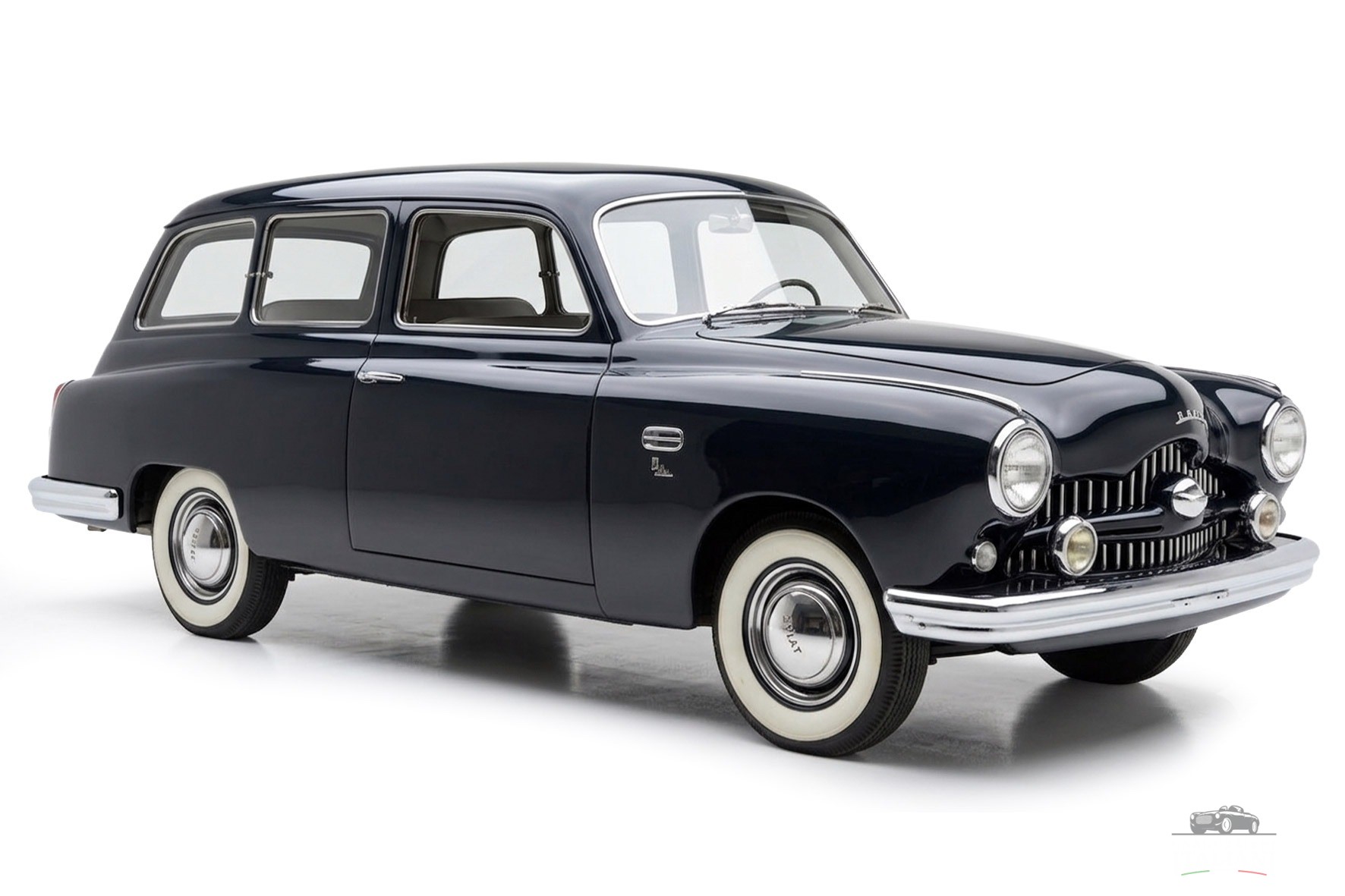
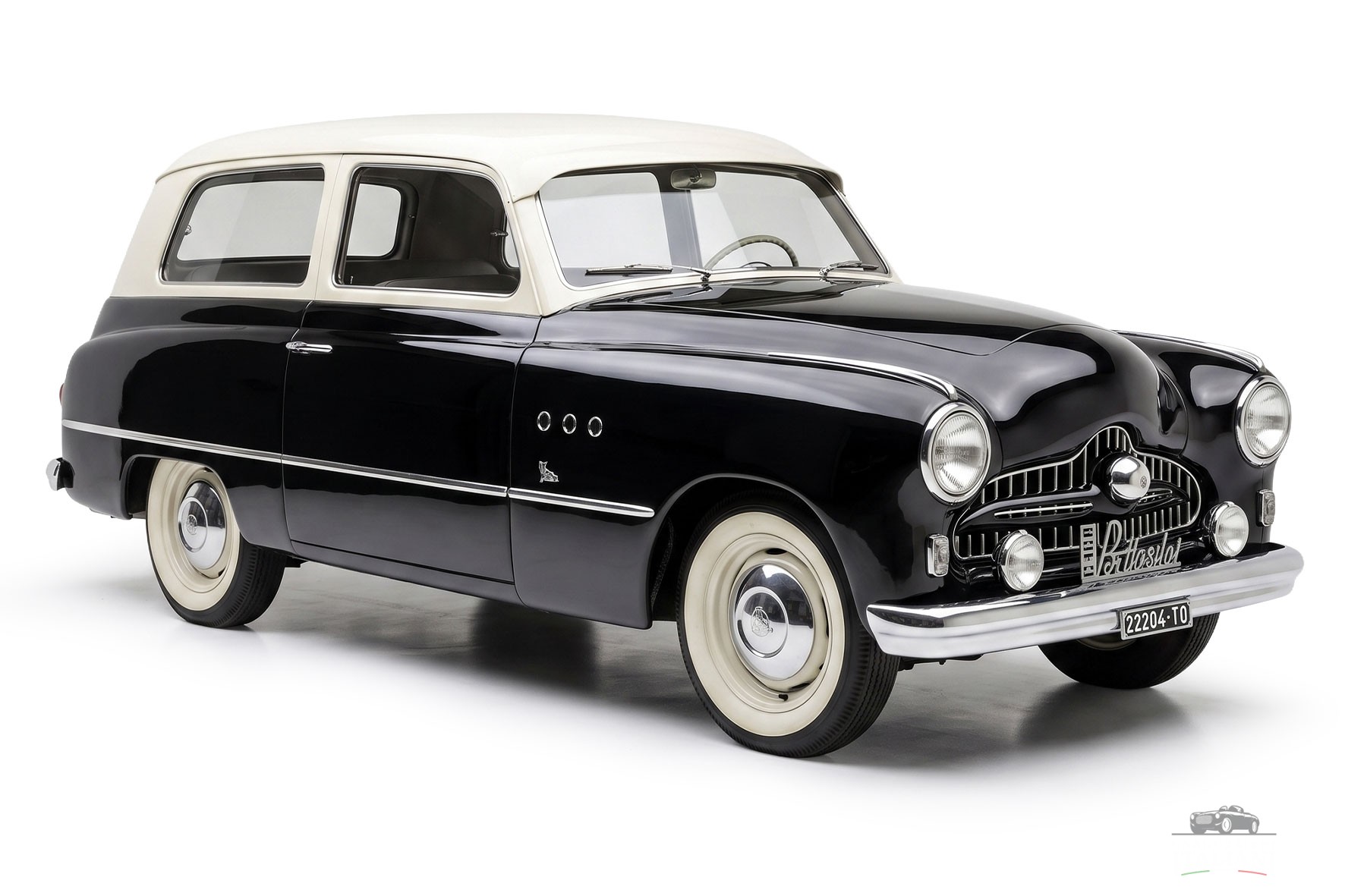
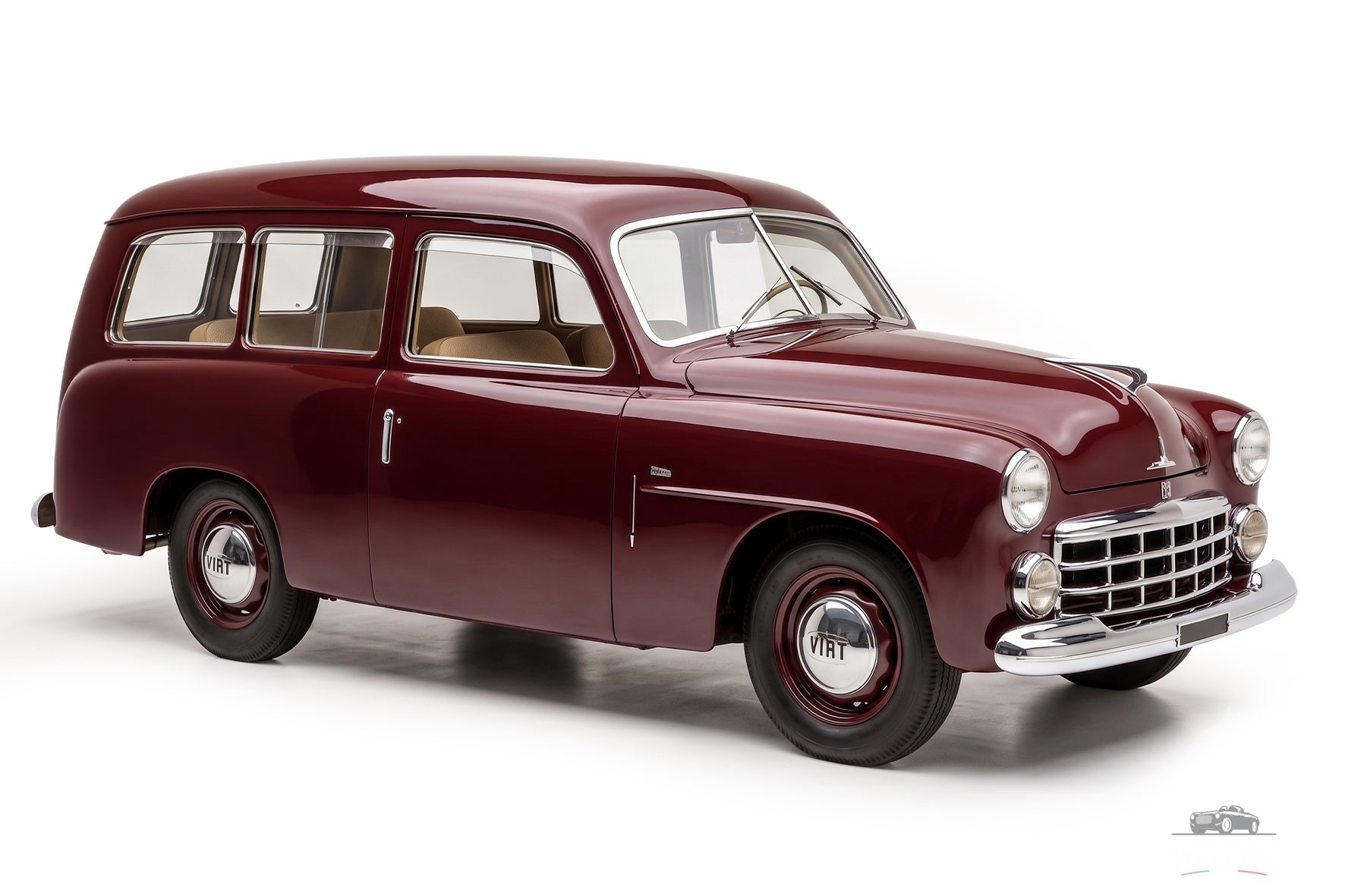
Fissore entered the post-war passenger-car market with utility estates and individually commissioned bodies. A 1947 Fiat 1100 L Giardinetta programme, associated in specialist accounts with Mario Revelli di Beaumont, combined load space with passenger-car accommodation and was shown in Turin in 1948. The Fiat 1100 E Giardinetta, Fiat 1400 Giardinetta Metallica and Fiat 1100 TV Coupé illustrate the range from metal-bodied estates to formal coupés. The company also worked on Fiat 600 derivatives, including the 600 Multipla Sabrina and 600 Multipla Marinella. These were distinct projects rather than a single model series.
Mario Fissore became a central figure in styling and technical management, with other members of the family active in production, commercial and administrative operations. External designers associated with particular commissions included Mario Revelli di Beaumont and Giovanni Michelotti, but design authorship must be attributed to individual projects rather than assumed from a general professional relationship. Trevor Fiore, also known as Trevor Frost, worked closely with the technical office in the 1960s. Franco Maina contributed to drawings and model development, and succeeded Mario Fissore as technical-office director in 1977 according to Paolo Fissore’s archival account. Development typically involved scaled drawings, reduced models, full-size body patterns and as-built documentation.
Overseas design and production programmes
From about 1960 Fissore expanded its international technical and manufacturing relationships. The DKW and Auto Union programmes involved Inauto and IMOSA in Argentina, where Italian-made body components were initially shipped for assembly before greater local industrialisation. In Brazil, Vemag engaged Fissore to develop a luxury DKW saloon and provide industrial design and production assistance. The company made Italian DKW 1000 S Coupé and DKW 1000 S Spider variants, while Argentine and Brazilian production must be distinguished from Italian prototypes and assigned separate quantities.
The Brazilian connection also produced the Fissore Aruanda, a compact study developed from a design by Brazilian architect Arí de Rocha. Other international commissions included the Volvo P1800 GT and work on the OSCA 1600 GT2 family. Depending on the contract, Fissore supplied concept design, prototype construction, tooling, body panels or finished bodies. Participation in a programme does not demonstrate that every production example was assembled in Savigliano.
Sports-car prototypes and coachbuilt GTs
The 1964 De Tomaso Vallelunga Fissore is one of the better documented projects. Paolo Fissore’s published archival account attributes development of the coupé body to the technical office under Mario Fissore and identifies a drawing by Franco Maina dated 13 October 1964. The earlier 1963 open De Tomaso prototype was not a Fissore body; the Ghia-bodied Vallelunga represents a subsequent, separate production phase. Fissore also developed the Elva GT160 and TVR Trident, with Trevor Fiore involved in the wider design programme. The TVR Tina Spider and related coupé belong to further British collaborations. Authorship and production figures require individual verification for each version.
The company also created small-series Fiat 1600 coupés and spiders, represented by the Fiat 1600 S Cabriolet. Investment in metalworking, finishing and paint processes allowed specialist car production to coexist with commercial bodywork. By the mid-1960s the workforce was reported to have exceeded 200 people.
Monteverdi commissions
Cooperation with the Swiss manufacturer Monteverdi became an important activity from the late 1960s. The Monteverdi High Speed 375 L involved bodywork and finishing in Savigliano within an international production process. Other body versions included the 375 S, 375 C and 375/4. Their different bodies and mechanical configurations should not be merged into a single chassis history. Reported annual production rates in secondary accounts are not verified totals for individual versions.
The mid-engined Monteverdi Hai 450 SS was a separate prototype programme with its own questions of stylistic authorship. A Monteverdi Safari prototype used International Harvester Scout mechanical components; later series production by Rayton Fissore is distinct from the original Carrozzeria Fissore’s contribution. Additional Monteverdi projects included the four-door Range Rover conversion and Military 230-M. In each case the bodybuilder’s role must be separated from that of the chassis manufacturer and the brand marketing the finished vehicle.
Corporate restructuring and later work
The family enterprise underwent substantial restructuring in the late 1960s and early 1970s. The Fratelli Fissore partnership was constituted in December 1968, followed by reorganisation as a società per azioni in 1971. The first board meeting on 17 September 1971 identified Mario Fissore as president and Renato Fissore as vice-president. Subsequent management and shareholder changes coincided with a crisis in Italy’s specialist coachbuilding sector. Bernardo Fissore died on 3 January 1973.
Alongside its Monteverdi work, Fissore developed functional conversions such as the Fiat 127 Scout, Fiat 127 Combi and Fiat Panda Penny, as well as further industrial and service vehicles. Rayton Fissore was established separately in the 1970s; a common family name does not establish identical management, ownership or manufacturing responsibility. The builder attribution of the Fiat 126 Poker remains under review and should not be assumed from the historic firm’s name.
Closure and historical documentation
Financial difficulties culminated in the liquidation of Carrozzeria Fissore in 1984. An Italian government notice published in 1989 identifies employees of Carrozzeria Fissore S.a.s., based in Savigliano, as having been dismissed with effect from 23 November 1984. That date is a documented employment milestone, not automatically the exact legal date of liquidation. The historic company’s output encompassed promotional and industrial vehicles, Fiat-based bespoke bodies, international small-series programmes and experimental sports-car design. Surviving vehicles and family archival material preserve this wider industrial history.
KEY MOMENTS
Timeline
-
Birth of Bernardo Fissore
-
Foundation of Fissore
Savigliano, Italy
-
Fissore signs the Inauto/IMOSA DKW development agreement
Savigliano, Italy
-
Death of Bernardo Fissore
Sanremo, Italy
-
Carrozzeria Fissore is put into liquidation
Savigliano, Italy
-
Carrozzeria Fissore workforce dismissals take effect
Savigliano, Italy
PEOPLE & DESIGN
Designers
Aldo Sessano
Aldo Sessano was an Italian industrial and automotive designer who worked with Fiat and Abarth before founding independent design ventures. His projects also extended to commercial-vehicle styling.
Explore record ↗Ari de Rocha
Ari de Rocha was a Brazilian architect and automotive designer associated with independent vehicle-styling projects and work linked to Carrozzeria Fissore.
Explore record ↗Franco Maina
Franco Maina is an Italian automotive designer and artist associated with Savigliano.
Explore record ↗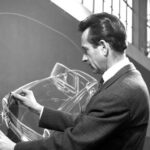
Giovanni Michelotti
Giovanni Michelotti was a prolific Italian automotive designer whose independent Turin studio produced coachwork and production-car designs for Vignale, Triumph, BMW and numerous other manufacturers.
Explore record ↗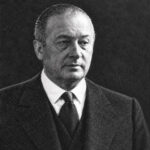
Mario Revelli di Beaumont
Mario Revelli di Beaumont was an Italian automotive designer, active from the interwar period to the postwar era. He collaborated with Stabilimenti Farina, Ghia, Viotti and Bertone, and worked on projects for Fiat and Simca.
Explore record ↗Tom Tjaarda
Tom Tjaarda \(1934–2017\) was an American-born designer who built his career in Turin. At Pininfarina he designed the Ferrari 330 GT 2+2 and Fiat 124 Spider\; his later work at Ghia included the De Tomaso Pantera. He also created the Chevrolet Corvette Rondine concept.
Explore record ↗View all 7 designers
Aldo Sessano
Aldo Sessano was an Italian industrial and automotive designer who worked with Fiat and Abarth before founding independent design ventures. His projects also extended to commercial-vehicle styling.
Explore record ↗Ari de Rocha
Ari de Rocha was a Brazilian architect and automotive designer associated with independent vehicle-styling projects and work linked to Carrozzeria Fissore.
Explore record ↗Franco Maina
Franco Maina is an Italian automotive designer and artist associated with Savigliano.
Explore record ↗Giovanni Michelotti
Giovanni Michelotti was a prolific Italian automotive designer whose independent Turin studio produced coachwork and production-car designs for Vignale, Triumph, BMW and numerous other manufacturers.
Explore record ↗Mario Revelli di Beaumont
Mario Revelli di Beaumont was an Italian automotive designer, active from the interwar period to the postwar era. He collaborated with Stabilimenti Farina, Ghia, Viotti and Bertone, and worked on projects for Fiat and Simca.
Explore record ↗Tom Tjaarda
Tom Tjaarda \(1934–2017\) was an American-born designer who built his career in Turin. At Pininfarina he designed the Ferrari 330 GT 2+2 and Fiat 124 Spider\; his later work at Ghia included the De Tomaso Pantera. He also created the Chevrolet Corvette Rondine concept.
Explore record ↗Vehicles at a glance
- Related vehicles
- 94
- Concepts
- 5
- Prototypes
- 12
- One-offs
- 13
- Limited series
- 58
- Fuoriserie
- 5
- Series production
- 1
CONTINUE EXPLORING
Related vehicles



FROM THE JOURNAL
Related Articles
Carrozzeria Fissore: The History
Carrozzeria Fissore, established in 1921 by Bernardo Fissore and his brothers in Savigliano, holds a distinguished place in the history of Italian automotive craftsmanship. Specializing in bespoke bodywork, the company became renowned…
Read story
THE CONVERSATION
Comments 0