
Björn Envall
AT A GLANCE
- Born
- 1942
- Nationality
- Swedish
- Occupation
- Automotive designer
- Active from
- 1960
- Based in
- Sweden / Germany
THE STORY
Overview
Björn Erik Anders Envall (born 1942) is a Swedish industrial and automobile designer closely associated with Saab. After working with Sixten Sason during the 1960s and spending two years at Opel, he became Saab’s chief designer in 1969. His work included production models, experimental vehicles and collaborations with Italian companies. The Saab 98, assembled by Carrozzeria Coggiola, is the clearest direct connection between his individual design activity and Italian coachbuilding.
Early years with Sixten Sason
Envall joined Sason Design AB in 1960 and worked with Sixten Sason until 1967. During this period Sason was developing the visual identity of Saab automobiles, including the Saab 99. Envall contributed within Sason’s design organisation, but the original 99 must remain attributed to the wider programme rather than being credited exclusively to the younger designer. He was also associated with studies surrounding the Saab Catherina, an experimental sports car developed from Sason’s personal proposals. That programme was not selected for series production.
Opel and leadership at Saab
From 1967 to 1969 Envall worked for Opel Design in West Germany. He subsequently returned to Sweden and became Saab’s chief designer in 1969, following Sason’s death. Sweden’s Nationalencyklopedin records him as chief designer at Saab-Scania through 1989 and subsequently at Saab Automobile following the corporate reorganisation around 1990. His senior design responsibilities continued into the early 1990s.
Saab’s relatively small design organisation worked closely with its engineers. Its automobiles reflected requirements for visibility, occupant safety, luggage access and aerodynamic performance. Under Envall, exterior appearance was developed alongside functional packaging rather than treated as an independent layer of decoration. Individual projects involved engineers, modellers and other stylists, whose work should not automatically be assigned personally to the head of the department.
Combi Coupé, Saab 99 and Saab 900
During the 1970s Saab expanded the 99 range with the Combi Coupé body, joining a conventional passenger compartment to a large, practical rear opening. The idea influenced the first-generation Saab 900, introduced in 1978. Although its structure evolved from that of the 99, the newer model required major changes to its front body and passenger accommodation to meet contemporary safety and comfort requirements.
Envall produced numerous sketches for the Saab 900, particularly its longer and more protective nose. Period drawings reproduced in the Swedish motoring magazine Vi Bilägare document his proposals and his participation in the development process. The 900 programme was nevertheless an engineering and styling collaboration. His department was also involved in later body variants, including work that preceded the Saab 900 convertible.
The Saab 98 and Carrozzeria Coggiola
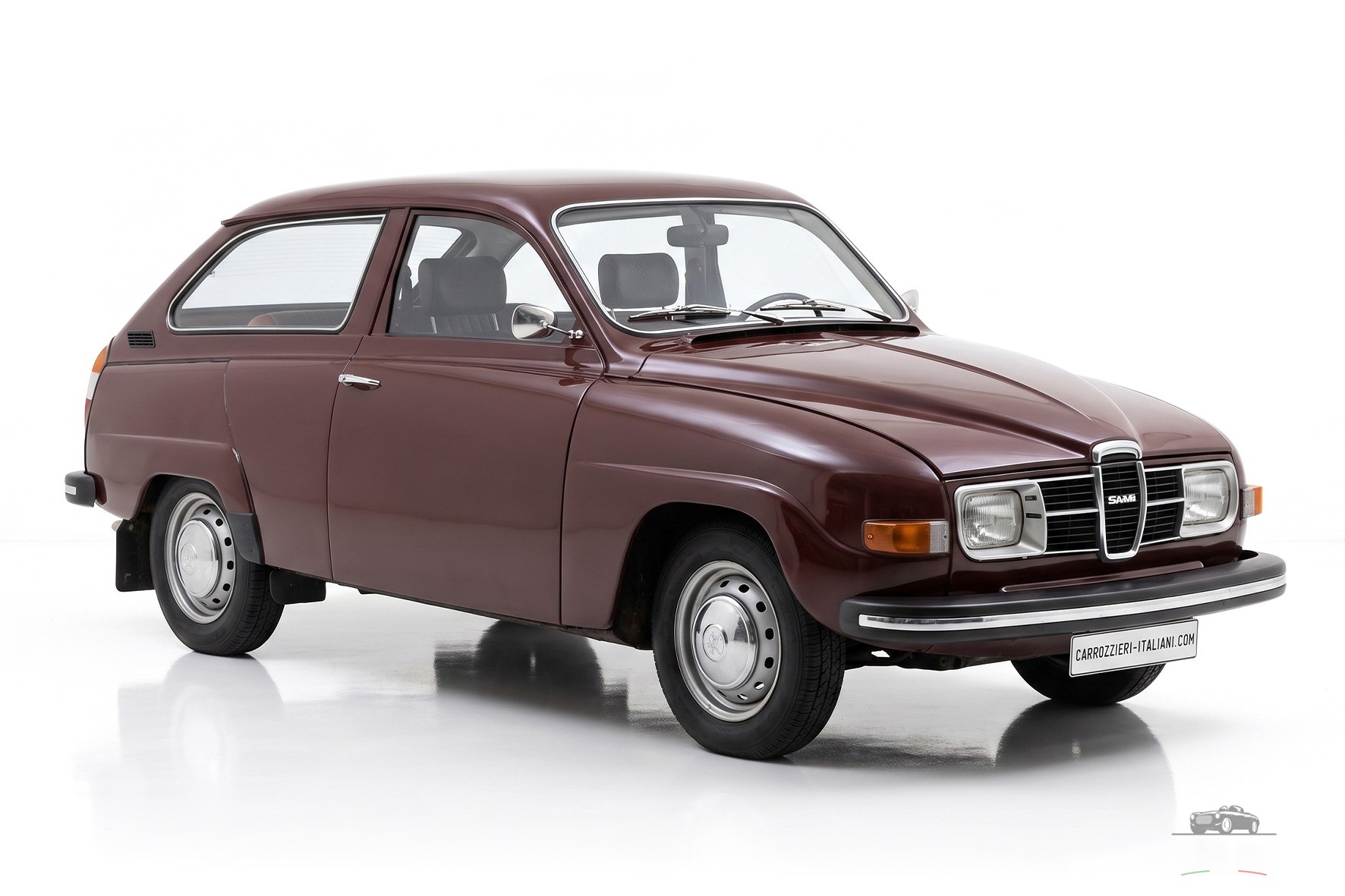
The Saab 98, originally project X14, applied the Combi Coupé idea to a smaller Saab using a Saab 95-derived platform. Envall led the design, while Italian coachbuilder Carrozzeria Coggiola, under Sergio Coggiola, constructed the prototype in the mid-1970s. Envall’s role as designer and Coggiola’s responsibility for building the body are distinct historical attributions.
Saab did not put the 98 into series production, judging that there was insufficient commercial space for the proposed model alongside the existing 95 and 99. An example survives in the Saab Car Museum at Trollhättan. Published accounts differ over the total number of experimental bodies, so a precise production figure should not be inferred from the surviving example without a separate chassis-level investigation.
The Type Four programme and the Saab 9000
The Saab 9000, launched in 1984, resulted from the Type Four collaboration between Saab and the Fiat group. Giorgetto Giugiaro and Italdesign were responsible for the underlying design programme, while Saab’s own design staff, led by Envall, adapted the proposal to the Swedish company’s requirements and identity. The original styling authorship and Saab’s subsequent adaptation must be recorded separately, without treating the vehicle as the exclusive design of either individual.
The 9000 extended Saab’s range into a larger market segment and maintained the company’s emphasis on cabin space, visibility and versatile luggage accommodation. Unlike the Saab 98, which involved an Italian workshop constructing a prototype, the Type Four programme brought Saab into a multinational industrial design and engineering partnership.
Experimental work and the EV-1
The Saab EV-1 of 1985 was a functional experimental sports coupé based on the Saab 900 Turbo 16. Envall’s styling employed a low body and extensive glass. Solar cells integrated into the roof powered a ventilation fan for use when parked; reinforced composite panels and safety-related structural details explored solutions beyond those of contemporary production cars. The EV-1 was a development study and not a production model.
Envall also supervised proposals for the successor to the original Saab 900 before later organisational and engineering changes reshaped the project. His career links Sason’s original Saab design language to the expanded production range and international collaborations of the 1980s. For historically accurate attribution, his responsibility for vehicle design should be distinguished from the roles of coachbuilders, industrial partners and other members of Saab’s styling organisation.
THE NETWORK
Shared vehicle credits
KEY MOMENTS
Timeline
-
Birth of Björn Envall
Sweden
-
Career begins
CONTINUE EXPLORING
THE CONVERSATION
Comments 0