
Davide Arcangeli
AT A GLANCE
- Born
- 1970-09-12
- Birthplace
- Rimini
- Died
- 2000
- Nationality
- Italian
- Occupation
- Automotive designer
- Active from
- 1990
- Studio
- Pininfarina / BMW
- Based in
- Turin / Munich
- Vehicle awards
- 1
THE STORY
Overview
Davide Arcangeli (12 September 1970 – 2000) was an Italian automotive designer who worked at Pininfarina in Turin and subsequently at BMW in Munich. His documented work includes the exterior design of the Honda Argento Vivo concept and the Peugeot 406 Coupé, followed by the design proposal selected for the BMW 5 Series E60. His career was undertaken within larger design organisations, whose styling direction, engineering and vehicle production responsibilities must be distinguished from his individual contributions.
Education and early career
Arcangeli was born in Rimini, Italy, and studied at the city’s Liceo Artistico. He moved to Turin to pursue automotive styling, joining Pininfarina after an initial training placement. Contemporary accounts of his career describe how the planned six-month placement developed into a permanent position in the design department. His professional development took place during a period when Pininfarina designed concept vehicles and production bodies for several manufacturers while managing increasingly complex engineering and manufacturing programmes.
Within Pininfarina’s design organisation, Arcangeli worked under the direction of Lorenzo Ramaciotti. The distinction between a designer responsible for an individual exterior proposal and the head of a design centre is important for understanding the authorship of projects produced by a large studio. Ramaciotti’s direction did not negate Arcangeli’s documented design work, and Arcangeli’s individual contribution did not make him responsible for all of Pininfarina’s engineering, construction or industrial decisions.
Honda Argento Vivo
The Honda Argento Vivo was a two-seat Pininfarina roadster concept designed in 1994 and exhibited at the 1995 Tokyo Motor Show. The original study combined a low, restrained body with contrasting exposed metal and painted surfaces, a lightweight aluminium structure and a retractable rigid roof. The curatorial documentation of the Rimini Biennale identifies Arcangeli as the designer of the concept, while contemporary design-history accounts place the work within Pininfarina under Ramaciotti’s direction.
The original Honda show car must not be conflated with subsequent private road cars derived from the Argento Vivo idea and adapted around Mercedes-Benz mechanical components for clients connected with Brunei. The number, specifications and ownership history of those derivatives constitute a separate history and are not evidence that the Honda concept itself was a five-unit V12 production model. Arcangeli’s credited contribution concerns the initial design; the production and engineering roles involved in any later derivatives require separate documentation.
Peugeot 406 Coupé
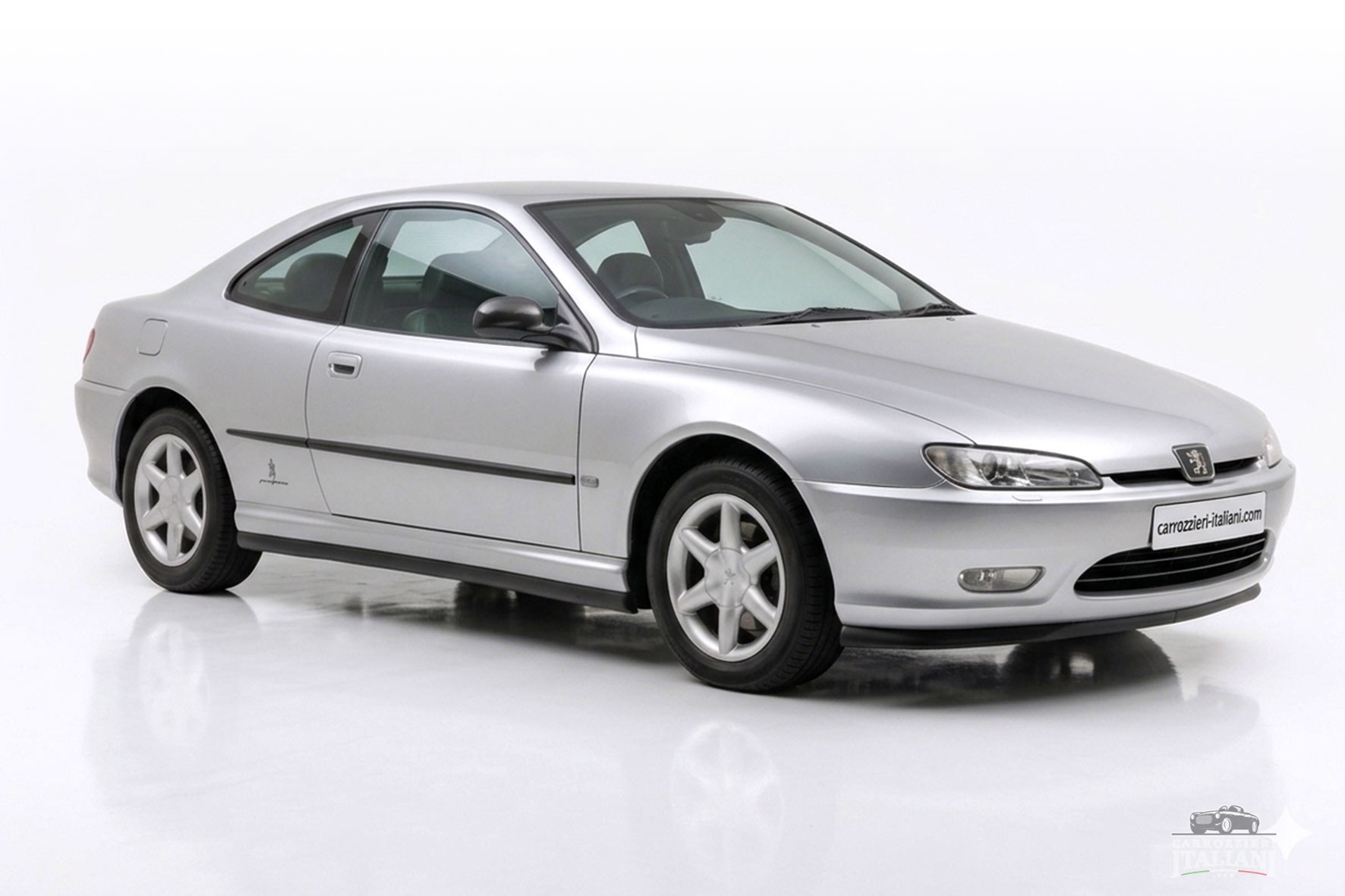
The Peugeot 406 Coupé, introduced in 1997, became Arcangeli’s best-documented production design. Peugeot’s own retrospective history explicitly credits the vehicle’s design to Arcangeli, while assigning overall design, engineering and production to Pininfarina. Giuseppe Castaldi is identified with the engineering programme, and Lorenzo Ramaciotti directed the Pininfarina design organisation. These separate responsibilities explain why the completed car can correctly be described both as a Pininfarina design and as a work by Arcangeli.
Development of the coupé took place during the early 1990s, before the production vehicle reached the market. The model departed substantially from the four-door Peugeot 406 in its exterior body design, using a low roofline, slender front lamps, a restrained grille and a continuous shoulder line to define a four-seat grand touring coupé. Pininfarina was responsible not simply for the appearance of the vehicle but also for its industrial development and assembly. The car was manufactured at Pininfarina facilities in the Turin area rather than on a conventional Peugeot assembly line.
The coupé received the 1997 Car Design Award in the production-car category, alongside other recognition of its styling. The award should be recorded as an award to the vehicle or project unless an award register independently establishes an individual recipient. A frequently repeated suggestion that the 406 Coupé was originally a rejected Ferrari design was contradicted by Paolo Pininfarina, who instead pointed to both Peugeot’s own coupé heritage and the design language shared by Pininfarina projects.
Fiat Spunto and other Pininfarina studies
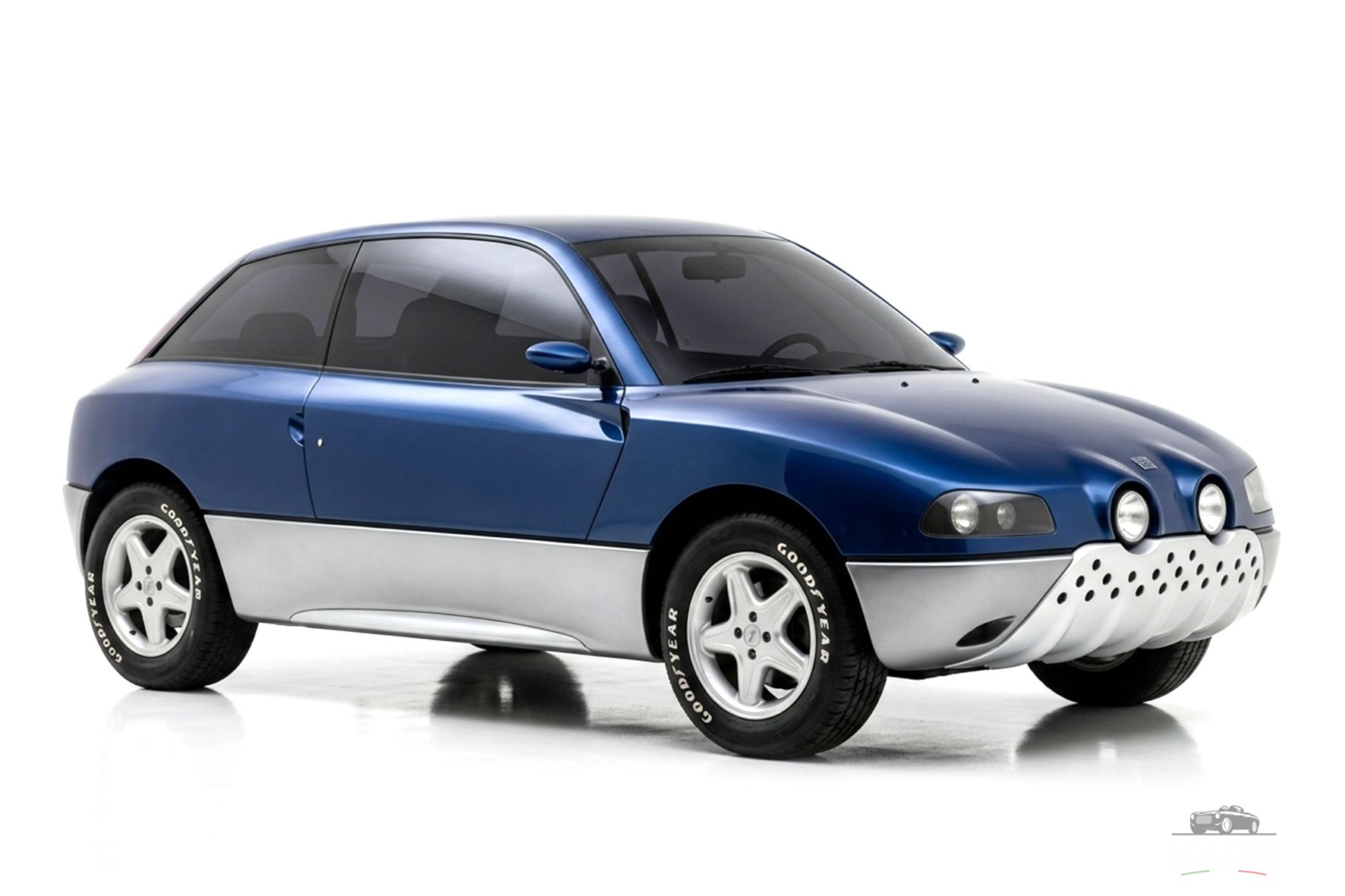
The 1994 Fiat Spunto was another Pininfarina project represented among Arcangeli’s legacy-associated vehicles. It was a compact, leisure-oriented study based on the Fiat Punto, with a two-door body and protective styling details, shown at the Turin Motor Show. The project identity and Pininfarina involvement are documented, but presently available specialist material does not establish Arcangeli’s individual design authorship to the same standard as the Honda Argento Vivo and Peugeot 406 Coupé. The individual attribution therefore requires further evaluation rather than being presented as equally verified.
BMW and the 5 Series E60
After his period in Turin, Arcangeli joined BMW’s design organisation, which was directed by Chris Bangle. He developed the exterior proposal that became the fifth-generation BMW 5 Series, internal designation E60. Bangle’s later first-person recollections describe how Arcangeli revised a design model that had initially been removed from the selection process, working with aluminium foil to change the surfaces. The revised model was reconsidered and selected for production.
Arcangeli’s E60 proposal exploited concave and negative surface treatments to moderate the visual mass of the vehicle. Bangle’s account attributes the original visual solution to Arcangeli while making clear that the project was assessed, developed and approved within BMW’s design and management structure. The model reached production in 2003, after Arcangeli’s death. The design team’s determination to preserve the selected proposal was subsequently described by Bangle as a response to the loss of their colleague. The E60’s styling was part of BMW’s wider design strategy of the period, not an independently produced coachbuilt automobile.
Death and retrospective exhibitions
Arcangeli died in December 2000 at the age of thirty, before the launch of the E60. Published biographies describe a serious illness and a subsequent cerebral aneurysm, but the exact date and place of death are not promoted here beyond the precision supported by the current canonical biographical record. The subsequent commercial history of his BMW design was therefore posthumous.
In 2018 the Biennale del Disegno in Rimini organised exhibitions devoted to Arcangeli’s work, presenting drawings and design material and placing his career within the regional and international history of automotive styling. These exhibitions provide important curatorial evidence for his early life and his contributions at Pininfarina. His principal documented work spans a Honda concept vehicle, a Peugeot production coupé and the final BMW design proposal, each with distinct programme, authorship and manufacturing contexts.
THE NETWORK
Shared vehicle credits

KEY MOMENTS
Timeline
-
Birth of Davide Arcangeli
Rimini, Italy
-
Career begins
-
Death of Davide Arcangeli
Italy
AWARDS & RECOGNITION
Palmarès
Vehicle awards
- Design awards
- 1
1 vehicle award record
Car Design Award Production
Peugeot 406 Coupé1997 Car Design Award Production
Production
CONTINUE EXPLORING


THE CONVERSATION
Comments 0