
Elvio d’Aprile
AT A GLANCE
- Nationality
- Italian
- Occupation
- Automotive designer and design manager
- Active from
- 1980s
- Studio
- Pininfarina / Toyota Europe Design Development
- Based in
- Turin / Sophia Antipolis, France
THE STORY
Overview
Elvio d’Aprile is an Italian automotive designer whose work spans Pininfarina, Toyota’s Japanese design organisation and Toyota Europe Design Development (ED²). His documented work includes exterior styling contributions to the Ferrari 550 Maranello and leadership of Toyota’s Corolla Verso and Urban Cruiser concept programmes. The distinction between personal styling, overall design direction and the work of the manufacturers’ design teams is essential to identifying his individual credits.
Education and early professional work
D’Aprile studied at the Istituto d’Arte Applicata e Design (IAAD) in Turin during 1977–1978, according to his published professional profile. Toyota’s own contemporary account records work for Porsche and Pininfarina before he joined Toyota in Japan in 1994. The public evidence consulted does not establish his exact birth date or the precise dates of his appointments at Porsche and Pininfarina; those details should not be inferred from his education or subsequent projects.
At Pininfarina, D’Aprile was part of the wider Turin tradition of design development in which individual proposals were refined within teams under studio management. The historical credits associated with his work require separation from the responsibilities of senior designers, model-makers and interior stylists. The firm’s relationship with Ferrari was particularly important during the transition of its twelve-cylinder grand tourers from the 1980s into the 1990s.
Ferrari 550 Maranello
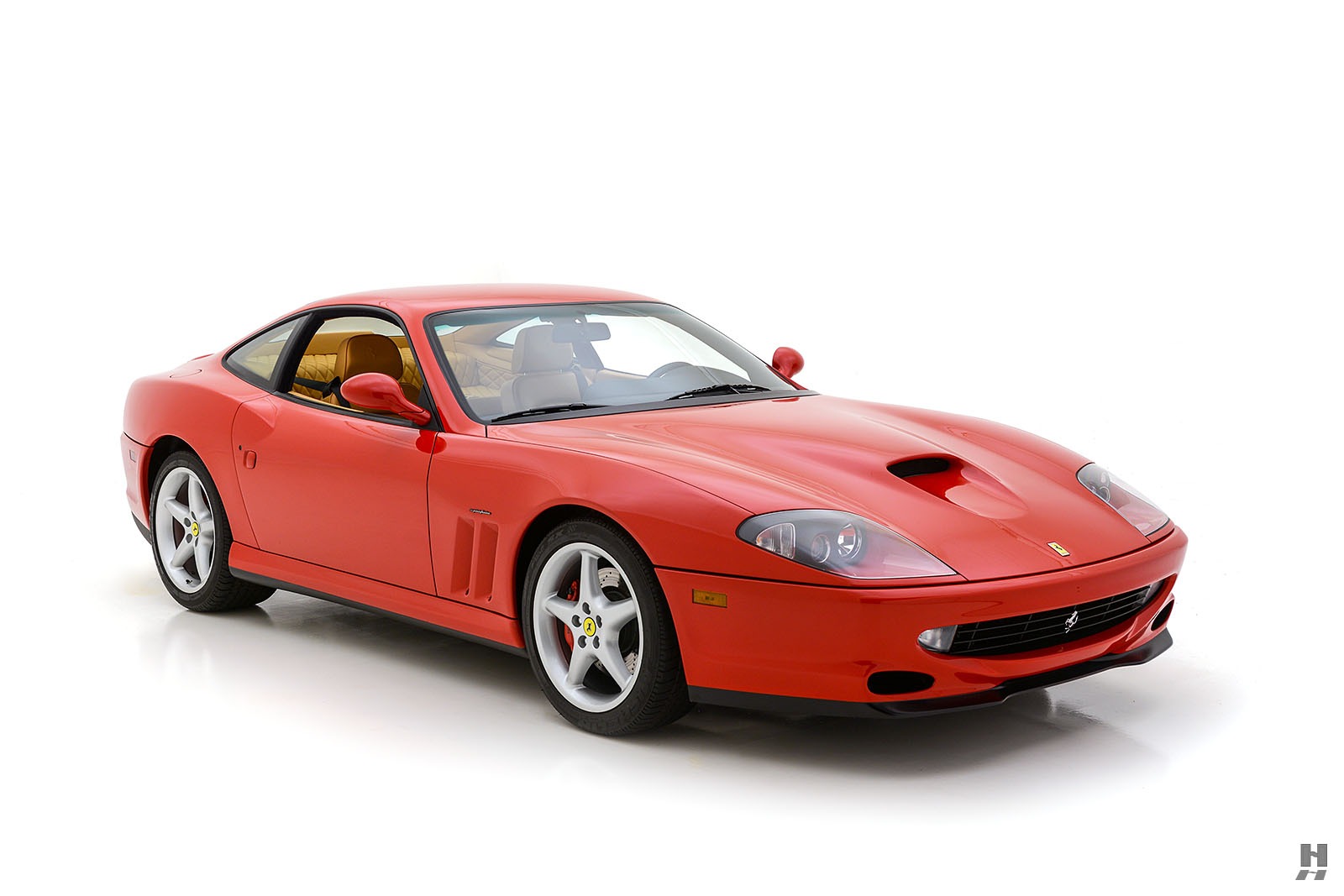
The Ferrari 550 Maranello, introduced in 1996, is the principal Ferrari production programme associated with D’Aprile. The front-engined V12 berlinetta was developed within Pininfarina under the design leadership of Lorenzo Ramaciotti. Published attributions identify D’Aprile with the exterior design; Goran Popović is credited with interior design, while Maurizio Corbi is among the other design contributors. The credits therefore describe a collaborative project rather than a sole-designer assignment.
Ferrari’s return to a front-engined two-seat twelve-cylinder grand tourer after the Berlinetta Boxer and Testarossa families formed the historical context for the 550. Its exterior used a long bonnet, compact passenger compartment and relatively restrained surface treatment. The work is documented at the model level: no evidence considered for this biography identifies individual chassis as a separate personal styling commission by D’Aprile.
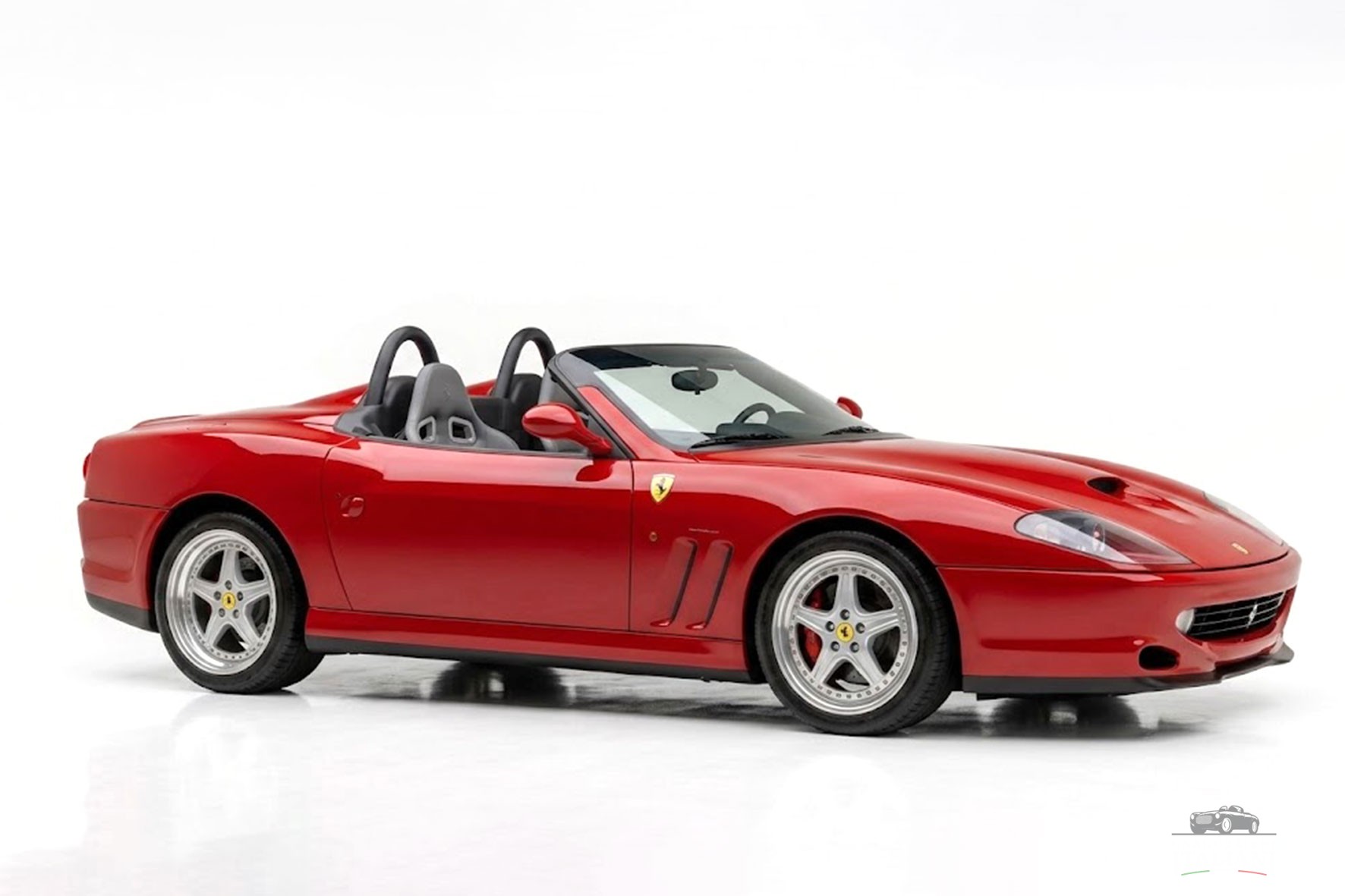
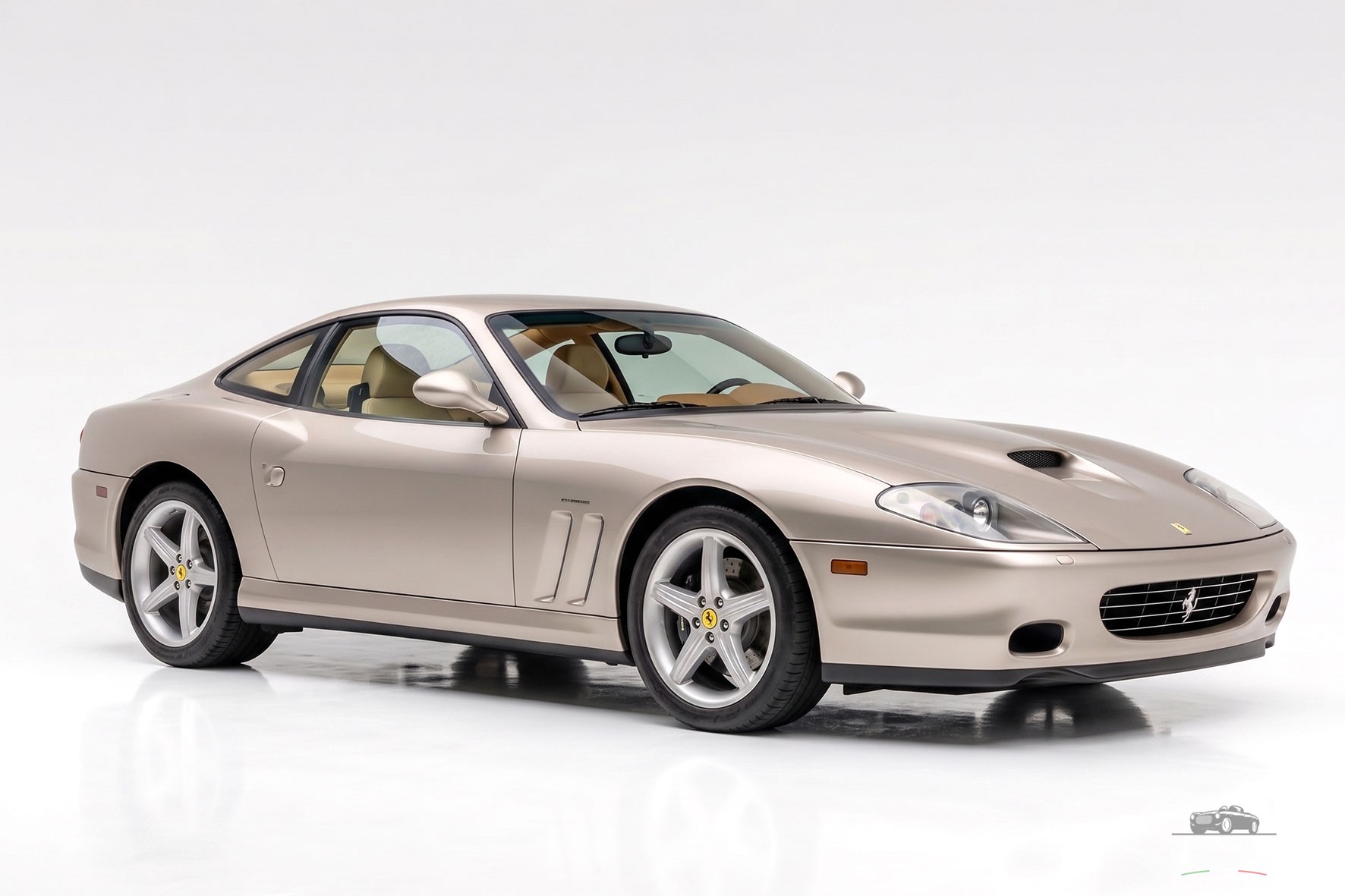
The subsequent Ferrari 550 Barchetta of 2000 was an open version of the same model family, and the Ferrari 575M Maranello of 2002 developed the berlinetta further. Both appear under D’Aprile in the legacy Carrozzieri Italiani designer index. Their stylistic relationship to the original 550 does not, by itself, demonstrate that he individually designed each derivative. The individual attributions should remain qualified until project-specific Pininfarina records establish the respective exterior and interior responsibilities.
Toyota in Japan and Europe
Toyota’s March 2006 Geneva Motor Show documentation states that D’Aprile joined Toyota in Japan in 1994. He subsequently transferred to ED², the company’s European design centre in Sophia Antipolis, southern France, when it opened in 2000. The move illustrates the international organisation of automotive styling during a period when Toyota increasingly used European design teams to develop vehicles for European market requirements.
By the middle of the decade D’Aprile held the role of chief designer on specific programmes. Toyota expressly credited him as chief designer of the second-generation Corolla Verso. This 2004 family car used an emphasis on a clearly defined cabin volume, a compact overall package and robust exterior forms. Design leadership at a corporate studio includes responsibility for development and coordination, but it does not imply that every detail of the cabin and body was personally drawn by the chief designer.
Toyota Urban Cruiser concept
The Urban Cruiser concept shown at the 2006 Geneva Motor Show provides unusually clear contemporary evidence of D’Aprile’s responsibilities. Toyota identified it as an ED² design and named him chief designer. The concept investigated a small sports-utility vehicle with an upright stance, compact body and distinctive graphic treatment, within Toyota’s contemporary “Vibrant Clarity” design programme. Its function was to explore a potential urban SUV category, not to document a production run or chassis series.
Toyota separately credited Yi Jeong Jae with the interior styling, drawing on contemporary furniture and fashion as design references. This division of exterior programme leadership and interior design is significant: the existence of a single chief designer does not erase the contributions of named colleagues. The later production Urban Cruiser should not automatically be treated as identical to the 2006 study or as an independent styling assignment without further evidence.
Design patents and collaborative authorship
United States design-patent records provide primary documentary evidence of D’Aprile’s work within Toyota design teams. Patent D504639, granted on 3 May 2005, names him alongside Estuya Oishi, Tokaharu Mino and Shunsaku Kodama for an automotive ornamental design. Patent D541702, granted on 1 May 2007, lists D’Aprile and Satoshi Yokoi for a motor-vehicle design. More recent filings include automobile lamp designs, with patents issued in 2021 naming other Toyota collaborators. Patent co-inventorship confirms participation in the design claimed by the filing, but is not proof of sole responsibility for the complete exterior of a particular marketed model.
Later work and attribution limits
D’Aprile has remained associated in public professional material with Toyota’s European styling organisation in Belgium. Secondary accounts also associate him, together with Ken Nagasaka, with the second-generation Toyota C-HR introduced in 2023. Toyota’s published material establishes that the model was designed and engineered in Europe, but the precise division of individual styling roles has not yet been independently confirmed here from original studio credits; the attribution is therefore recorded as a research lead rather than an established sole-authorship claim.
His career encompasses Italian coachbuilt grand touring design, Japanese corporate design development and European-oriented Toyota concepts and production vehicles. For Carrozzieri Italiani the directly documented individual credits concern the Ferrari 550 exterior programme, Toyota Corolla Verso project leadership, the 2006 Urban Cruiser concept and specific collaborative design patents. The attribution of additional variants and the preservation of original sketches or portraits require separate documentary and rights checks.
CONTINUE EXPLORING

THE CONVERSATION
Comments 0