
Emilio Castagna
AT A GLANCE
- Nationality
- Italian
- Occupation
- Coachbuilding designer and entrepreneur
- Active from
- 1919
- Studio
- Carrozzeria Carlo Castagna / Carrozzeria Emilio Castagna
- Based in
- Milan, Italy
- Vehicle awards
- 1
THE STORY
Overview
Emilio Castagna was an Italian automotive body designer and coachbuilding entrepreneur associated with the Milanese Carrozzeria Carlo Castagna and, from 1940, with the independent Carrozzeria Emilio Castagna. A younger son of Carlo Castagna, he entered the family firm in 1919 and became closely associated with its design work during the interwar period. His historical role encompasses the styling and development of bespoke luxury coachwork, experimentation with body construction and aerodynamic forms, and the operation of a smaller independent business after the outbreak of the Second World War. Individual design credits must be distinguished from bodies produced by a workshop under the Castagna name.
Family firm and entry into coachbuilding
The Castagna business grew out of the Milanese carriage-making tradition and developed into a manufacturer of automobile bodies in the early twentieth century. Carlo Castagna died in 1914, after which his son Ercole assumed the leading managerial role. Emilio, Ercole’s younger brother, joined the company in 1919. The two brothers performed different functions: Ercole was associated principally with the management and industrial development of the concern, while Emilio became identified with the design and visual treatment of its coachwork. The company operated with drawing offices, workshops and specialist craftspeople; the appearance of any finished body therefore also reflected the contributions of draughtsmen, metalworkers, fitters and other employees.
During the 1920s the family firm built luxury coachwork for marques including Isotta Fraschini, Alfa Romeo, Lancia, Fiat and imported high-end chassis. Its commissions included both individually specified cars and groups of related bodies. The distinction between the manufacturer of the chassis, the coachbuilder that made its body and the designer responsible for a particular drawing is essential: a Castagna-bodied vehicle cannot automatically be assigned to Emilio personally without evidence of his role in that commission.
Design responsibilities in the 1920s and 1930s
Emilio Castagna’s design work became part of the workshop’s identity as Italian coachbuilding moved from formal carriage-derived outlines towards lower bodies, more integrated wings and increasingly aerodynamic profiles. Period examples included closed luxury bodies, open touring cars, coupés and cabriolets, often tailored to their owners’ particular requirements. His contribution lay not simply in exterior proportions but also in the relationship between glazing, roof construction, passenger accommodation and the metalwork required to build bespoke bodies on manufacturer-supplied chassis.
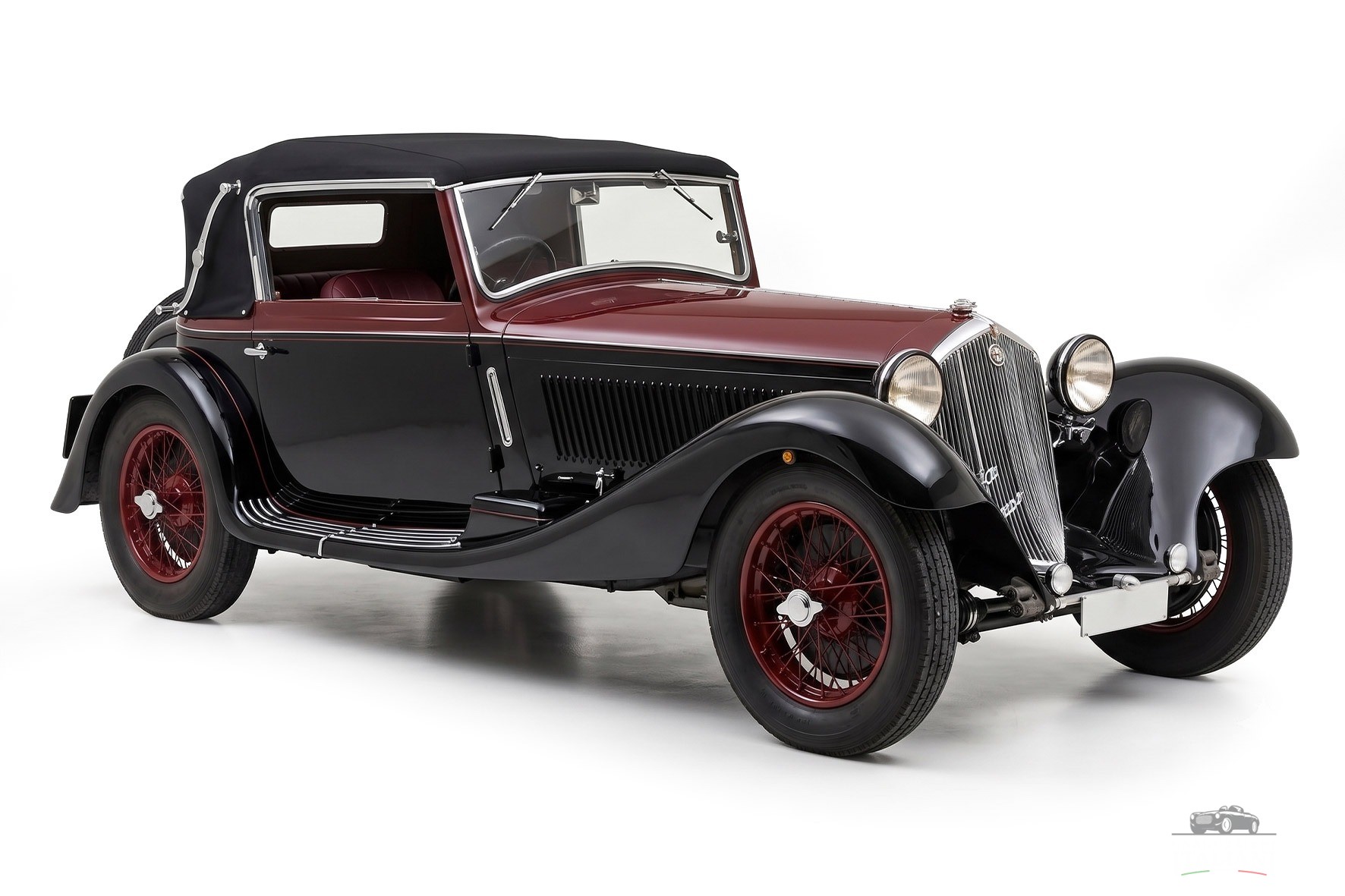
The Alfa Romeo 8C 2300 Drophead Coupé Castagna of the early 1930s is an example for which historical descriptions propose a personal stylistic attribution to Emilio. The relevant CI legacy entry treats his involvement as highly probable rather than established by an original signed drawing. The coachbuilding credit belongs to Castagna; the attribution of the precise design to Emilio should remain qualified pending documentary confirmation. Particular chassis associated with the Castagna-bodied 8C must also be kept separate rather than treated as interchangeable examples of a single automobile.
Materials, glazing and aerodynamic experiments
Castagna’s interwar work took place during an expansion of specialised body-building techniques, including lightweight metal construction, transformable bodies and broader use of glass. The company acquired or used technologies originating outside its own design department. In particular, the Castagna Vistotal glazing system was adapted from the French Vutotal principle associated with the coachbuilder Labourdette. Its unusually open glazed treatment, with reduced or absent conventional windscreen pillars, became one of the workshop’s recognised features. It should not be presented as an original invention of Emilio alone.
Historical accounts also connect the Castagna workshop’s aerodynamic research with collaboration by the German engineer Bergmann and with the selection of specialist materials and interior finishes. These accounts illustrate the technical and artistic network behind the bodies, but they do not establish that every aerodynamic Castagna model was personally drawn by Emilio. The broader firm’s coachwork on Alfa Romeo and Lancia chassis forms the industrial context for his activity; model-specific attributions require individual supporting documents.
Independent Carrozzeria Emilio Castagna
In 1940 Emilio separated from the family business and established his own coachbuilding concern in Milan, generally recorded at Via Giovanni Battista Fauchè 24. Carrozzeria Emilio Castagna was distinct from the original Carrozzeria Carlo Castagna managed by Ercole. The separation preceded the destruction of the latter company’s Milan premises during wartime bombing in 1942 and its later relocation to Venegono Superiore. The different corporate histories must not be conflated, including the end of the original family’s main coachbuilding operation in 1954 and the reported continuation of Emilio’s independent concern until 1960.
The independent workshop investigated small-vehicle manufacture during wartime shortages. The Castagna Trottolina, usually dated to around 1940, was a proposed small three-wheeled vehicle associated with Emilio’s enterprise. Its projected production did not become a substantiated regular series. Published technical claims about individual engines, configurations and production numbers require verification against contemporary technical records before inclusion as structured facts.
An original signed letter dated 28 April 1942, preserved through a specialist autograph dealer’s catalogue, provides an unusually direct record of Emilio’s own commercial and technical activity. It concerns a proposed pedal-powered ‘Ciclovetturetta Autarchica’, describes its light tubular construction and body materials, and quotes a delivered price of 11,000 Italian lire. The catalogue also records an accompanying photograph of the prototype. This quoted figure is an offer for the particular pedal-vehicle proposal, not an auction result or verified sale price for the Trottolina, and the two designs should not be treated as the same vehicle without further evidence.
Postwar coachwork
After the war the independent firm concentrated on specialised bodies, frequently using Fiat mechanical bases. Open and closed variants of the Fiat 1100 are associated with Emilio’s workshop during the late 1940s. Among the records in the Carrozzieri Italiani database are the Fiat 1100 C Sedan Cabriolet Castagna and the Fiat 1100 BL Special Panoramic Wagon. Both records currently carry native CI 2.0 Designer relationships to Emilio, reflecting the historical catalogue. These links are existing database attributions rather than proof that he personally drew each body; original drawings or workshop records are still needed to establish precise individual responsibility.
The changed economic conditions of postwar Italy favoured inexpensive factory-built cars over the bespoke luxury coachwork that had sustained the prewar family business. The independent Carrozzeria Emilio Castagna is recorded as ending its activities in 1960. No reliable documentary evidence has yet established Emilio’s precise birth and death dates. Those fields should remain uncompleted until a biographical or civil record supports them.
Attribution and legacy
Emilio Castagna’s place in Italian automobile design history derives from both his role within a major interwar coachbuilding firm and the independent enterprise he founded in 1940. The archival record must distinguish Carlo Castagna’s earlier business, Ercole Castagna’s management, Emilio’s stylistic and entrepreneurial activity, named outside collaborators, and the modern Castagna Milano undertaking revived in the 1990s. The latter is a separate later organisation and its automobiles cannot be attributed retrospectively to Emilio. His work is best assessed through precisely identified bodies, dated documents, surviving drawings and workshop records rather than through indiscriminate application of the family name to every Castagna-bodied car.
THE NETWORK
Shared vehicle credits

KEY MOMENTS
Timeline
-
Career begins
-
Career ends
AWARDS & RECOGNITION
Palmarès
Vehicle awards
- Class wins
- 1
1 vehicle award record
CONTINUE EXPLORING



THE CONVERSATION
Comments 0