
Ermanno Cressoni
AT A GLANCE
- Born
- 1939-07-22
- Birthplace
- Milan
- Died
- 2005-06-30
- Nationality
- Italian
- Occupation
- Architect and automotive designer
- Active from
- 1965
- Studio
- Alfa Romeo Centro Stile / Fiat Centro Stile / I.DE.A Institute
- Based in
- Milan / Turin, Italy
THE STORY
Overview
Ermanno Cressoni (22 July 1939 – 30 June 2005) was an Italian architect and automotive designer who directed styling departments at Alfa Romeo and Fiat. His work is associated with the angular saloon bodies of Alfa Romeo in the 1970s and 1980s, particularly the Giulietta of 1977, the Alfa 33 and the Alfa Romeo 75. After moving to Fiat in 1986, he supervised teams responsible for production cars and experimental design programmes. His personal styling work, design management and the contributions of other members of those teams must be distinguished when attributing individual vehicles.
Architectural training and Alfa Romeo
Cressoni was born in Milan on 22 July 1939 and trained in architecture. He joined the Alfa Romeo Centro Stile in 1965 and became its director in 1975. As the head of an in-house styling department, he worked within a manufacturer that developed the body engineering, powertrain and chassis of its models through separate technical divisions. His responsibilities therefore included both proposing a visual direction and guiding designs through the constraints of existing vehicle architecture and manufacturing capacity.
Although his career coincided with the introduction and development of the Alfa Romeo Alfetta family, an appointment at Alfa Romeo does not establish individual authorship of every body introduced by the manufacturer in those years. The distinction is particularly important for programmes undertaken by external design houses and for vehicles completed under the direction of other Alfa Romeo executives.
La Linea and the 1977 Giulietta
During the 1970s Cressoni developed the styling language often described as La Linea or cuneo sportivo. Its defining elements included a comparatively low nose, an upward progression of the beltline, sharp intersections between body surfaces and a short, elevated rear. The Alfa Romeo Giulietta introduced in 1977 provided an especially clear application of the approach. The saloon employed the transaxle mechanical architecture related to the Alfetta while receiving an individual body treatment intended to establish a recognisable identity in the medium-size segment.
The Giulietta’s angular treatment was not only a drawing-room exercise. Body dimensions, doors, glazing, luggage accommodation and production tooling had to be reconciled with a mechanical package already defined by Alfa Romeo. Cressoni’s work in this period illustrates a practical relationship between architecture and automobile styling: a consistent exterior language adapted to the structural and financial limits of a series-production car.
Alfa Romeo 33 and the 75
The Alfa Romeo 33, introduced in 1983 as a successor to the Alfasud, continued the emphasis on geometric lines and well-defined volumes. Cressoni’s responsibility for the Alfa Romeo styling organisation is documented, although the design of individual details involved the broader Centro Stile team. Descriptions of his personal contribution should not imply that he alone drew, engineered and completed every part of the production vehicle.
The 1985 Alfa Romeo 75 was a more explicit individual assignment. The manufacturer records that the project to replace the Giulietta was internally named K1 and entrusted to Cressoni, while the parallel K2 programme, which produced the Alfa Romeo 90, was assigned to Bertone and Marcello Gandini. Both programmes had to retain significant structural elements from existing cars. For the 75, Cressoni employed a rising side treatment, a dark continuous beltline element, a high rear and trapezoidal front and rear graphics. This account, published by Stellantis Heritage, establishes the difference between his work on the 75 and Gandini’s responsibility for the 90.
The 75 retained the front-engine, rear-transaxle arrangement characteristic of the Alfetta and Giulietta families. Its appearance was conceived around that inherited technical scheme, rather than a new mechanical platform designed personally by Cressoni. The distinctive body nevertheless gave the 75 an identity separate from the older Giulietta. The North American Alfa Romeo Milano was a market version of the 75, not a separate original styling programme.
Interior architecture and the patented console
Cressoni also worked on functional interior design. Patent US 4,818,008, granted on 4 April 1989 to Alfa Romeo Auto S.p.A., names him as inventor of a console for a motor car. The application, filed in 1985, describes a central storage compartment and armrest integrated with a U-shaped parking-brake lever. A related British publication, GB 2,162,134 A, records priority in July 1984. The patent is evidence of a specific invention by Cressoni and should not be expanded into a claim that he personally designed every element of the interiors of the Alfa Romeo 75 or Alfa Romeo 90.
Leadership at Centro Stile Fiat
In 1986 Cressoni transferred to Fiat, where he headed its styling organisation during a period of expansion and eventual coordination of design work across several marques. Programmes developed during his management included the Fiat Cinquecento, Fiat Coupé, Fiat Barchetta and Fiat Bravo/Brava. In this role he directed a heterogeneous group of designers and model makers rather than serving as sole stylist for every project. The Fiat organisation also encompassed advanced studies and design research in parallel with series-production development.
The Fiat Cinquecento, introduced in 1991, reflected the requirements of a compact city car with efficient use of interior volume. Cressoni’s participation is associated with the direction of the programme, while production engineering and body construction belonged to Fiat’s industrial organisation. The model should be distinguished from the 1957 Fiat Nuova 500 and from later vehicles bearing the 500 name.
Fiat Coupé and collaborating designers
The Fiat Coupé, introduced in 1993, is an example in which the division of design responsibilities is documented by the manufacturer. Stellantis Heritage identifies the project as the work of a team led by Chris Bangle under Cressoni’s supervision. The exterior theme was developed at Centro Stile Fiat; Pininfarina contributed the interior and manufactured the production body. Consequently, Cressoni’s position as styling director does not replace Bangle’s individual exterior credit, nor does the Fiat design-centre attribution replace Pininfarina’s production and interior roles.
Other designers working within the Fiat organisation included Andreas Zapatinas, Mike Robinson and Roberto Giolito. The Fiat Barchetta and Bravo/Brava programmes likewise combined individual proposals with selection, refinement and approval by a larger team. A direct designer relationship for Cressoni should be assigned only where the documented role and the database’s relationship type correspond; supervision is not interchangeable with personal exterior authorship.
Concept vehicles and advanced-design programmes
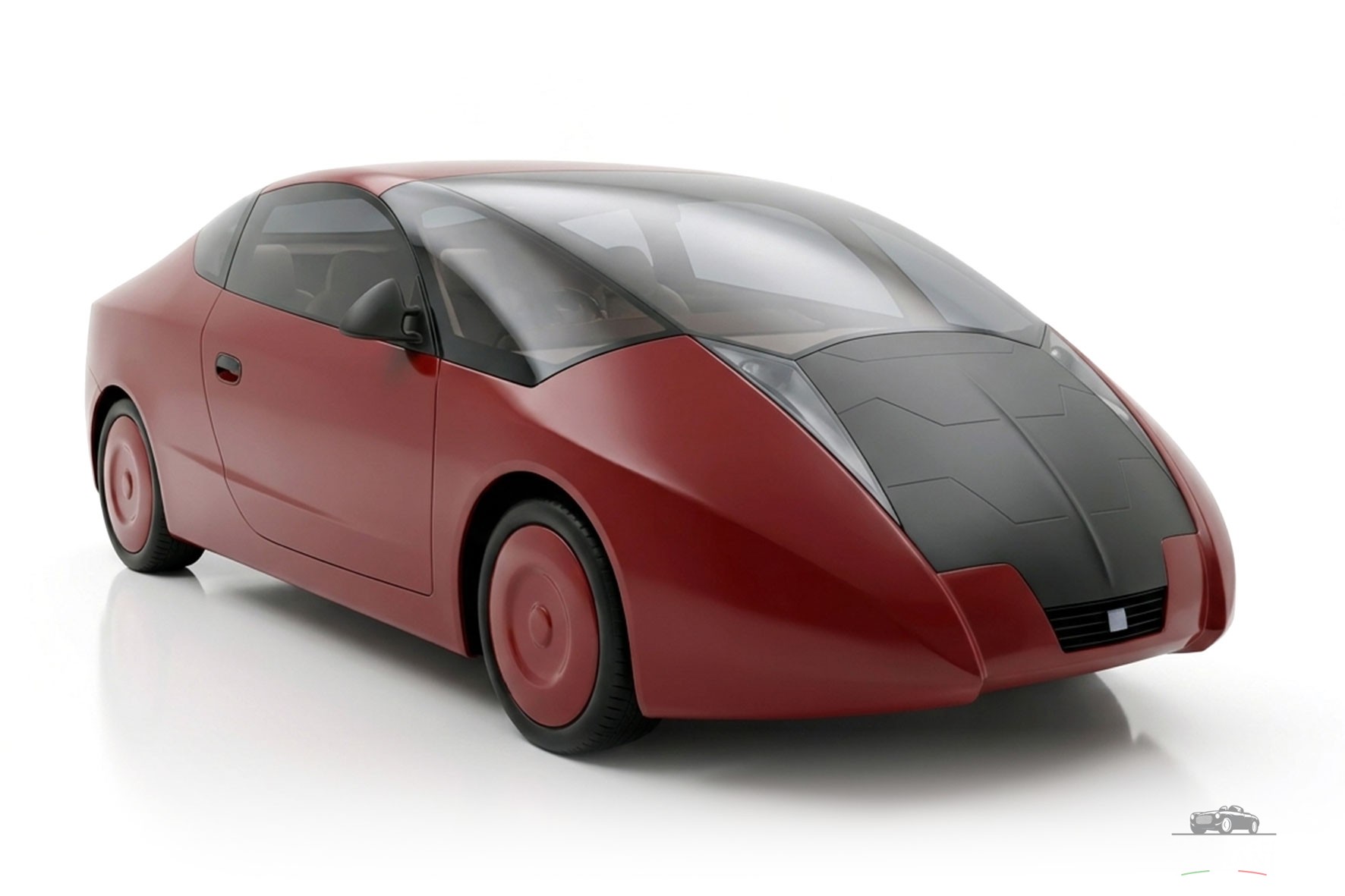
Fiat’s experimental projects during the later period of Cressoni’s career included the 1996 Fiat Bravo Armadillo, a compact multi-purpose concept developed by Fiat’s in-house styling organisation and constructed by Maggiora. The available records distinguish the Centro Stile’s design leadership from the coachbuilder that physically executed the prototype. The concept was not a production variant of the Bravo, and no individual chassis identity can be derived merely from its mechanical relationship to the production car.
The Lancia Nea of 2000 belongs to the later advanced-design work linking Centro Ricerche Fiat, Lancia styling and I.DE.A Institute. Contemporary project accounts distinguish Cressoni’s direction from the chief design contribution of Pietro Camardella and the work of other contributors. These separate roles should be preserved in both historical prose and native database relationships. Other programmes associated with the wider Fiat design organisation, including the Scia study and Lancia Dialogos, likewise require project-specific evidence before individual authorship can be assigned.
Later career and historical assessment
Cressoni’s activities in the late 1990s and early 2000s included advanced-design and consultancy work. The chronology and precise title of his last responsibilities within Fiat and subsequent associations with I.DE.A Institute are not equally well documented in all contemporary accounts, so they are not treated as proof of design authorship of particular concept cars. He died in Milan on 30 June 2005.
Cressoni’s contribution to Italian automobile design encompasses directly documented styling work, the organisation of manufacturer design departments and the development of younger designers. The Giulietta, Alfa Romeo 33 and particularly the 75 demonstrate the evolution of Alfa Romeo’s angular body language. His Fiat period is better understood through the work of the styling teams he supervised, with individual credits preserved for the authors of each selected design and the separate firms responsible for prototype construction or production coachwork.
THE NETWORK
Shared vehicle credits

KEY MOMENTS
Timeline
-
Birth of Ermanno Cressoni
Milan, Italy
-
Career begins
-
Career ends
-
Death of Ermanno Cressoni
Milan, Italy
CONTINUE EXPLORING

THE CONVERSATION
Comments 0