
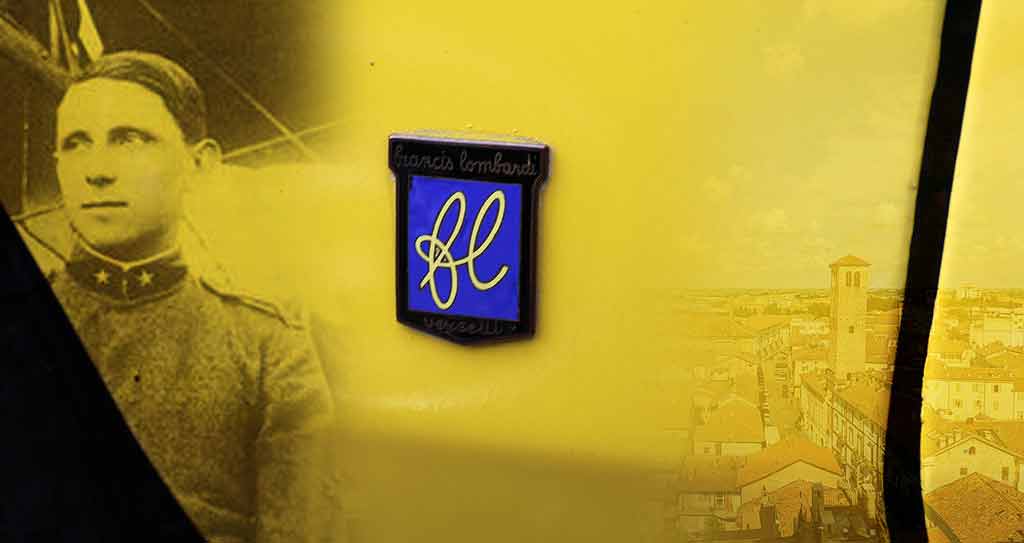
Francis Lombardi
Carrozzeria founded in Vercelli in 1947 by Carlo Francesco Lombardi; produced Fiat-based special bodies, four-door Lucciola conversions, My Car and Grand Prix coupés.
Explore record ↗
1970Coachwork by Francis Lombardi
THE VEHICLE AT A GLANCE
THE PEOPLE BEHIND THE CAR
Carrozzeria founded in Vercelli in 1947 by Carlo Francesco Lombardi; produced Fiat-based special bodies, four-door Lucciola conversions, My Car and Grand Prix coupés.
Explore record ↗Giuseppe Rinaldi was an Italian automotive designer associated with the Carrozzeria Francis Lombardi and its specialist vehicle projects.
Explore record ↗01 / THE STORY
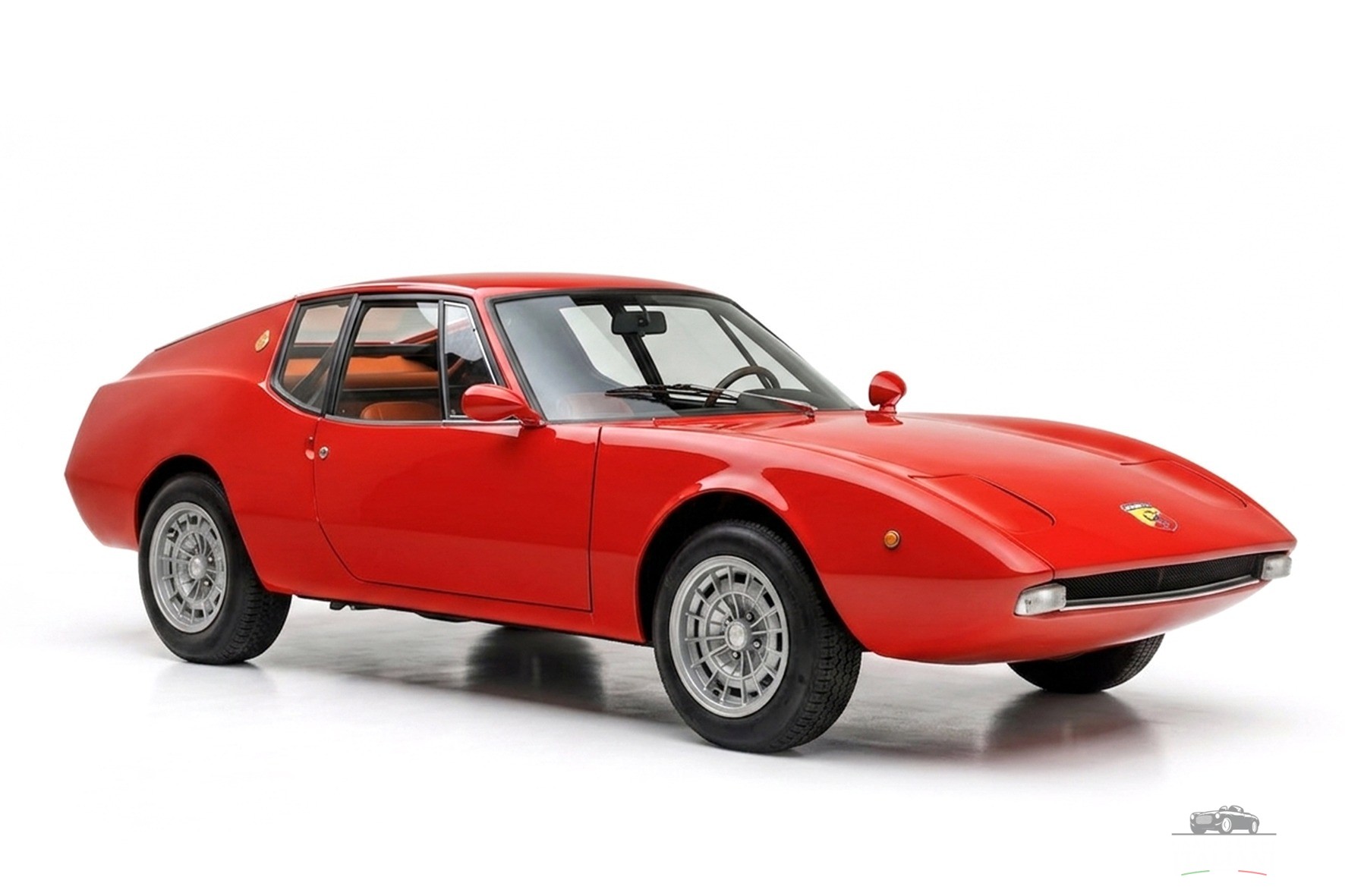
The Abarth 1300 Scorpione was the high-performance development of the rear-engined Francis Lombardi Grand Prix, the low two-seat coupé introduced in 1968 on Fiat 850 mechanical foundations. The Scorpione combined Lombardi’s distinctive body with an Abarth-modified engine and running gear. The 1970 designation used for this model should not obscure the earlier development of the Grand Prix and its Abarth derivatives, which appeared in several forms during the late 1960s.
The body was built by Carrozzeria Francis Lombardi at Vercelli. Its styling is credited to Giuseppe Rinaldi, the firm’s designer, rather than to an Abarth stylist. The compact, low-roofed coupé had a pointed nose, retractable headlights, a broad windscreen swept by a single wiper, and round Fiat 850-derived rear lamps. The Grand Prix family retained predominantly steel bodywork, with an aluminium engine lid reported by specialist collection documentation. The Scorpione belongs to this common body family, but its mechanical specification must not be confused with an ordinary Fiat 850 Grand Prix or with the OTAS and Giannini derivatives.
The standard 1300 Scorpione used an Abarth-developed version of the Fiat 124 four-cylinder engine, enlarged to approximately 1,280 cc. Contemporary and retrospective accounts report an output of about 75 PS, substantially above that of the basic Fiat 850-powered Lombardi. An Abarth bellhousing adapted the larger engine to the Fiat 850-derived four-speed transaxle. The engine remained at the rear, and the greater mass increased rearward weight bias. The modified nose also provided space for a front-mounted radiator, giving the Abarth versions distinctive cooling openings.
A road test published by the German magazine auto motor und sport in 1970 is repeatedly cited for a measured maximum speed of 175.6 km/h. Some secondary accounts give a vehicle mass between approximately 680 and 750 kg and a rearward weight distribution of 61 per cent. These figures should be understood as reported test or variant-dependent data, not as measured specifications of every surviving Scorpione.
The more extensively modified Scorpione S and SS must be distinguished from the basic 1300. The higher-performance derivatives introduced revised suspension, including coil-spring front suspension, anti-roll bars and four-wheel disc brakes. The SS was described with roughly 100 hp, with changes to carburetion and engine tuning. The history of Francis Lombardi places these cars within the wider Grand Prix programme, but the SS’s brakes, suspension and power output should not be assigned automatically to the standard model. The exact number produced remains uncertain; figures quoted for SS examples do not establish a total for all 1300 Scorpione variants.
The Scorpione was among Abarth’s final independently developed road-car projects before Fiat acquired the firm in 1971. Its history illustrates a division of responsibilities: Francis Lombardi supplied the distinctive coachwork, Rinaldi was responsible for its underlying design, and Abarth developed the performance-oriented mechanical package. Surviving cars and auction catalogues document different specifications within the family. Chassis numbers, restoration histories, sales and concours appearances must therefore be associated with the individual examples to which they belong, rather than transferred to the model as a whole.
02 / TECHNICAL IDENTITY
03 / DESIGN, BODY & SUPPLIERS
Coachbuilder / Design studio
Carrozzeria founded in Vercelli in 1947 by Carlo Francesco Lombardi; produced Fiat-based special bodies, four-door Lucciola conversions, My Car and Grand Prix coupés.
Explore record ↗Designer
Giuseppe Rinaldi was an Italian automotive designer associated with the Carrozzeria Francis Lombardi and its specialist vehicle projects.
Explore record ↗07 / GALLERY
CONTINUE READING
A tiny Italian coupé with supercar dreams, the Francis Lombardi Fiat 850 Grand Prix blended bold design, coachbuilt flair, and a wild backstory. From Geneva show glitz to Abarth-tuned fury, here’s the…
Read storyFrom WWI fighter pilot to Italy’s most inventive coachbuilder, Francis Lombardi redefined small cars with style, charm, and ingenuity. Discover how his creations—from the Lucciola to the first Popemobile—left a lasting mark…
Read story
THE CONVERSATION
Comments 0