The 1952 Abarth 1500 Coupé Biposto was a unique two-seat experimental coupé created through the collaboration of Abarth and Carrozzeria Bertone. Its coachwork was designed by Franco Scaglione, whose early work for the Turin firm would lead to the Alfa Romeo B.A.T. experiments. The Biposto was presented at the 34th Turin Motor Show, held from 23 April to 4 May 1952, where the Bertone stand provided an unusually prominent setting for a small Fiat-derived specialist car.
Design and the 1952 Turin debut
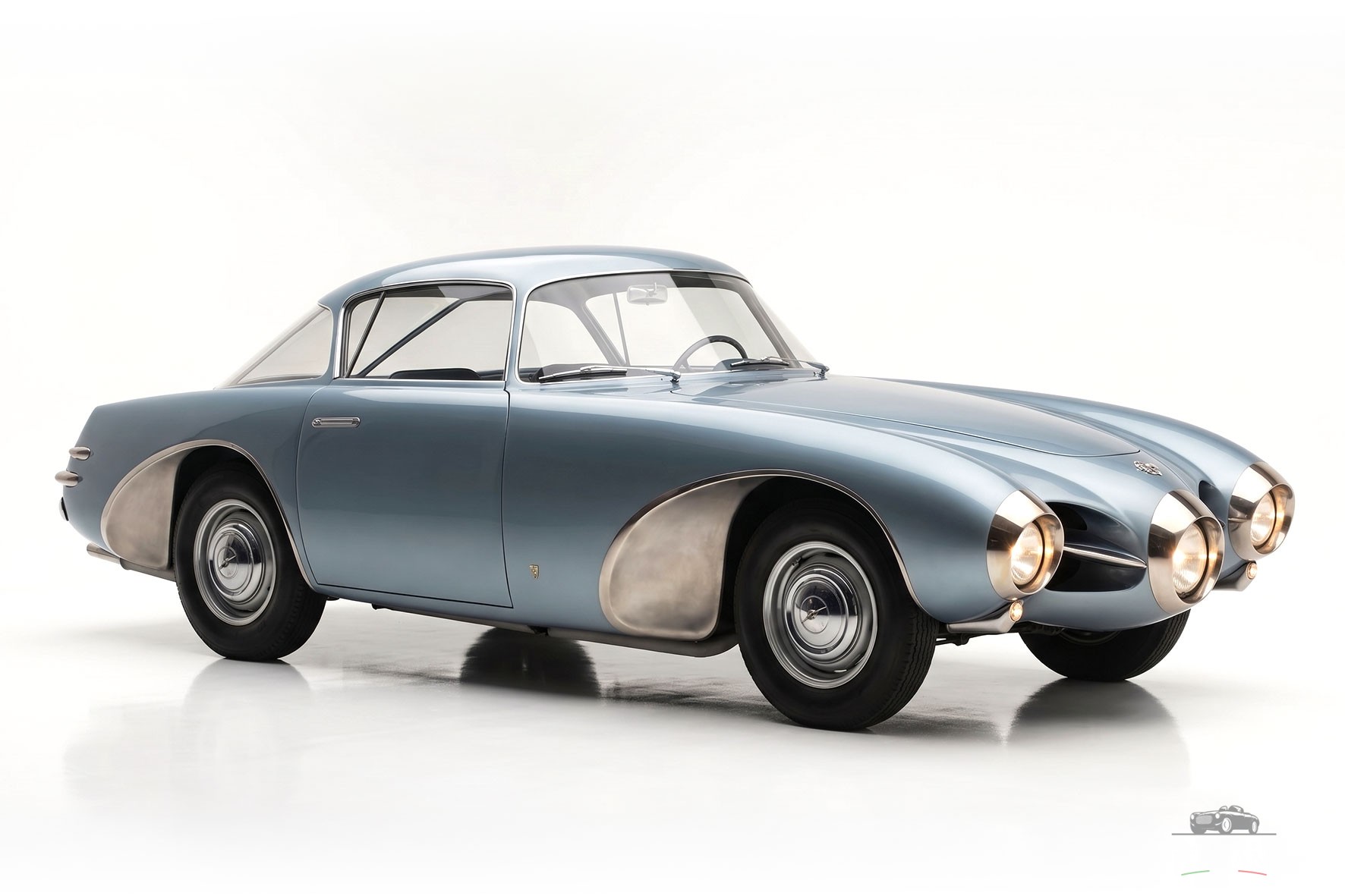
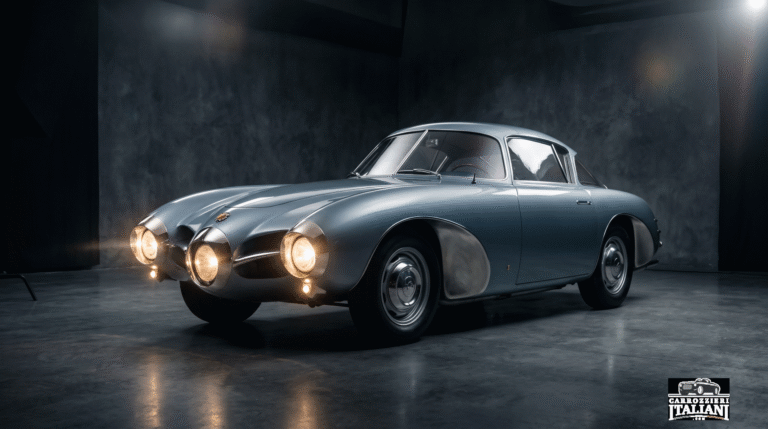
Scaglione departed sharply from the upright proportions of conventional postwar sports coupés. Three headlamps occupied the nose, with the central lamp projecting forward above a split grille. The front wings and rear quarters had deeply recessed surfaces, while the windscreen and rear glazing wrapped into the car’s sides. Pronounced rear-fender fins and a slim central dorsal fin added to the distinctive tail. These elements preceded, rather than belonged to, the Bertone B.A.T. studies of 1953–55, which pursued aerodynamic forms on Alfa Romeo mechanical bases. The 1500 Biposto was a separate Abarth project, not an Alfa Romeo B.A.T. chassis.
Engineering and physical identity
Abarth used Fiat 1400-derived mechanical components, but the car should not be identified simply as a standard Fiat 1400 chassis fitted with different bodywork. The later Christie’s catalogue describes an Abarth-built platform structure, a front-mounted overhead-valve four-cylinder engine, twin Weber downdraught carburettors and a four-speed manual gearbox. Published displacement figures differ, so the model designation “1500” is not conclusive evidence of a precise cubic capacity. Christie’s quoted approximately 75 hp rather than a contemporaneous independently measured result.
The surviving one-off was documented at auction as chassis 214-01, engine 101-000 032083. These identifiers concern that specific physical car; the present database entry describes the one-off project and preserves the separate chassis-level evidence. A 2003 catalogue recorded a metallic-blue exterior and grey leather upholstery. Historical images of the car require their own provenance and usage-rights assessment.
Packard and later history
After its Turin appearance, the Biposto entered the hands of the American manufacturer Packard and was examined by its design and engineering personnel. In July 1953 Packard president James J. Nance arranged its transfer to Fortune journalist Richard Austin Smith, following Smith’s contribution to a company advertising idea. The surviving correspondence documents the unusual gift but does not prove that a specific later Packard production feature was copied from the Abarth. The prototype remained in the United States for decades and eventually re-emerged for public sale in 2003.
The vehicle’s transatlantic history, subsequent rediscovery and restoration are examined in Abarth 1500 Biposto: Why Packard Gave It Away. More broadly, the project belongs to the early design career of Scaglione and to the growing experimental ambitions of Bertone under Nuccio Bertone, before the firm’s aerodynamically focused Alfa Romeo show cars attracted international attention.


THE CONVERSATION
Comments 0