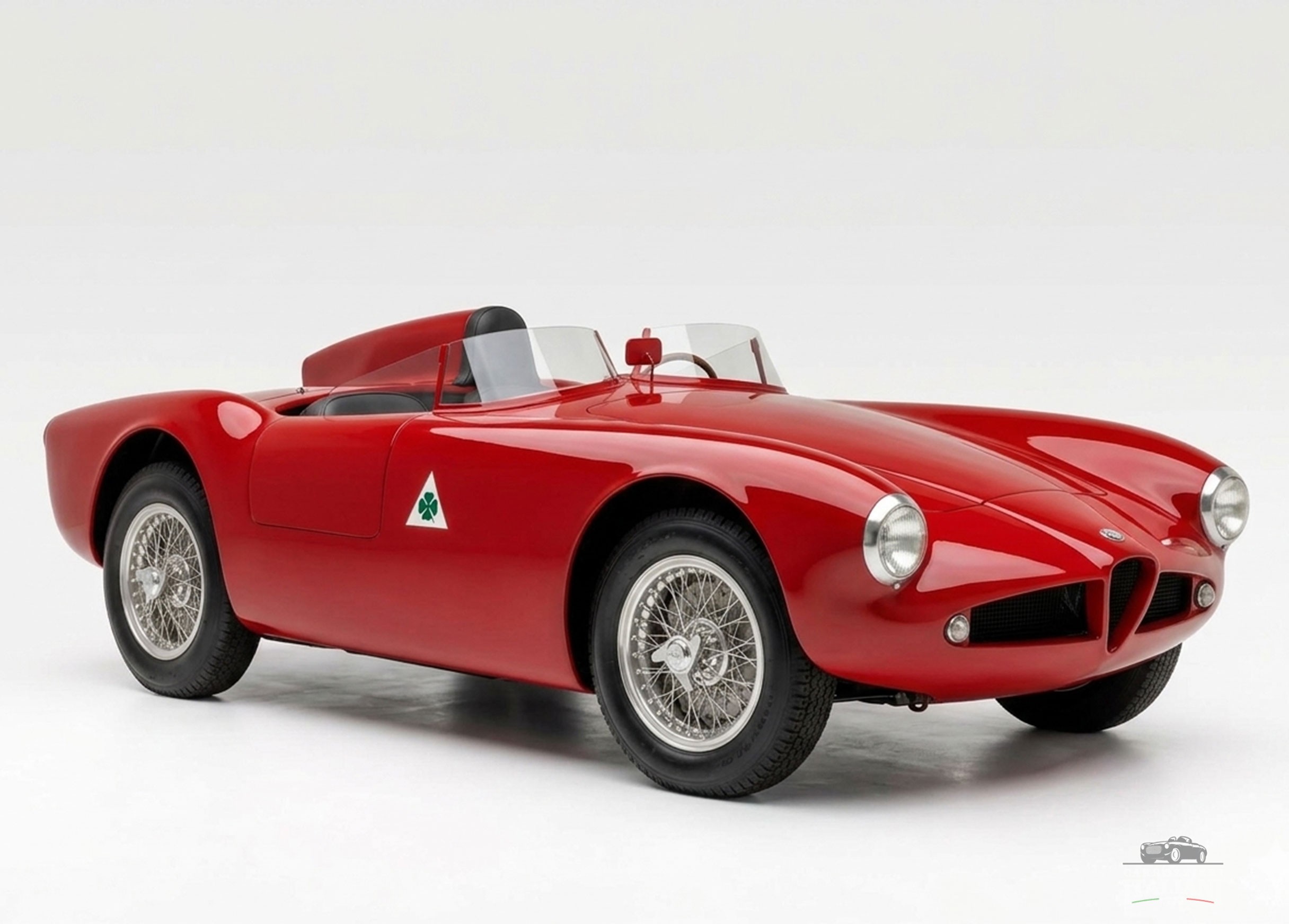
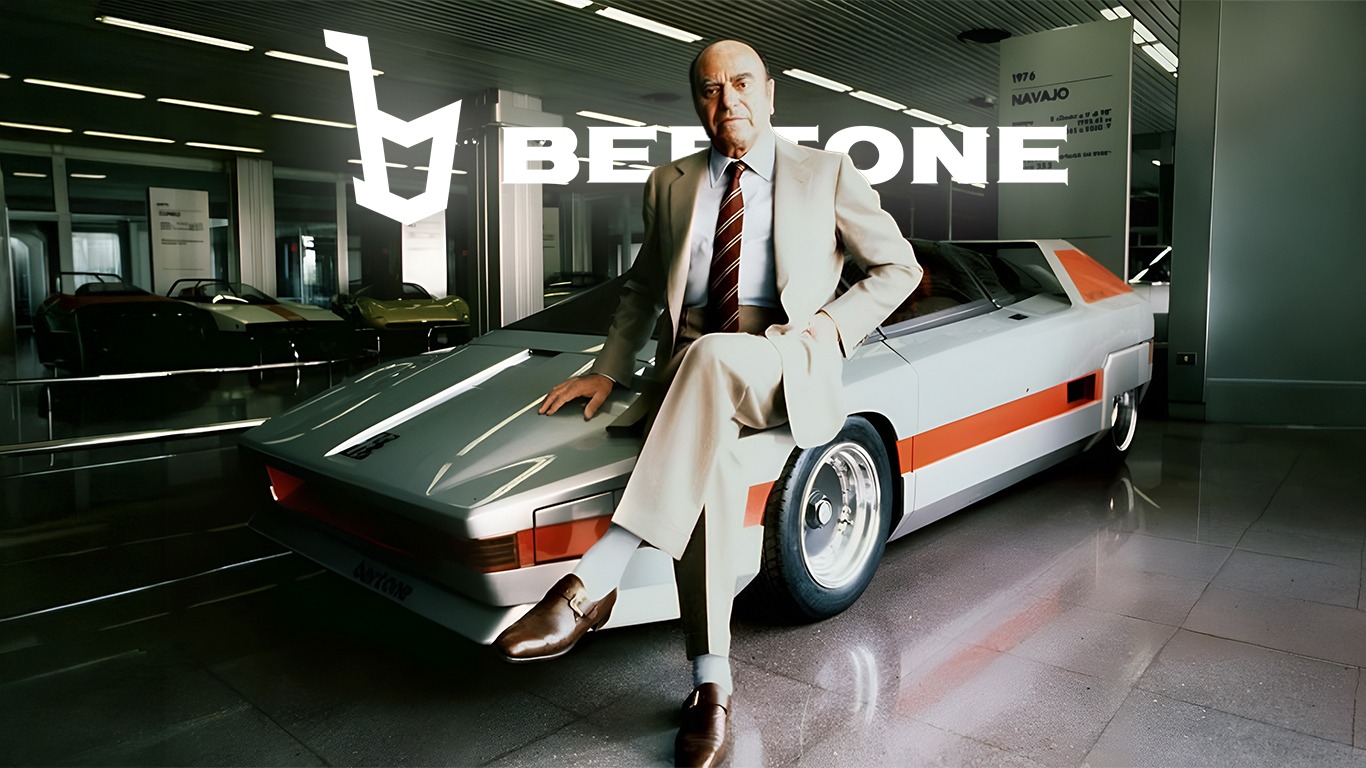
The 1958 Alfa Romeo Abarth 1000 GT was a single experimental coupé developed through an agreement between Alfa Romeo and Carlo Abarth. It combined a lightweight tubular chassis engineered by Mario Colucci with a body built by Carrozzeria Bertone and styled by Franco Scaglione. The car was presented on Bertone’s stand at the 40th Turin Motor Show, which opened on 5 November 1958. The prototype was intended to explore a small-displacement sports car distinct from Alfa Romeo’s existing Giulietta range.
Development and construction
The 1000 GT followed an earlier Alfa Romeo–Abarth collaboration, the Alfa Romeo 750 Competizione of 1955, an open sports prototype with coachwork by Boano. The 1958 project was a separate design. Alfa Romeo assigned engineer Mario Colucci to work with Abarth in Turin; Colucci was responsible for the engineering programme and the tubular trellis chassis rather than the styling of the body. The chassis structure weighed approximately 50 kg, while the complete car weighed 640 kg. This architecture differed from the sheet-metal structure used for the earlier 750 Competizione. A contemporary technical account described a chromium-molybdenum tubular lattice with a reinforced central backbone, a reported frame mass of 51 kg, and a heat-insulating plastic floor bonded to the tubes. It also reported approximately 660 kg dry weight, whereas the manufacturer’s heritage record gives 640 kg; these figures are preserved as distinct published specifications.
The front-mounted longitudinal engine was derived from the Alfa Romeo Giulietta’s twin-cam four-cylinder unit. A modified crankshaft reduced displacement to 958 cm³, allowing the car to enter a racing class below one litre without competing directly with the Giulietta. The original specification included twin overhead camshafts, two twin-choke Weber 40 DCOE carburettors and an output of 88 CV at 8,000 rpm. Independent front suspension, a rear live axle, braking components and transmission architecture were derived from Giulietta mechanical practice. Specialist references additionally describe a five-speed gearbox with Porsche-type synchromesh, although this particular detail is not specified in the manufacturer’s heritage account.
A technical account published in March 1959 recorded a bore of 74 mm and a stroke of 58 mm, corresponding to approximately 998 cm³. This differs from the manufacturer’s later heritage specification of 958 cm³. Until the engine documentation is reconciled, these figures remain separate reported specifications rather than interchangeable values for an identified engine serial.
Bertone design and public presentation
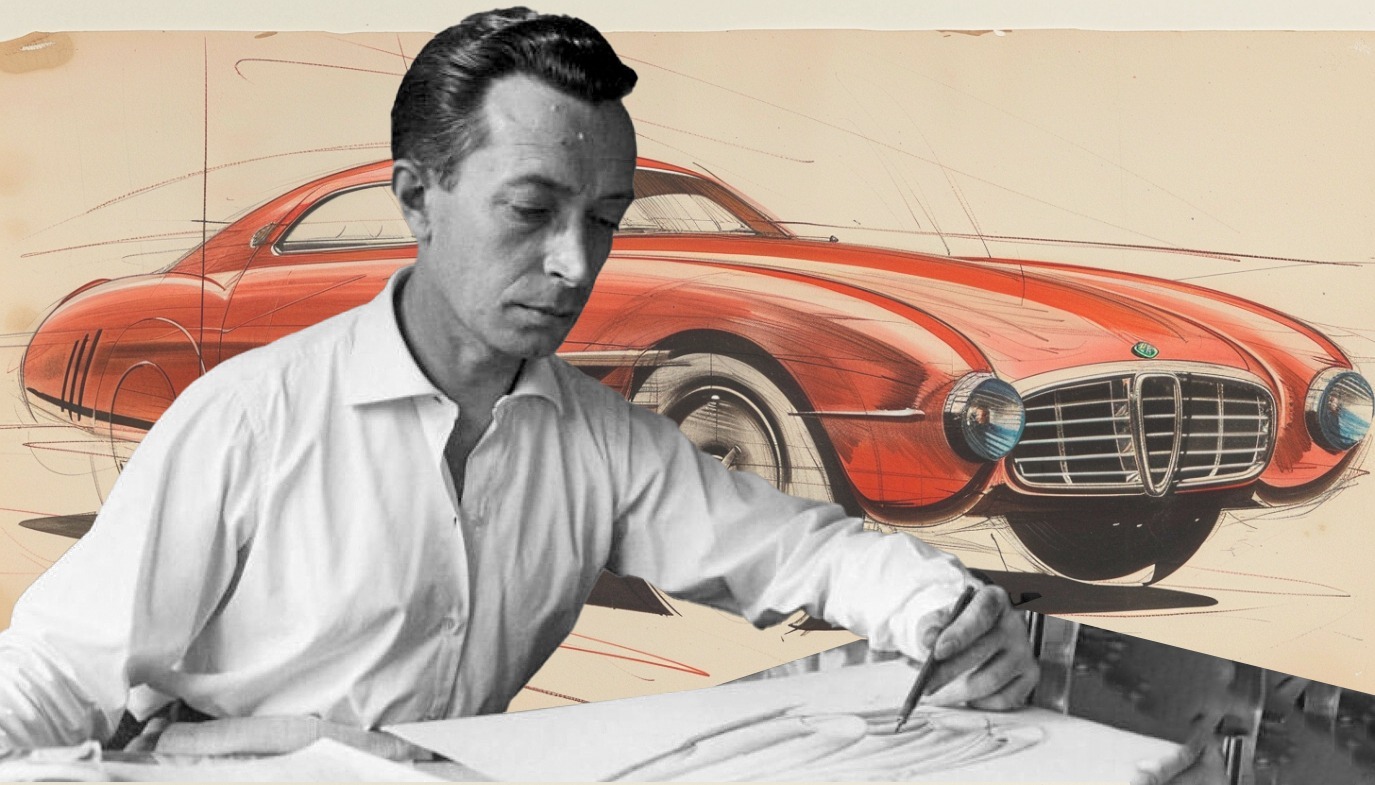
Scaglione designed a low, aerodynamic closed body with pronounced curved front wings, faired headlights, a narrow oval central air intake and two subsidiary cooling openings. The doors extended into the front wings and had no projecting handles. A steeply inclined windscreen, short rounded tail and large rear window integrated into the roof completed the compact coupé. Some design themes were related to Scaglione’s work on the Alfa Romeo Giulietta Sprint Speciale prototype; the vehicles were distinct projects and did not share an identified chassis.
The Turin presentation was the prototype’s documented public debut. Stellantis Heritage describes the Bertone-bodied Alfa Romeo Abarth 1000 as a single prototype, with no series production following the end of the Alfa Romeo–Abarth agreement. The earlier Carrozzieri Italiani record reports three cars, but that figure has not been supported by an identified group of chassis and should not be treated as an established production total.
Subsequent history and technical legacy
Secondary histories associate an Alfa-Abarth coupé with damage during testing at the AVUS circuit in Berlin in 1959 and a subsequent fibreglass rebody designed by Luigi Colani for a Berlin Alfa Romeo dealer. These accounts also mention a later 1.3-litre Giulietta engine. In the absence of a documented original chassis serial and continuous provenance, the alleged Colani-bodied derivative must be distinguished from the Bertone coupé in its original 1958 form. No verified exact-chassis sale, individual owner sequence or race result has been established for the original body.
After the joint programme ended, Colucci joined Abarth’s technical leadership and became technical director in 1960. His trellis-frame approach was developed further in Abarth sports prototypes, culminating in the Fiat Abarth 1000 SP programme of 1966. The 1958 Alfa Romeo Abarth 1000 GT is therefore part of both Bertone’s Scaglione-era coachwork and the technical development of Abarth’s later tubular-chassis racing cars.





THE CONVERSATION
Comments 0