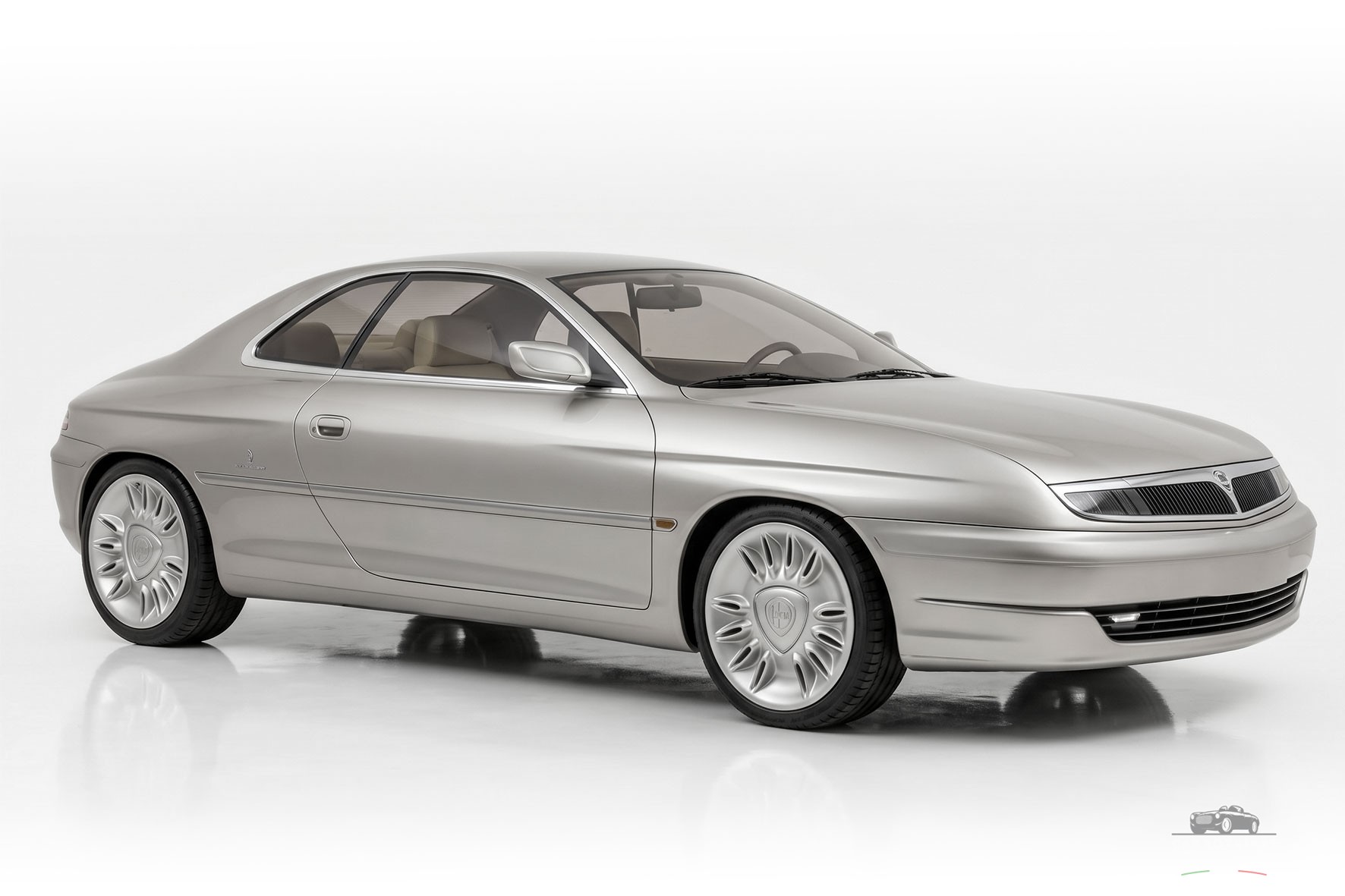
The Alfa Romeo Bella is a one-off 2+2 coupé concept built by Bertone and presented at the 1999 Geneva Motor Show. Designed under the direction of Luciano D’Ambrosio, it explored a possible sporting coupé derived from the Alfa Romeo 166 executive saloon. It was a functioning design study, not a production model; no series version followed. The single prototype subsequently became part of the historic Bertone collection.
Design and development
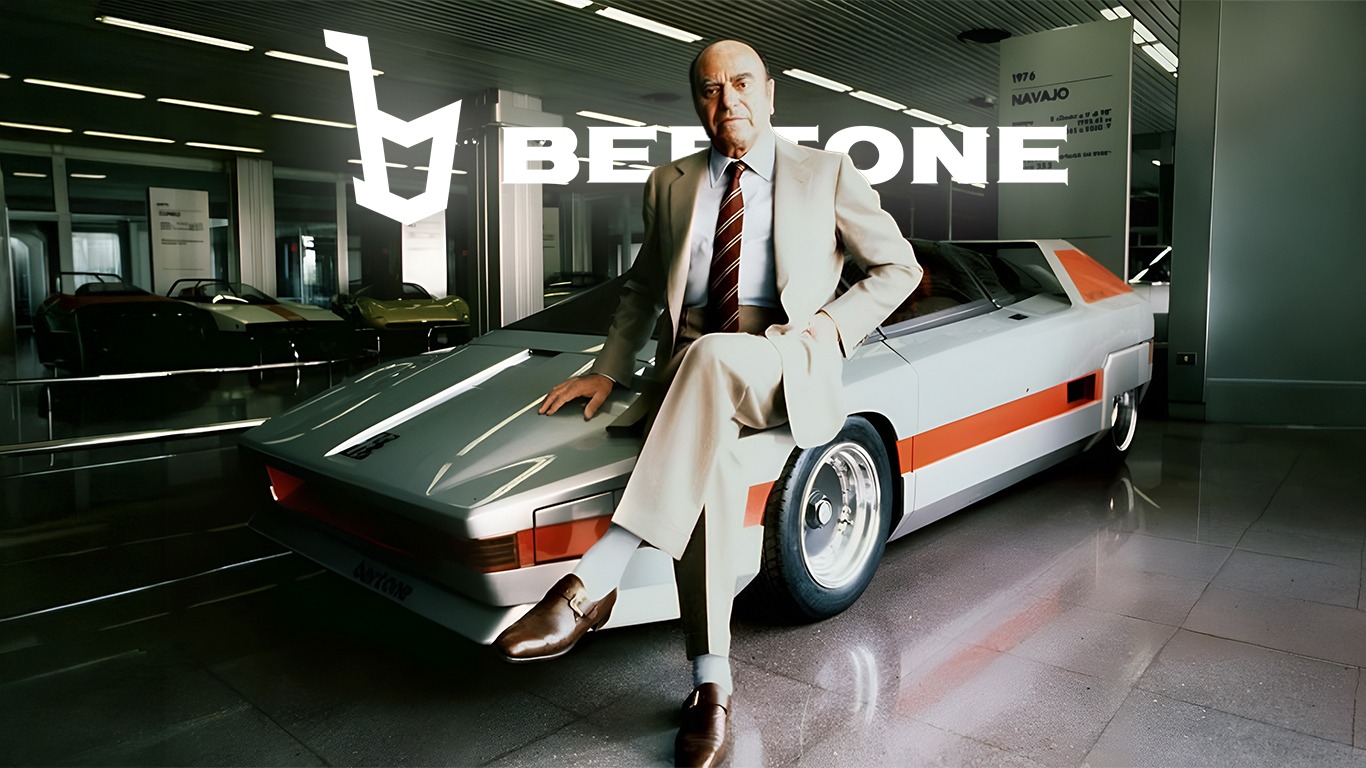
Luciano D’Ambrosio was Bertone’s design director from 1991 to 2000. In a recorded account of the Bella project, he explained that the studio intended to reconsider the Alfa Romeo visual identity without simply reproducing earlier sports-car motifs. The traditional shield grille was integrated as a graphic element within the sculpture of the bonnet rather than standing out as a conventional projecting grille. Narrow front lamps using LED technology formed part of a deliberately restrained front treatment, with small visible air intakes and an uncluttered bumper.
The side profile departed from the rising wedge-shaped waistlines common in contemporary concept design. Its beltline closed towards the rear, beneath a continuous, visor-like glazed cabin. The windscreen and side glazing formed an unusually expansive panoramic area; D’Ambrosio compared the idea of the glass canopy to themes explored in earlier Bertone work, including the Lancia Stratos. A compact, full-volume rear was divided visually by thin horizontal lamps. The result was a distinct interpretation of Alfa Romeo’s late-1990s grand-touring language, rather than a re-bodied production 166 with unchanged exterior proportions.
Mechanical architecture
The Bella used the Alfa Romeo 166 as its mechanical foundation. D’Ambrosio described the engine compartment, principal front dimensions and basic mechanical package as retained from the production saloon. The principal structural alteration was aft of the rear wheels, where the spare-wheel area was shortened to permit a notably compact tail. The donor architecture was front-wheel drive. No independently authenticated individual chassis or engine serial has been established for the prototype in the reviewed documentation.
The exact engine installed in the surviving vehicle requires qualification. Some published accounts describe a 3.0-litre Busso V6 and approximately 225–226 CV, while others identify a 2.0-litre Twin Spark four-cylinder as the running prototype’s engine, or report different engines at different stages. The designer’s recorded description of the 166 mechanical basis does not resolve that disagreement. Consequently, neither displacement, output nor gearbox specification should be assigned to this individual car as verified. Published overall dimensions likewise vary between accounts and have not been adopted as chassis-specific measurements.
Interior and practical features
The interior retained elements of the Alfa Romeo 166 architecture but introduced a different interpretation of the sporting four-seat cabin. D’Ambrosio described a dashboard incorporating a honeycomb-like textile and a system of fans and ducts designed to extract heat accumulated in the upper fascia when the vehicle stood in sunlight. The concept’s 2+2 seating was more than a token arrangement: its rear accommodation could be reconfigured to increase luggage space for large recreational equipment. Bertone also designed a carbon-fibre bicycle named Bestia to demonstrate this versatility; it accompanied Bella during early exhibitions.
Exhibition and preservation
The Bella appeared at Geneva in 1999 among Bertone’s independently developed proposals intended to attract the attention of manufacturers. In concept and commercial purpose, it can be compared with the earlier Lancia Kayak, another Bertone grand-touring coupé study conceived with production potential but not adopted as a series model. A separate historical feature on the Bella preserves a fuller account of D’Ambrosio’s recollections of the project.
The Bella was retained within the Bertone collection, which was acquired for preservation by the Automotoclub Storico Italiano in 2015. ASI identified the car as one of the Bertone vehicles selected for the Salone Auto Torino display in September 2024. In March 2026 the organisation inaugurated a new presentation of its Bertone collection at the Stellantis Heritage Hub in Turin; that collection announcement does not, by itself, establish the Bella’s permanent exhibition position. No authenticated individual sale price or full chassis ownership chronology has been established from the records reviewed.




THE CONVERSATION
Comments 0