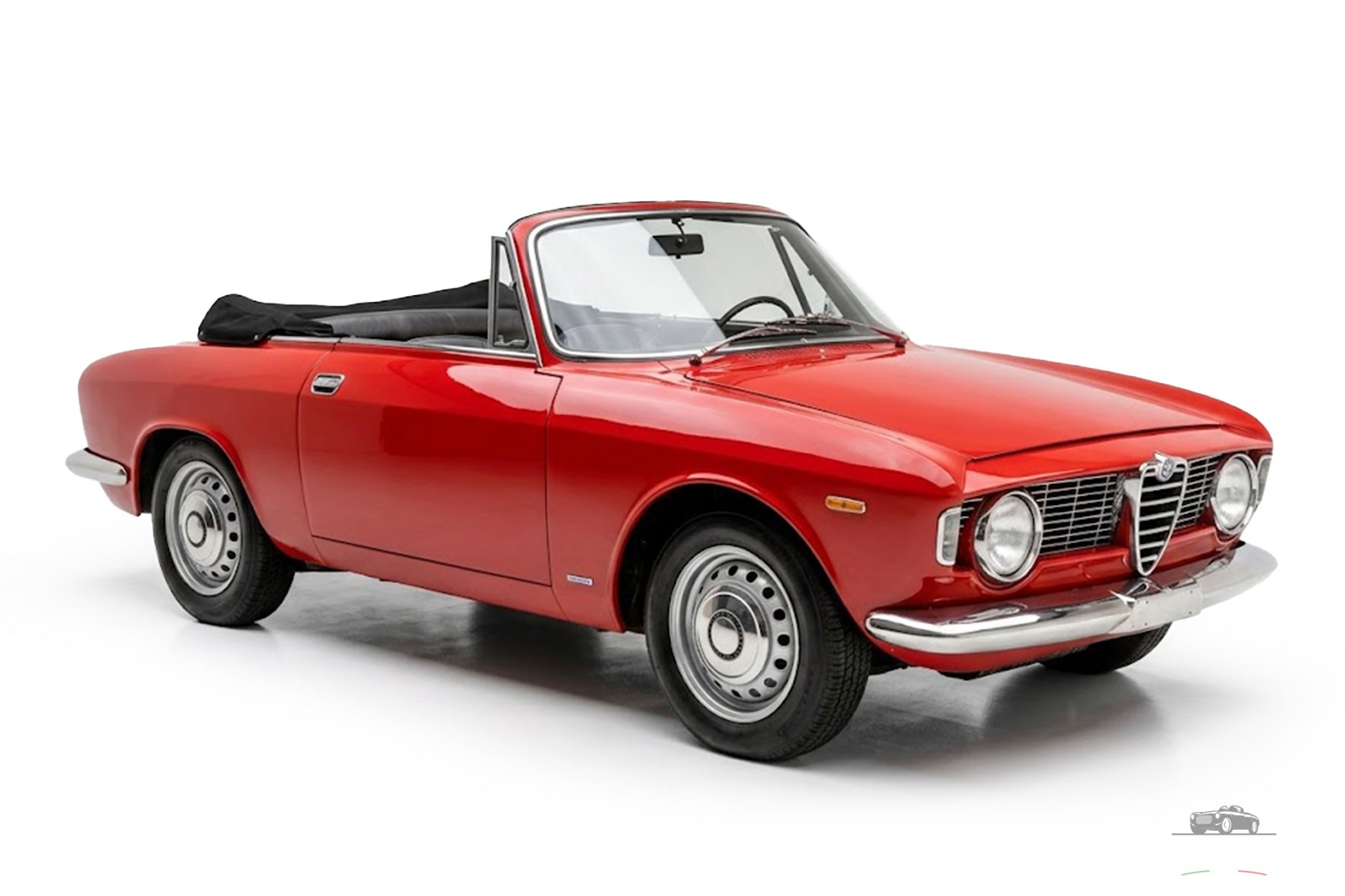
The Alfa Romeo Giulia GTC Bertone design study documents the early open-body development of the Giulia Sprint GT, whose coupé styling was created by Giorgetto Giugiaro at Bertone. It represents the design-proposal stage preceding the production Giulia GTC assembled by Carrozzeria Touring. The archival listing identifies a roofless GT maquette rather than a distinct series-production car; a chassis number and a securely dated public presentation for this particular study have not been established.
Development of an open Giulia GT
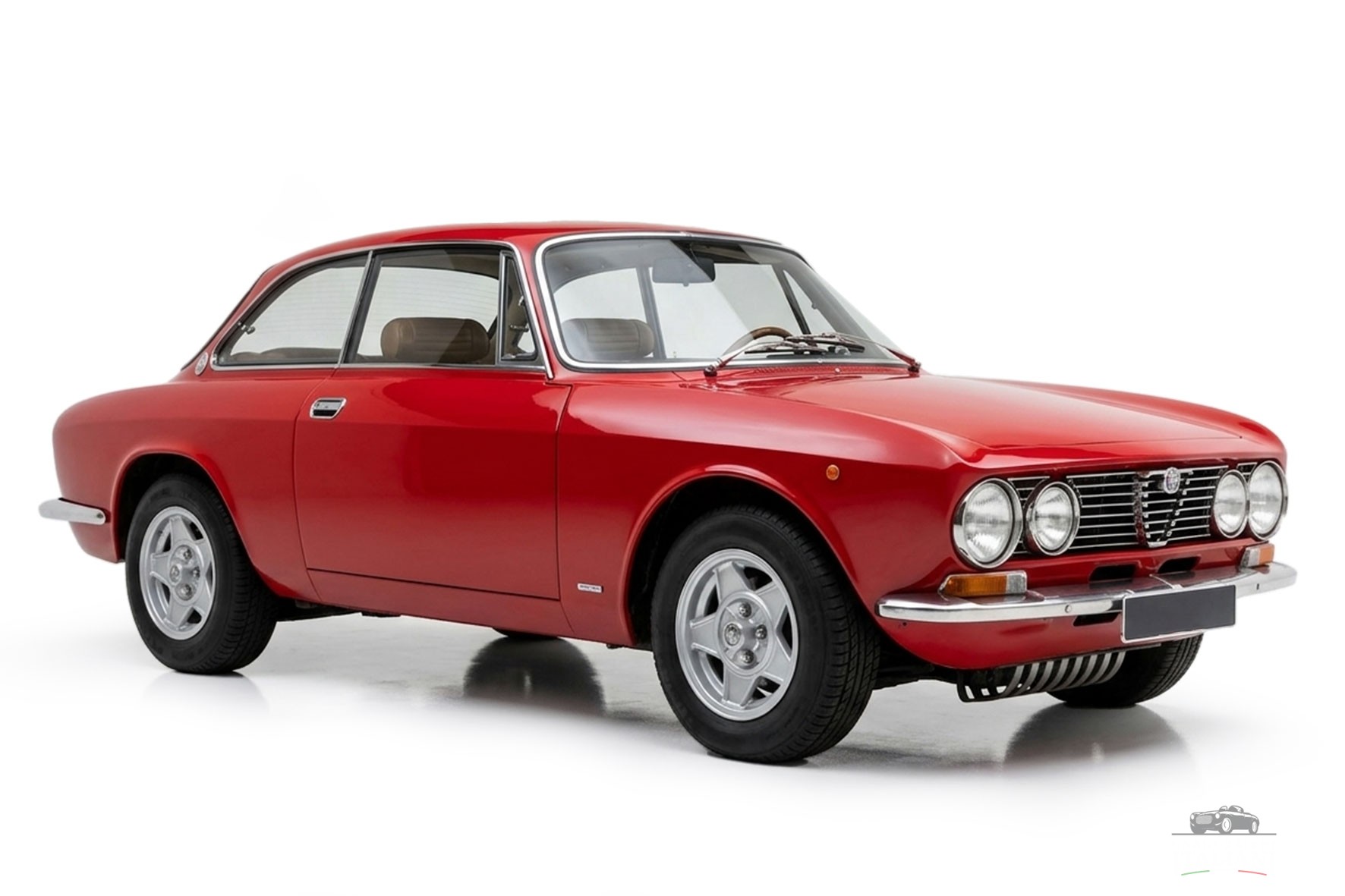
Alfa Romeo considered open versions of the Giulia as it prepared to replace the Giulietta-derived Spider. The Giulia Sprint GT, introduced in September 1963, provided the basic proportions for a new convertible. Its two-door body, compact wheelbase and characteristic front treatment were the starting points for studies of a roofless derivative. Specialist histories describe Bertone preparing an initial open-body proposal, with the coupé roof removed to demonstrate the principal silhouette.
Accounts differ on the dating and physical form of these preliminary studies. One reconstruction places early Bertone and Alfa Romeo Centro Stile prototype work before the Sprint GT’s public launch; other catalogues group the GTC development under 1964. The year 1964 is therefore retained as an approximate development reference for this entry, not as proof that the maquette was unveiled at a motor show in that year. Photographs and drawings require individual attribution before a particular design stage can be identified conclusively.
From Bertone’s proposal to Touring production
The basic open-car idea was developed into the Giulia GTC production cabriolet by Carrozzeria Touring, which undertook the conversion and assembly work. Removing the fixed roof of the Giulia GT altered the stiffness of the body shell. Touring introduced structural reinforcements and detail changes to make the convertible suitable for manufacture. The production vehicle was presented to the press at Monza in March 1965 and made its public debut at the Geneva Motor Show that month.
Bertone’s part in the design development must not be confused with Touring’s responsibility for assembling the production cars. Similarly, the approximately one thousand Giulia GTCs commonly cited in marque histories describe the production series, not the number of Bertone maquettes. No engine specification, completed-car chassis serial or sale price can be assigned specifically to this design-stage record from the evidence currently available.
Distinct prototype identities
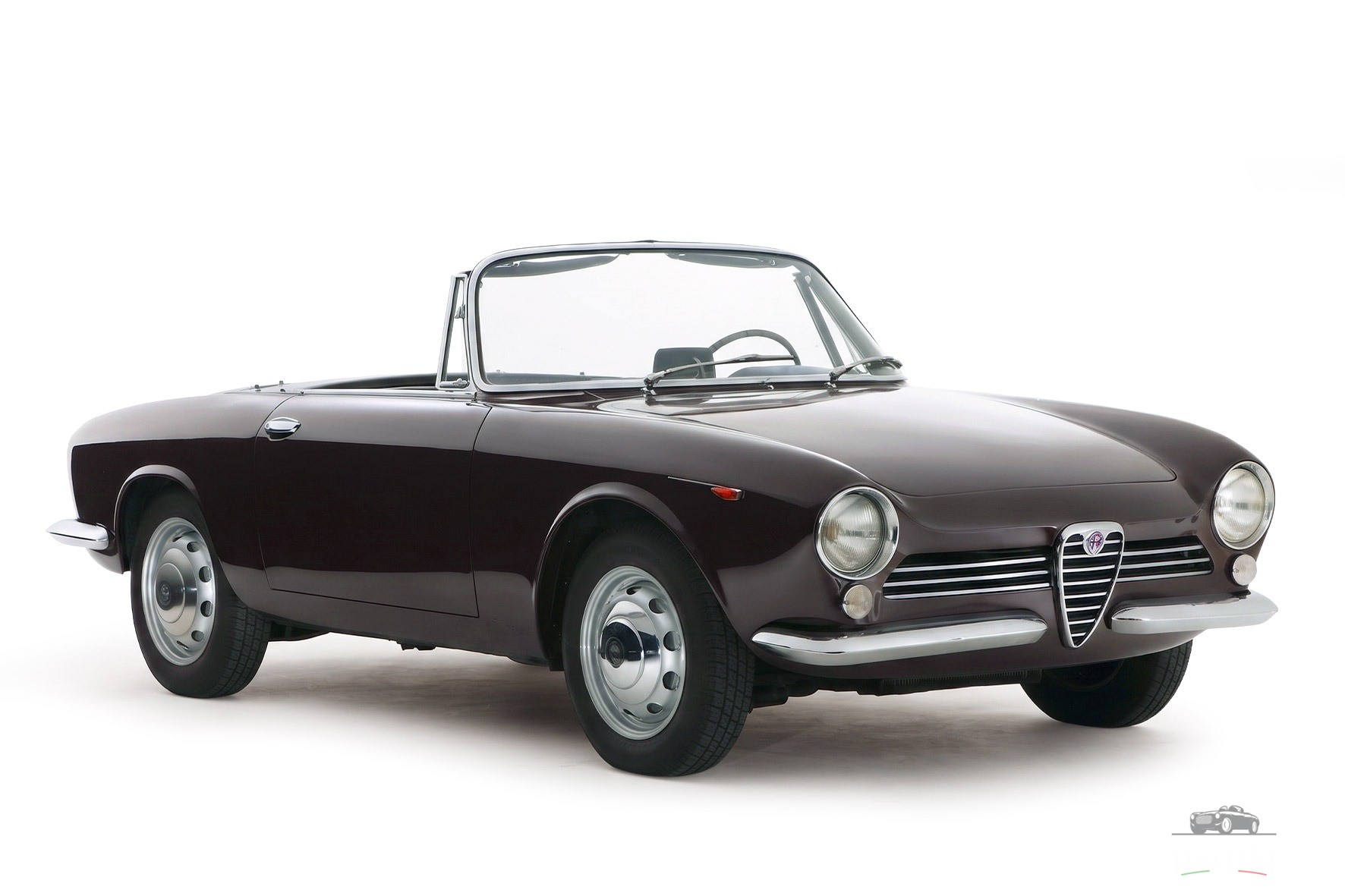
A separate Giulia GT Spider prototype, chassis 10503*00002, survives with modifications associated with Ernesto Cattoni and Alfa Romeo Centro Stile. Specialist research describes links between Bertone’s early open-car studies and the evolving prototype; the available documentation does not justify identifying every Bertone maquette photograph with that surviving chassis. The two database entries consequently retain separate identities pending a fully documented image-to-chassis comparison.
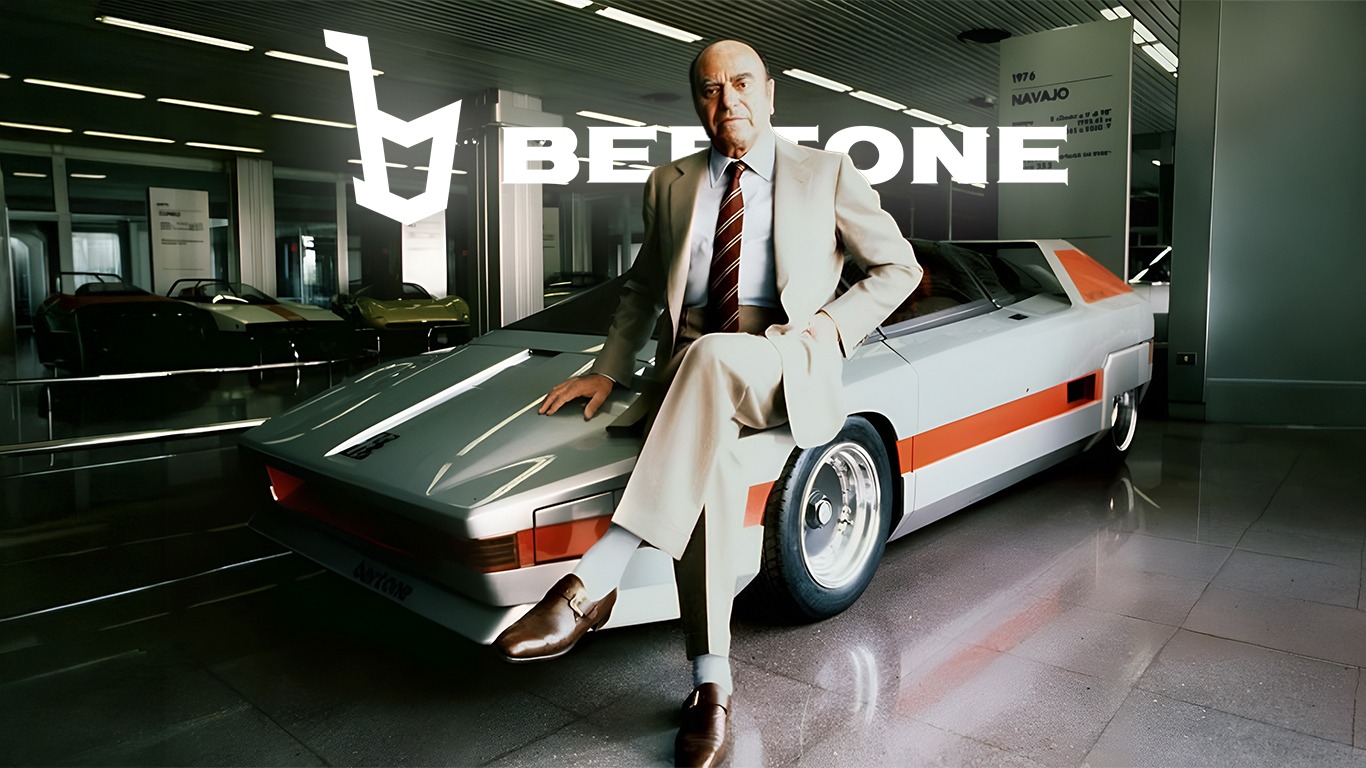
The concept also belongs to the period when Alfa Romeo was evaluating alternative routes to an open Giulia. Giorgetto Giugiaro‘s original Sprint GT design established the foundation, while the subsequent GTC production programme required Touring’s practical body engineering. The company’s broader design activity is documented in the history of Bertone.
Documentation and attribution
This entry describes a proposal rather than an identified surviving automobile. The reported single-study quantity is an archival classification, not an independently verified production total. The individual maquette’s dimensions, powertrain, construction materials, ownership history, public appearances and auction history remain unverified. Existing archival images are retained without assuming that all show the same physical prototype or later production GTC. Such distinctions are necessary when comparing early design studies, the Cattoni-developed Spider and Touring’s series-built convertible.





THE CONVERSATION
Comments 0