
I.DE.A Institute
Italian automotive design, engineering and prototype-development institute founded near Turin in 1978, active on experimental and series-vehicle programmes until 2019.
Explore record ↗
1995
THE VEHICLE AT A GLANCE
THE PEOPLE BEHIND THE CAR
Italian automotive design, engineering and prototype-development institute founded near Turin in 1978, active on experimental and series-vehicle programmes until 2019.
Explore record ↗01 / THE STORY
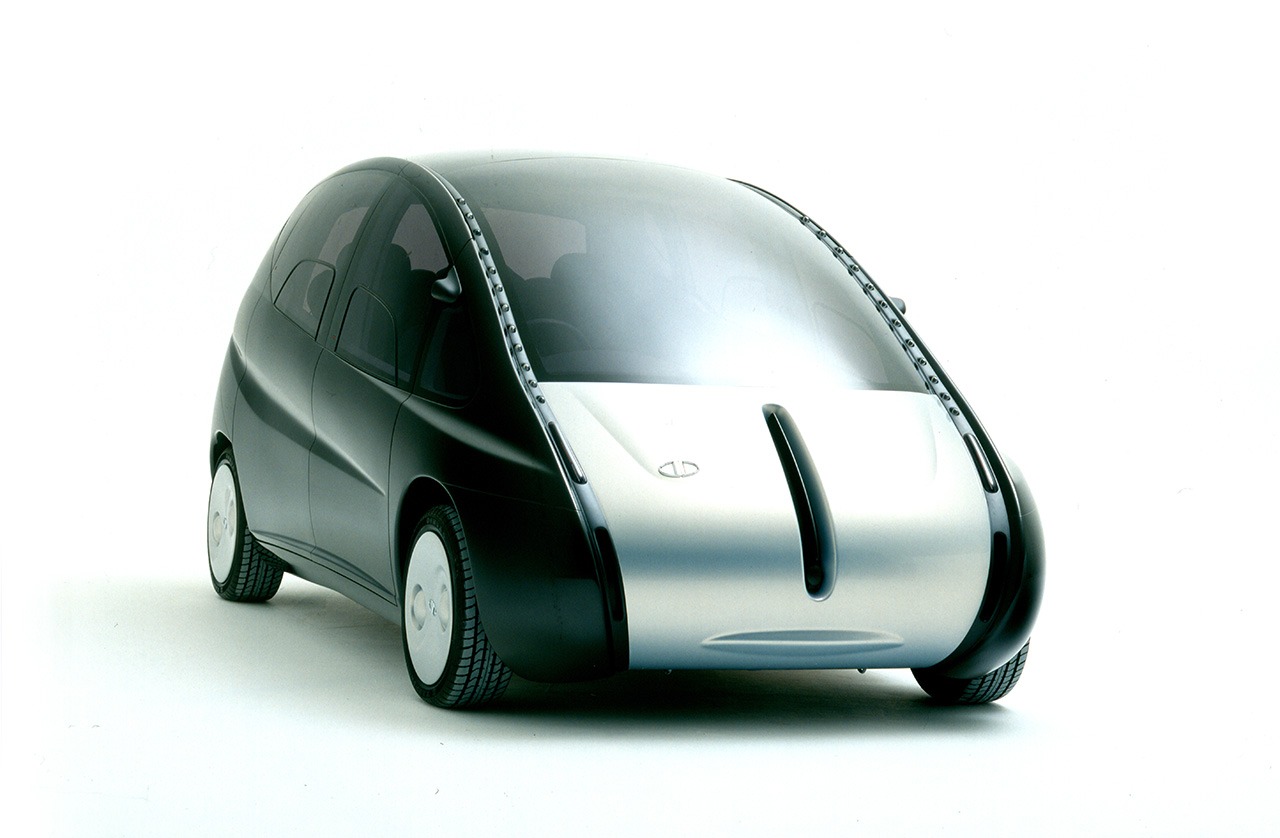
The Daewoo DACC-II was a concept vehicle developed in 1995 by the Italian design and engineering firm I.DE.A Institute for the South Korean automaker Daewoo. Presented at the Seoul Motor Show that same year, the DACC-II was an innovative design study that explored the potential of electric propulsion and urban mobility at a time when alternative energy solutions were gaining increased interest in the automotive industry. The DACC-II, whose acronym likely stands for “Daewoo Advanced Concept Car,” followed in the footsteps of previous experimental prototypes and served as a showcase for Daewoo’s forward-thinking vision. Although it was presented as a static model without a fully operational drivetrain, the DACC-II was designed to represent a future in which compact, aerodynamic electric vehicles could address urban transport challenges through energy efficiency and design practicality. The vehicle featured smooth, flowing lines typical of mid-1990s concept cars, with an emphasis on reducing aerodynamic drag. Its compact dimensions reflected a clear urban focus, aimed at maneuverability and efficiency in congested city environments. The proportions suggested a one-box configuration, maximizing interior space within a minimal external footprint. Inside, the DACC-II featured a futuristic and spacious cabin layout. Extensive use of glass panels and a high roofline created a light-filled interior environment with excellent visibility. The seating arrangement and overall spatial organization prioritized comfort and functionality for short-distance, low-emission driving. Although detailed technical specifications were not released, the DACC-II was clearly positioned as an electric vehicle concept. It aligned with broader global trends of the mid-1990s, when several automakers began investing in research and development for low-emission vehicles, anticipating future environmental regulations and shifts in consumer preferences. The Daewoo DACC-II did not progress beyond the concept stage and was not intended for production. However, it remains a significant example of Daewoo’s ambition during its most dynamic phase of global expansion. The involvement of I.DE.A Institute provided the concept with a refined, European-influenced design direction, making the DACC-II a notable project in the history of early electric vehicle exploration and international design collaboration.
02 / TECHNICAL IDENTITY
03 / DESIGN, BODY & SUPPLIERS
Coachbuilder / Design studio
Italian automotive design, engineering and prototype-development institute founded near Turin in 1978, active on experimental and series-vehicle programmes until 2019.
Explore record ↗Prototype builder
Italian automotive design, engineering and prototype-development institute founded near Turin in 1978, active on experimental and series-vehicle programmes until 2019.
Explore record ↗04 / CHRONOLOGY
07 / GALLERY
THE CONVERSATION
Comments 0