
I.DE.A Institute
Italian automotive design, engineering and prototype-development institute founded near Turin in 1978, active on experimental and series-vehicle programmes until 2019.
Explore record ↗
1995
THE VEHICLE AT A GLANCE
THE PEOPLE BEHIND THE CAR
Italian automotive design, engineering and prototype-development institute founded near Turin in 1978, active on experimental and series-vehicle programmes until 2019.
Explore record ↗01 / THE STORY
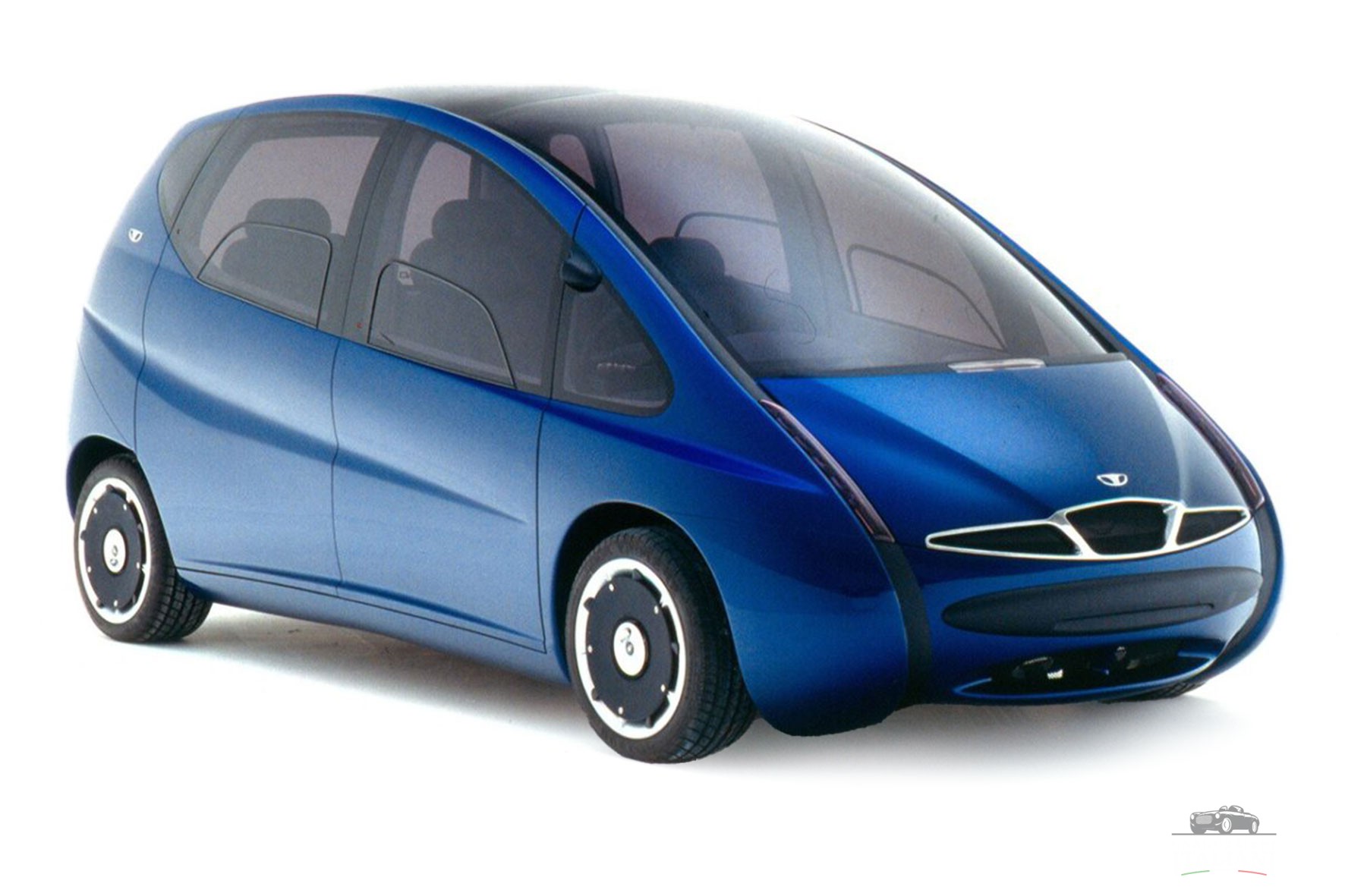
The Daewoo No.2 was a concept minivan unveiled in 1995 as part of a collaborative project between South Korean automaker Daewoo and the Italian design and engineering studio I.DE.A Institute. The vehicle was introduced at the 1995 Seoul Motor Show, serving as a showcase for forward-looking design and engineering ideas that Daewoo was exploring during the mid-1990s. Though it remained a concept, the No.2 demonstrated a number of innovative features that reflected contemporary trends in modularity, passenger safety, and powertrain versatility. One of the most distinctive features of the Daewoo No.2 was its interior layout. The minivan included two individual rear passenger seats placed in a raised position. This elevated seating arrangement not only offered rear occupants a better outward view but also enhanced safety in side impacts by positioning them above the main structural frame zones. Such a configuration illustrated an early effort to combine comfort and passive safety features in family-oriented vehicles. The concept was powered by an inline six-cylinder engine, developed as part of a broader family of aluminum-block powertrains designed for front-wheel-drive applications. This engine range included three- to six-cylinder units, with displacements varying from 0.8 to 2.5 liters. The modular design of the engine lineup suggested a flexible engineering strategy, allowing different power outputs and applications across multiple vehicle types. Visually, the No.2 followed a clean, aerodynamic design language typical of mid-1990s concept cars. Its compact dimensions and smooth lines were tailored to urban driving and practicality, fitting the needs of a modern minivan. The design hinted at Daewoo’s ambitions to move toward more global and sophisticated products by integrating Italian styling sensibilities with Korean engineering development. Although the Daewoo No.2 never entered production, it stands as an example of the company’s brief but ambitious exploration of advanced vehicle concepts during its period of international expansion. The involvement of I.DE.A Institute further emphasized the global collaboration behind the project and Daewoo’s interest in incorporating European design thinking into its product strategy.
02 / TECHNICAL IDENTITY
03 / DESIGN, BODY & SUPPLIERS
Coachbuilder / Design studio
Italian automotive design, engineering and prototype-development institute founded near Turin in 1978, active on experimental and series-vehicle programmes until 2019.
Explore record ↗Prototype builder
Italian automotive design, engineering and prototype-development institute founded near Turin in 1978, active on experimental and series-vehicle programmes until 2019.
Explore record ↗04 / CHRONOLOGY
07 / GALLERY
THE CONVERSATION
Comments 0