
Sports Cars
Founded in Modena by former racing driver Piero Drogo, Carrozzeria Sports Cars built specialist bodies for Ferrari and other Italian competition-car manufacturers during the 1960s.
Explore record ↗
1966Coachwork by Sports Cars
THE VEHICLE AT A GLANCE
THE PEOPLE BEHIND THE CAR
01 / THE STORY
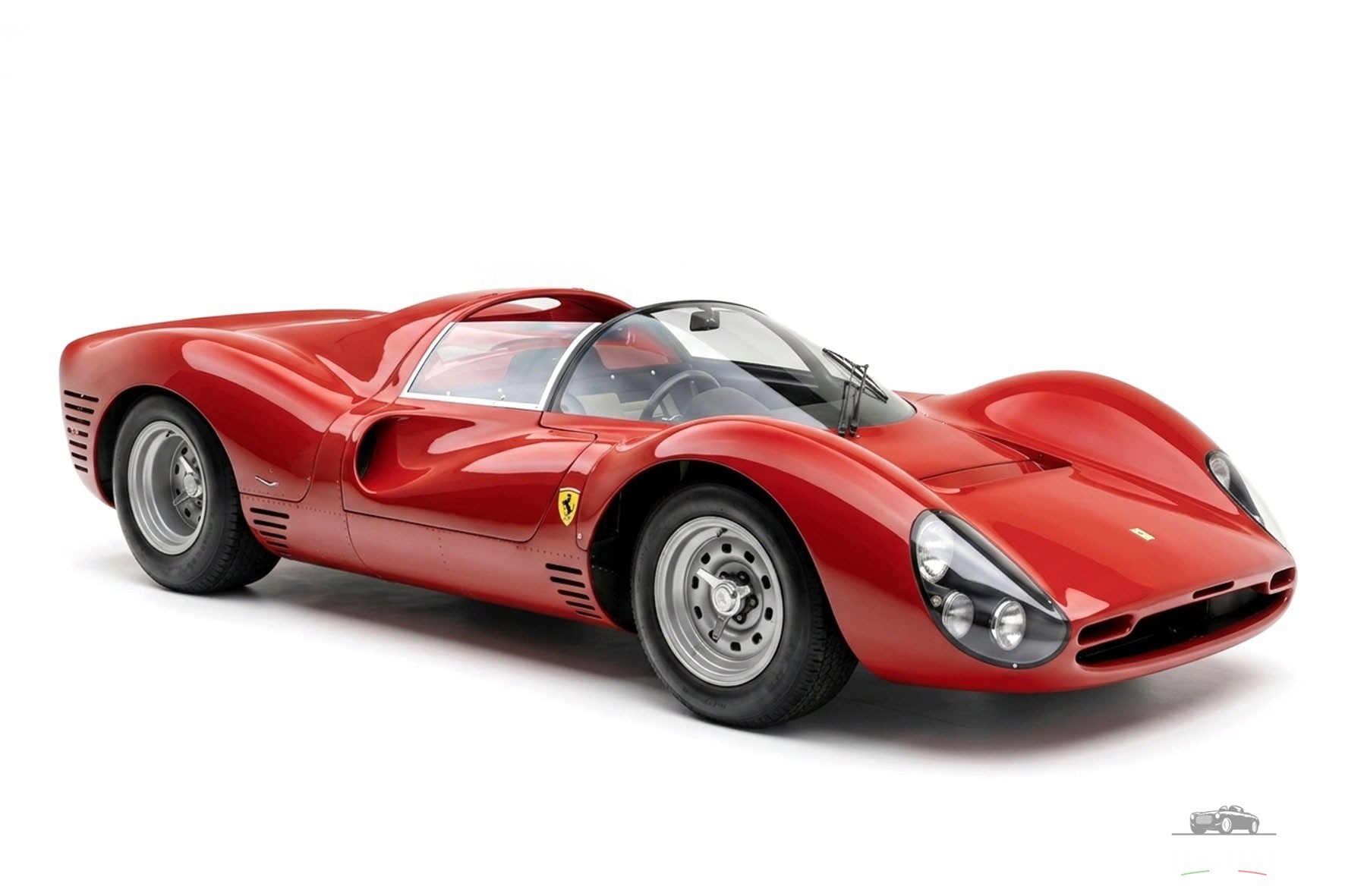
The Ferrari 330 P3 is an iconic race car that competed in the 1966 World Sportscar Championship, a season that saw Ferrari defending its title after winning the championship in 1965. With 20 races scheduled, Ferrari’s cars won 10, including four victories by the P2 model. Amid fierce competition, particularly from Ford’s GT40, Ferrari decided to develop a new model for the 1966 season: the Ferrari 330 P3, designed to compete directly with the dominant American machines. The design of the Ferrari 330 P3 was entrusted to Piero Drogo, a former driver and the founder of Carrozzeria Sports Cars in Modena. Known for his aerodynamic expertise, Drogo created a car that was both cutting-edge and perfectly adapted to the new FIA regulations, which included a minimum size requirement for the windshield. The 330 P3 was available in both coupe and spider versions, with the body crafted from lightweight aluminum, except for the fiberglass doors. The car was fitted with Campagnolo magnesium alloy wheels and a steel tube-frame chassis, riveted with aluminum panels to increase rigidity without sacrificing weight, a technique first used by Ferrari in the 158 F1. The Ferrari 330 P3 featured independent suspension with deformable quadrilateral arms and telescopic shock absorbers with coil springs. The heart of the car was a 4.0-liter V12 engine, developed from the 2.95-liter V12 designed by Gioachino Colombo, which had been used in earlier Ferrari models like the 250 Europa GT and the 250 Testarossa. The engine in the 330 P3 was equipped with Lucas fuel injection, a significant upgrade from the carburetors used in the previous model, the 330 P2. The engine produced 420 horsepower, a slight increase from the 410 horsepower of the P2. Three 330 P3 cars were built, with chassis numbers 0844, 0846, and 0848. The limited production of the car, as well as the use of foreign components, was partly due to the political and social conditions in Italy at the time, including labor strikes that affected Ferrari’s manufacturing capacity. Midway through the 1966 season, Ferrari withdrew the 330 P3 from competition due to these strikes, and the cars underwent several modifications by the end of the season, eventually taking on new names. The Ferrari 330 P3 stands as a remarkable chapter in Ferrari’s racing legacy, combining innovation, engineering excellence, and competitive spirit. Despite the limited number of units produced and its eventual withdrawal from the season, the Ferrari 330 P3 remains a symbol of Ferrari’s commitment to performance and racing success during a highly competitive era in motorsport history.
02 / TECHNICAL IDENTITY
03 / DESIGN, BODY & SUPPLIERS
Coachbuilder / Design studio
Founded in Modena by former racing driver Piero Drogo, Carrozzeria Sports Cars built specialist bodies for Ferrari and other Italian competition-car manufacturers during the 1960s.
Explore record ↗06 / CHASSIS REGISTER
07 / GALLERY
THE CONVERSATION
Comments 0