
Pavesi
Carrozzeria Pavesi was a Milan coachbuilding workshop associated with Ernesto Pavesi, particularly noted for converting standard vehicles into bespoke commercial vans.
Explore record ↗
1989Coachwork by Pavesi
THE VEHICLE AT A GLANCE
THE PEOPLE BEHIND THE CAR
Carrozzeria Pavesi was a Milan coachbuilding workshop associated with Ernesto Pavesi, particularly noted for converting standard vehicles into bespoke commercial vans.
Explore record ↗01 / THE STORY
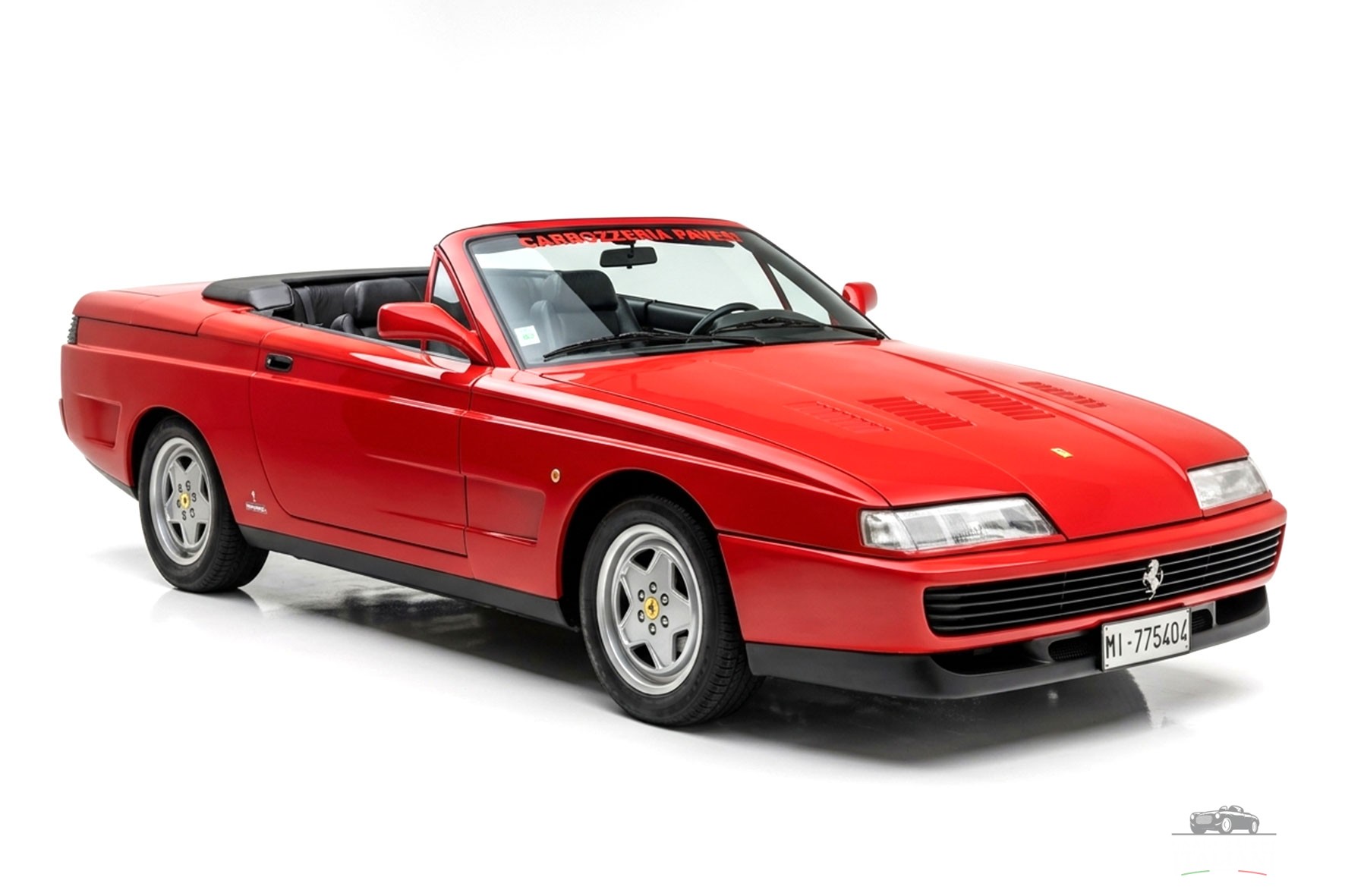
The Ferrari 412 Ventorosso, a unique experiment by Pavesi in Milan, elicits a polarizing response, particularly when scrutinizing its design choices. This one-of-a-kind specimen, born from the ambitious endeavor to convert a 1989 Ferrari 412 into a convertible, raises eyebrows with its unconventional aesthetics. In terms of exterior design, the wedge-shaped profile attempts to convey a modern sensibility. However, the execution seems to miss the mark, resulting in a peculiar and disjointed appearance. The departure from the classic Ferrari lines, particularly those inspired by Pininfarina‘s early 1970s project for the Ferrari 400, might be seen as more of a misstep than a bold evolution. The Ventorosso’s fully retractable top, a feature created by Pavesi himself, adds a layer of complexity that fails to seamlessly integrate into the overall design. Instead of enhancing the convertible allure, it introduces an awkward element that detracts from the car’s potential elegance. Looking at the interior, the decision to maintain the original 412’s seat upholstery and black leather trim may be considered a missed opportunity for a more comprehensive design overhaul. While paying homage to the Ferrari’s heritage is commendable, the Ventorosso’s interior lacks the innovation and refinement one might expect from a car with such bold exterior modifications. Critically, the Ventorosso’s bumpers, matching the body color, and the thin black band along the lower perimeter, attempt to play with visual dynamics. However, the execution falls short of achieving the desired harmonious effect. Instead, these design choices contribute to an overall discordant appearance, challenging the timeless elegance usually associated with the Ferrari brand. The high tail with rounded corners and the black stairway beneath might be interpreted as an effort to mitigate massiveness. Yet, it does little to rescue the Ventorosso from its peculiar aesthetic choices. The four circular lights and the four exhaust pipes, while showcasing the V12 power, do little to salvage the unconventional design language that defines the Ventorosso. In essence, the Ferrari 412 Ventorosso, though undoubtedly a bold and distinctive experiment, raises questions about the boundaries of design experimentation within the realm of iconic automotive brands. It stands as a testament to the risks and challenges inherent in deviating from established design norms, leaving enthusiasts to grapple with the outcome of this daring venture.
02 / TECHNICAL IDENTITY
03 / DESIGN, BODY & SUPPLIERS
Coachbuilder / Design studio
Carrozzeria Pavesi was a Milan coachbuilding workshop associated with Ernesto Pavesi, particularly noted for converting standard vehicles into bespoke commercial vans.
Explore record ↗07 / GALLERY
THE CONVERSATION
Comments 0