
Riva
Carrozzeria Riva evolved from nineteenth-century carriage construction to commercial vehicles, advertising bodies and sporting automobiles during the twentieth century.
Explore record ↗
1912Coachwork by Riva
THE VEHICLE AT A GLANCE
THE PEOPLE BEHIND THE CAR
Carrozzeria Riva evolved from nineteenth-century carriage construction to commercial vehicles, advertising bodies and sporting automobiles during the twentieth century.
Explore record ↗01 / THE STORY
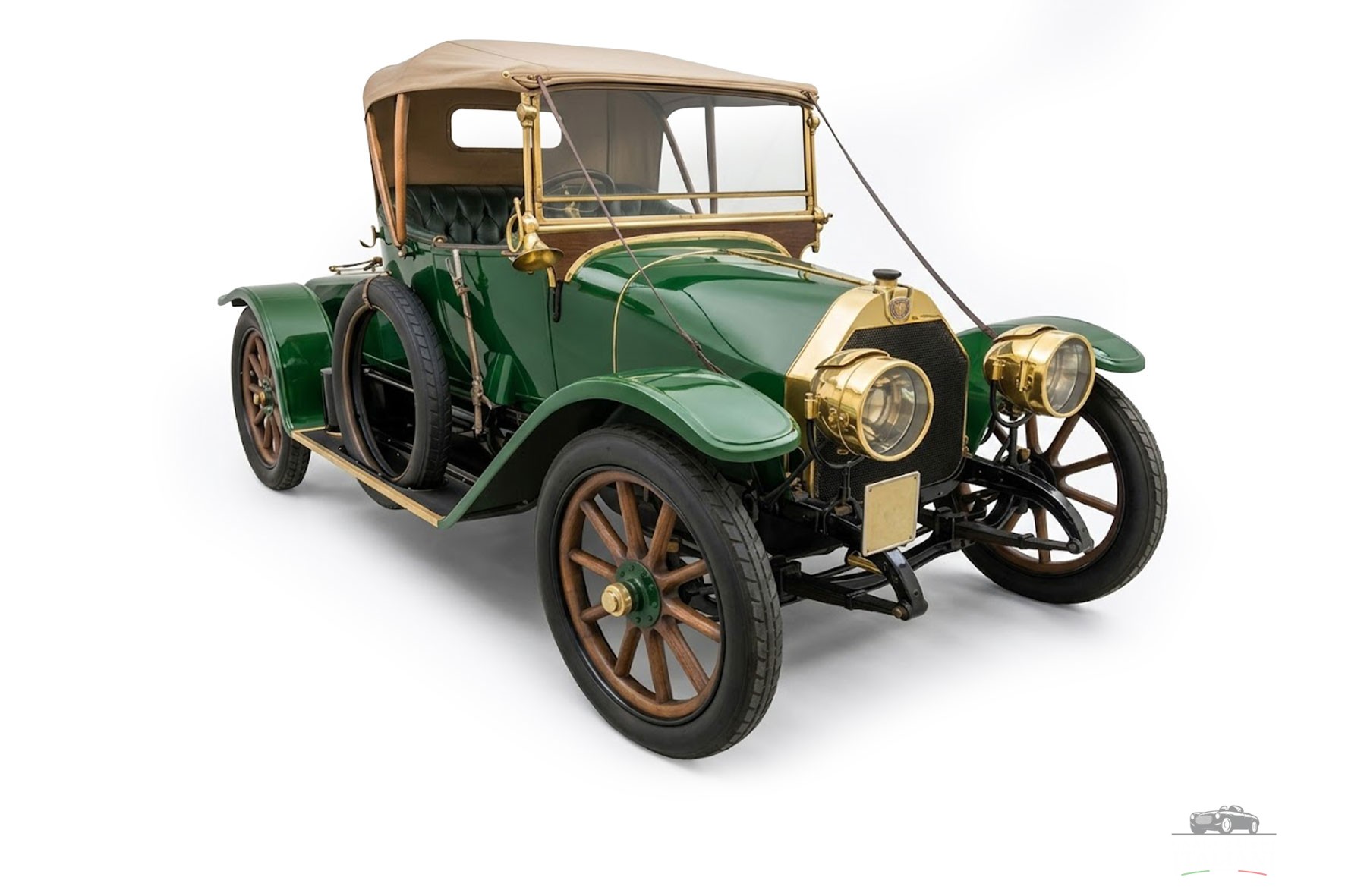
The Fiat Tipo 2 (1912) was coachbuilt by Riva. During this period, Fiat was expanding its production capabilities and diversifying its model range, which included the introduction of the Tipo series. The coachbuilding process for the Tipo 2 involved meticulous attention to proportions and construction methods, characterized by a lightweight body design that embraced the stylistic context of early 20th-century automotive aesthetics. The vehicle featured a streamlined silhouette that was both functional and visually appealing, integrating wood and metal in its construction to achieve the desired strength while maintaining a low overall weight.
Mechanically, the Tipo 2 was equipped with a powertrain that included a configuration documented as powered by a 4L inline-four engine. This engine was designed to deliver adequate performance for the era, while the vehicle’s chassis incorporated innovations that enhanced handling and ride comfort. The suspension system utilized leaf springs, which were common in vehicles of this vintage, contributing to the vehicle’s durability and usability on various road conditions.
In production terms, specific data regarding production units for the Tipo 2 is not available; however, surviving examples are recorded and can be found in private collections. This model was likely displayed at various automotive exhibitions during its production run, showcasing Fiat’s commitment to quality and craftsmanship in partnership with Riva. Documentation indicates that the combination of Fiat’s engineering and Riva’s coachbuilding resulted in a vehicle that reflected the technological advancements of its time.
Surviving examples are recorded in private collections and institutional archives, providing reference for researchers of postwar coachbuilding and contributing to the historical narrative surrounding early automotive design.
02 / TECHNICAL IDENTITY
03 / DESIGN, BODY & SUPPLIERS
Coachbuilder / Design studio
Carrozzeria Riva evolved from nineteenth-century carriage construction to commercial vehicles, advertising bodies and sporting automobiles during the twentieth century.
Explore record ↗07 / GALLERY
THE CONVERSATION
Comments 0