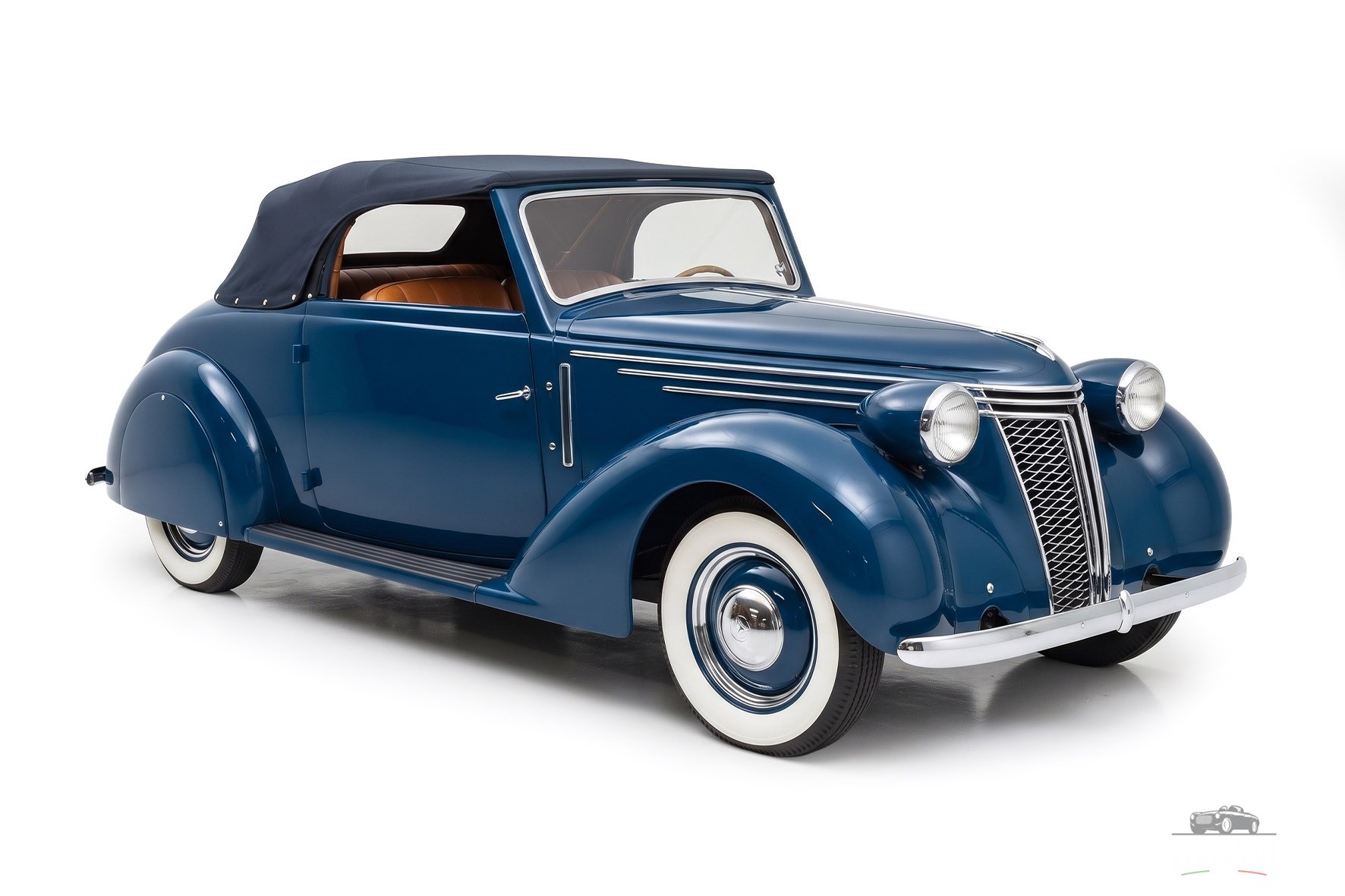
The Fiat 6C 1500 Cabriolet (1937) was coachbuilt by Bertone. During this period, Fiat was focused on producing vehicles that combined performance with aesthetic appeal, leading to collaborations with various coachbuilders to enhance their models. The 6C 1500 Cabriolet exemplifies this trend, showcasing a design that balances form and functionality, which was a hallmark of Bertone’s coachbuilding philosophy.
The coachbuilding process for the Fiat 6C 1500 Cabriolet involved meticulous attention to proportions and construction methods that emphasized both durability and style. The vehicle featured a streamlined silhouette that was characteristic of the late 1930s design movement, integrating functional elements with artistic flair. The Cabriolet’s body was constructed using steel and aluminum, ensuring a lightweight yet robust structure suitable for open-top driving.
Mechanically, the Fiat 6C 1500 Cabriolet was equipped with a powerful inline-six engine, providing adequate performance for its class. The chassis was designed with a focus on stability and handling, featuring a solid rear axle and independent front suspension. This configuration allowed for a smooth driving experience, making it a popular choice among enthusiasts of the era.
Production data for the Fiat 6C 1500 Cabriolet indicates that it was part of a limited series, with specific chassis numbers documented to track individual vehicles. Surviving examples are recorded in private collections and institutional archives, providing reference for researchers of postwar coachbuilding. The Fiat 1500 Cabriolet Bertone remains a significant model in the history of automotive design, illustrating the collaborative efforts between manufacturers and coachbuilders during a transformative period in the automotive industry.


THE CONVERSATION
Comments 0