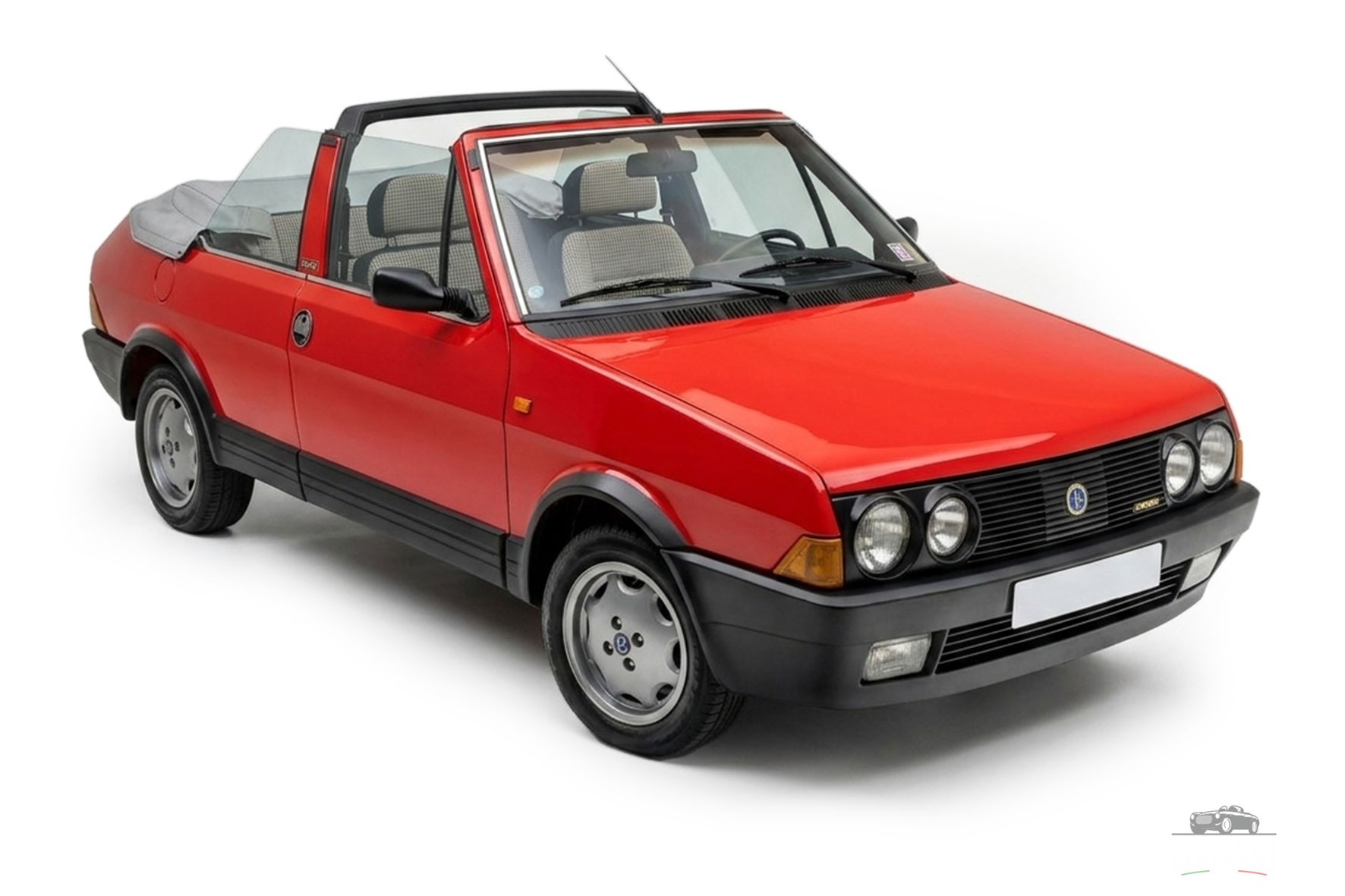
The Fiat Ritmo Supercabrio 100 S was introduced in 1985 as the higher-performance version of the open-top Ritmo built by Bertone. It developed the established Ritmo Cabrio programme rather than representing a separate Fiat platform. The convertible retained the practical proportions of the compact Ritmo while receiving the more powerful engine and a revised sporting appearance. Period Supercabrio literature survives, including an Italian eight-page brochure printed in January 1985, although its full text still requires examination.
The principal mechanical distinction was a 1,585 cc Fiat twin-cam four-cylinder engine driving the front wheels through a five-speed manual gearbox. Italian specialist accounts quote 105 metric horsepower (77 kW), whereas another catalogue records 101 CV (74 kW), and a French-market leaflet is described as specifying 100 ch. These figures should not be conflated without checking the relevant market and homologation documents. Published maximum speeds likewise range from approximately 170 to 175 km/h. The car’s mechanical identity therefore rests more securely on its 1.6-litre twin-cam specification than on a single unqualified power or performance figure.
The Supercabrio was distinguished from earlier versions by a deeper front bumper incorporating fog lamps, contrasting black lower-body mouldings and wheel-arch extensions. Bertone offered the model in single-colour and contrasting two-tone finishes, preserving the folding fabric roof and open four-seat concept of the Ritmo Cabrio family. Retrospective accounts associate the Supercabrio programme with Marc Deschamps, who worked at Bertone during this period; the precise authorship of individual styling details remains subject to examination of original drawings and design records.
The 100 S belongs to the final phase of Bertone’s Ritmo convertible programme. Sources differ over whether the version continued until 1987 or 1988, and a production total specifically attributable to the Supercabrio has not been established from factory records. Its relationship to the later Ritmo Cabrio Leader should be understood as a connection within the wider Bertone convertible family, not evidence that the two specifications or individual cars were identical.


THE CONVERSATION
Comments 0