Leonardo Fioravanti
Leonardo Fioravanti is an Italian automotive designer renowned for his work at Pininfarina, where he contributed to the styling of landmark Ferrari road cars.
Explore record ↗
2002
THE VEHICLE AT A GLANCE
THE PEOPLE BEHIND THE CAR
Leonardo Fioravanti is an Italian automotive designer renowned for his work at Pininfarina, where he contributed to the styling of landmark Ferrari road cars.
Explore record ↗Fioravanti is an Italian automotive design and engineering studio that expanded from architectural work into transport and industrial design in the early 1990s.
Explore record ↗01 / THE STORY
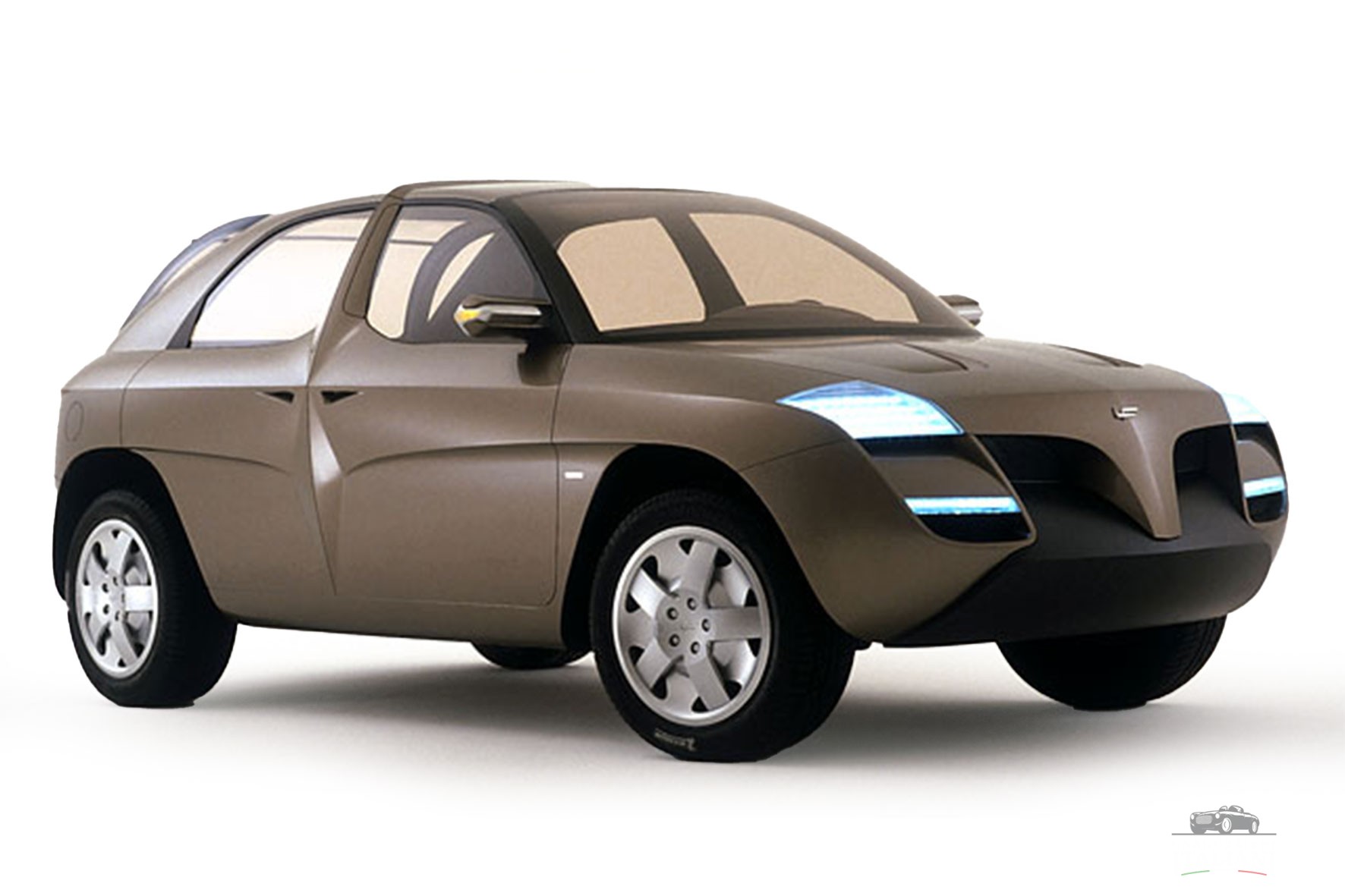
The Fioravanti Yak represents an alternative search for a more typical aesthetic based on new concepts, designed for a powerful V8 and all-wheel drive. Structurally, it is based on a strong transverse ring element, a kind of central roll cage, which is important for the safety of cars that often do off-roading as well. This solution gives it a special aesthetic connotation that allows it to integrate one of Fioravanti‘s new patented functions, that of side wipers. No one to date has proposed side visibility improvements in rainy conditions-we know how important rear three-quarter visibility is in many city and out-of-town driving conditions. The front end, features numerous air inlets and outlets, which are necessary for vehicles that can move even at low speeds and in severe conditions, and most importantly, an innovative headlight and light complex. All functions are integrated in a system of specific units consisting of new-generation, high-efficiency LEDs with special lenses, the set of which can be managed with software to compose light beams differently. For example, lengthening the high-beam headlights in fast highway straights, widening the low beams at low speed in city intersections, orienting low beams and/or high beams when cornering in the mountains. It is also possible to arrange the various functions differently according to the legislation of different countries. Given the miniaturization of the individual elements, Fioravanti’s patented system is particularly thin, almost a “bark of light,” and therefore adaptable to surfaces of any shape with aerodynamic and aesthetic advantages. The side is strongly ribbed and equipped with doors that open like closets for better accessibility to the rear seats. The center pillar incorporates the wiper function for the four doors. The rear features a large transparent bubble, which, due to its shape, allows large volumes to be carried and provides panoramic visibility. It is divided into several sections that can slide like a sunroof and tuck into the lower area of the tailgate, transforming the car into a “pickup truck.” A special traversing wiper allows for an integral cleaning of the rear window, increasing rear visibility. The interior is also full of innovative cues. The cabin is divided functionally and aesthetically into two zones: the front dedicated to even challenging off-road driving and the rear designed for comfortable and pleasant relaxation that reevaluates the condition of transported. The dashboard is marked by maximum simplicity of controls, some of them vocal, and information. Two screens, protected by a transparent bubble, communicate to the driver the data necessary for driving, vehicle status, maintenance and navigation, and to the passenger they provide connection to the Internet and television programs. These “infotainement” alternatives are selected by a “mouse” placed in an ergonomic position. The rear-view mirror incorporates telepass and electronic vehicle registration functions. Air conditioning is by separate areas for each occupant and through large air passage surfaces so without traditional vents. Large compartments for different types of objects are made in the door panels and in the space between the front seats. Seats that make the wearing of belts semi-automatic. A sensor in the cushion after a few moments from the seat sets in motion special armrests that place the upper parts of the 4-branch belts on the shoulders, and in the same armrests are inserted the lower parts of the same belts: all that remains is to fasten the central buckle normally. The system deposited by Fioravanti, is comfortable does not force contortions, is safer in side impacts and rollovers, and the armrests provide additional protection. The seats are equipped with seat-specific speakers. The rear area is shaped like a large three-seat sofa that extends over the doors softly merging with storage pockets; removable drawers are built in under the cushions. The headrests are retractable for better visibility. Housed in the same roll-bar structure are various lighting, climate control and “infotainement” devices for rear passengers for greater travel comfort. The trunk compartment is embellished with wood lining suitable for carrying both delicate luggage and rougher items.
02 / TECHNICAL IDENTITY
03 / DESIGN, BODY & SUPPLIERS
Coachbuilder / Design studio
Fioravanti is an Italian automotive design and engineering studio that expanded from architectural work into transport and industrial design in the early 1990s.
Explore record ↗Designer
Leonardo Fioravanti is an Italian automotive designer renowned for his work at Pininfarina, where he contributed to the styling of landmark Ferrari road cars.
Explore record ↗04 / CHRONOLOGY
07 / GALLERY

THE CONVERSATION
Comments 0