
Frua
Frua was a Turin coachbuilder founded in 1944 by Pietro Frua; its later design studio styled Maserati, Renault, Glas, AC and other European automobiles.
Explore record ↗
1963Coachwork by Frua
THE VEHICLE AT A GLANCE
THE PEOPLE BEHIND THE CAR
Frua was a Turin coachbuilder founded in 1944 by Pietro Frua; its later design studio styled Maserati, Renault, Glas, AC and other European automobiles.
Explore record ↗Pietro Frua was an Italian automotive designer and coachbuilder who established his own Turin-based company and became known for elegant, individually styled bodies for European manufacturers.
Explore record ↗01 / THE STORY
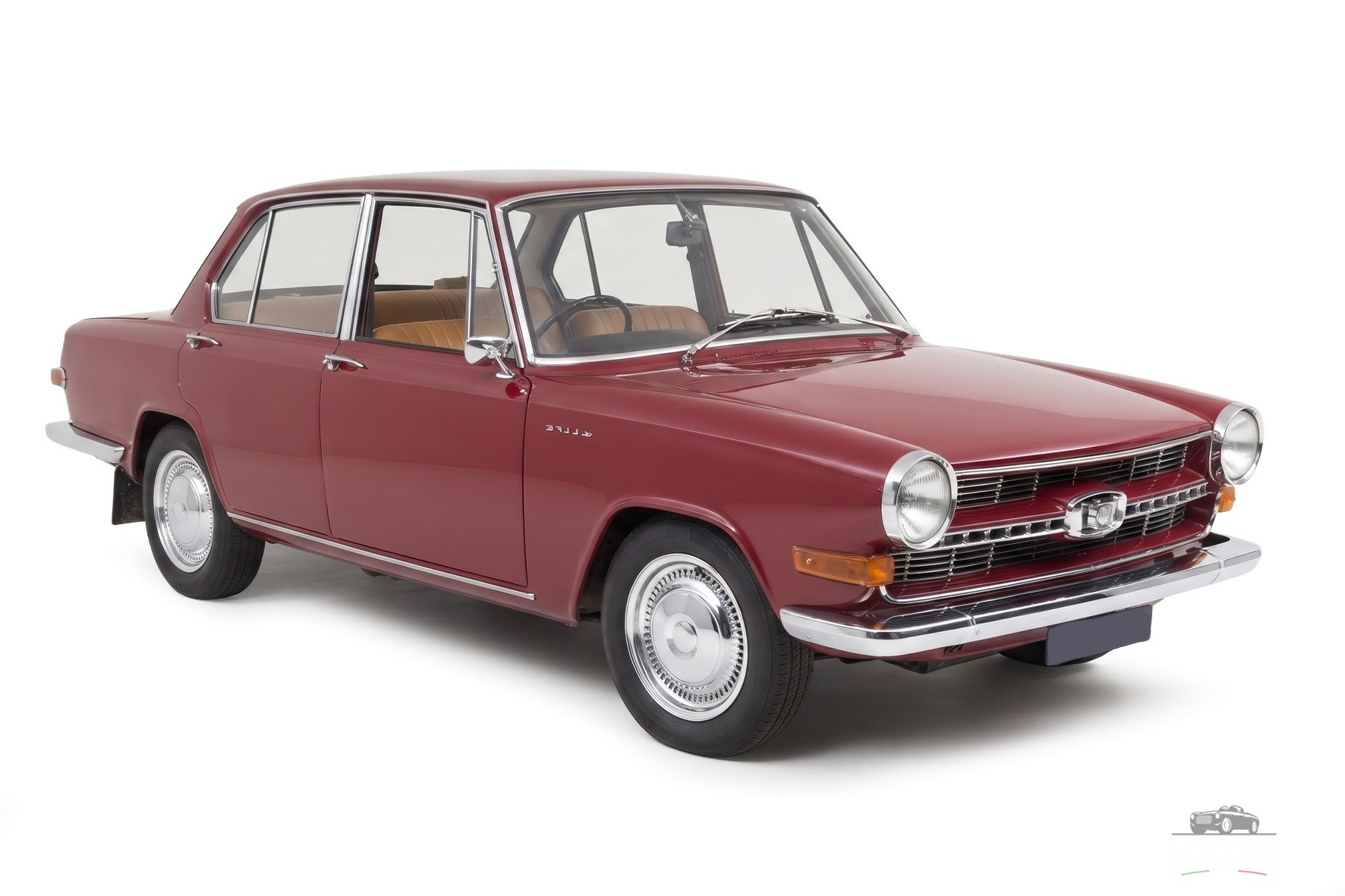
The Glas 1700 was a four-door saloon that marked a significant shift for Hans Glas GmbH, transitioning the company from its origins in compact, utilitarian vehicles like the Goggomobil to the more competitive mid-range and high-end segments. Produced in Dingolfing between August 1964 and December 1967, the Glas 1700 showcased the manufacturer’s ambition to rival established brands like BMW. However, limited financial resources ultimately constrained its success, and the model’s production ended following BMW’s acquisition of Glas. The Glas 1700 originated as the Glas 1500 prototype, unveiled in September 1963 at the Frankfurt Motor Show. Its design, attributed to the celebrated Italian stylist Pietro Frua, epitomized the clean, elegant lines of early 1960s automotive styling. The prototype was equipped with a 1.5-liter engine derived from the 1.3-liter unit of the Glas GT sports car, but it was deemed underpowered for a saloon. Consequently, Glas opted for a more robust 1.7-liter engine for the production version. This engine produced 80 horsepower, allowing for a top speed of 150155 km/h, providing competitive performance for its class. In September 1965, Glas introduced the 1700 TS, a sportier variant with an upgraded engine delivering 100 horsepower. This improvement boosted the car’s top speed to 170 km/h and reduced acceleration times, with 0100 km/h achieved in 13.5 seconds compared to 16 seconds for the standard model. These enhancements made the 1700 TS an attractive option for buyers seeking a balance between practicality and spirited performance. Despite its technical merits and refined design, the Glas 1700 faced significant challenges. Limited production capacity and financial difficulties hindered Glas’s ability to compete effectively in the marketplace. In 1967, the struggling company was acquired by BMW, which saw little value in continuing production of the 1700, as it competed directly with BMW’s own 1800 model. Production ceased in December 1967, and Glas’s legacy in the automotive world became intertwined with BMW’s expansion. The Glas 1700 remains a noteworthy example of mid-20th-century German automotive innovation, reflecting a period when smaller manufacturers sought to challenge industry giants with bold designs and engineering.
02 / TECHNICAL IDENTITY
03 / DESIGN, BODY & SUPPLIERS
Coachbuilder / Design studio
Frua was a Turin coachbuilder founded in 1944 by Pietro Frua; its later design studio styled Maserati, Renault, Glas, AC and other European automobiles.
Explore record ↗Designer
Pietro Frua was an Italian automotive designer and coachbuilder who established his own Turin-based company and became known for elegant, individually styled bodies for European manufacturers.
Explore record ↗04 / CHRONOLOGY
07 / GALLERY
08 / PERIOD ARCHIVE
Become a Pro member to see the full details in this section.
Membership is not available yet.
View membership options
THE CONVERSATION
Comments 0