
Sala
Cesare Sala was a Milanese carriage and automobile coachbuilder whose work ranged from nineteenth-century aristocratic coaches to early custom motorcar bodies.
Explore record ↗
1925Coachwork by Sala
THE VEHICLE AT A GLANCE
THE PEOPLE BEHIND THE CAR
Cesare Sala was a Milanese carriage and automobile coachbuilder whose work ranged from nineteenth-century aristocratic coaches to early custom motorcar bodies.
Explore record ↗01 / THE STORY
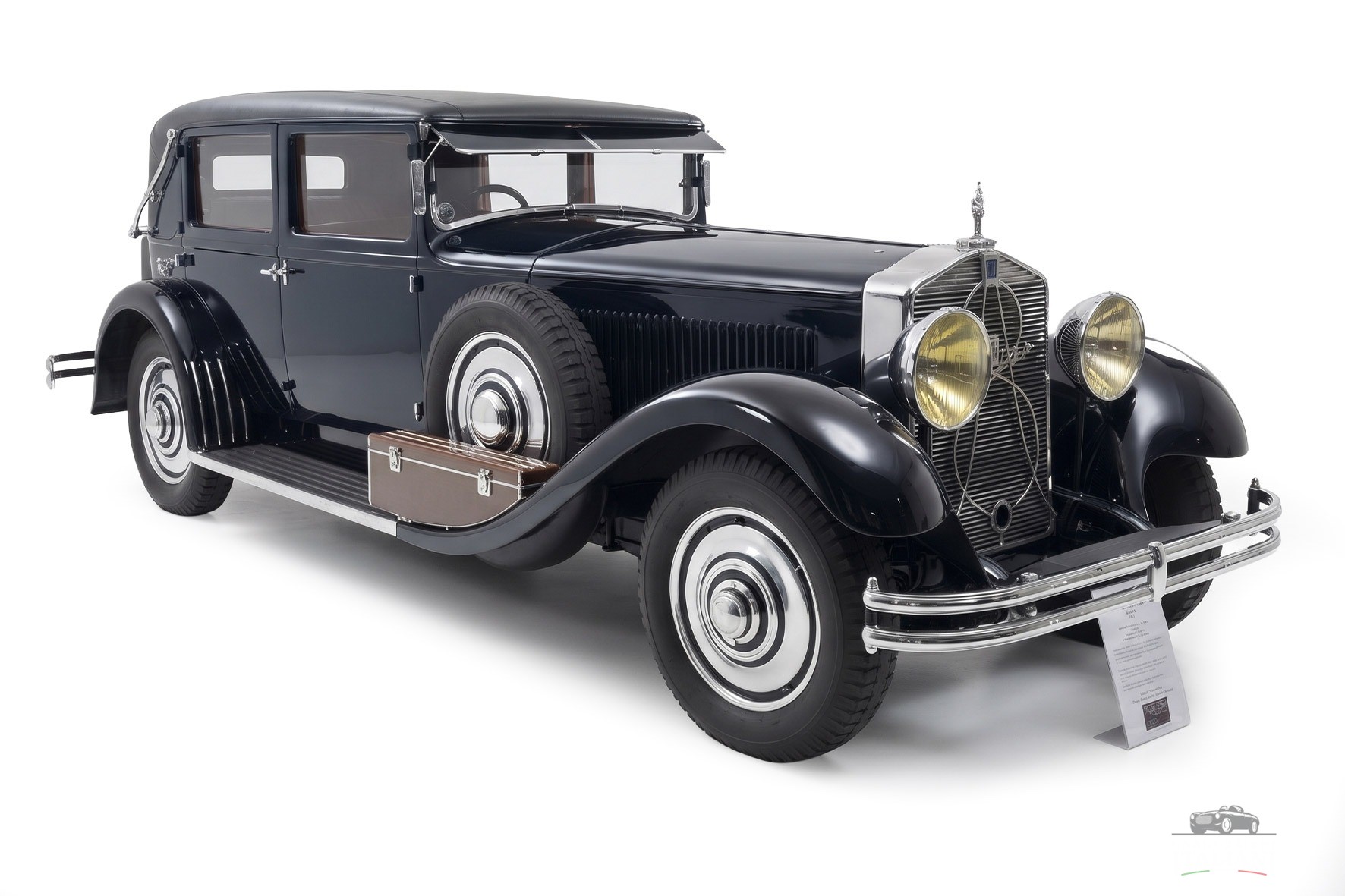
The Isotta Fraschini Tipo 8A, bodied by Carrozzeria Cesare Sala in 1925, represents an early example of bespoke luxury coachbuilding applied to Isotta Fraschini’s flagship chassis. Introduced in 1924, the Tipo 8A was conceived as a top-tier platform for elite clientele and was supplied exclusively as a bare rolling chassis to be completed by specialist coachbuilders. Cesare Sala, based in Milan, was among the firms most closely associated with the marque during this period. The coachwork for this example was designed by Oliviero Bergomi, who served as Cesare Sala’s in-house designer. Bergomi’s approach emphasized formal balance, clear volumes, and restrained decoration, consistent with mid-1920s luxury aesthetics. The body followed contemporary formal conventions, with careful attention to proportion between bonnet, passenger compartment, and rear section. Construction employed traditional coachbuilding techniques, using a wooden frame clad in hand-formed metal panels. Materials and finishes were selected to ensure durability while maintaining a refined appearance appropriate to the car’s status. Mechanically, the Tipo 8A was powered by a 7.3-litre inline eight-cylinder engine with overhead valves and an aluminium crankcase. The engine was designed for smoothness and flexibility rather than outright speed, producing approximately 115 horsepower in early specifications. Power was delivered through a three-speed manual gearbox to a live rear axle. The chassis featured semi-elliptic leaf springs front and rear and four-wheel servo-assisted mechanical drum brakes, providing stable braking performance and a comfortable ride for long-distance touring. The chassis layout and suspension tuning were intended to support large, formal bodies while maintaining composure at sustained cruising speeds. This configuration made the Tipo 8A particularly suitable for coachbuilders such as Sala, whose work focused on dignified luxury rather than sporting expression. Production of the Tipo 8A extended until 1931, with approximately 950 chassis built in total, each individually bodied. Sala-bodied examples from the mid-1920s were produced in small numbers and varied significantly according to client specification.
02 / TECHNICAL IDENTITY
03 / DESIGN, BODY & SUPPLIERS
Coachbuilder / Design studio
Cesare Sala was a Milanese carriage and automobile coachbuilder whose work ranged from nineteenth-century aristocratic coaches to early custom motorcar bodies.
Explore record ↗Attributed designer
07 / GALLERY
THE CONVERSATION
Comments 0