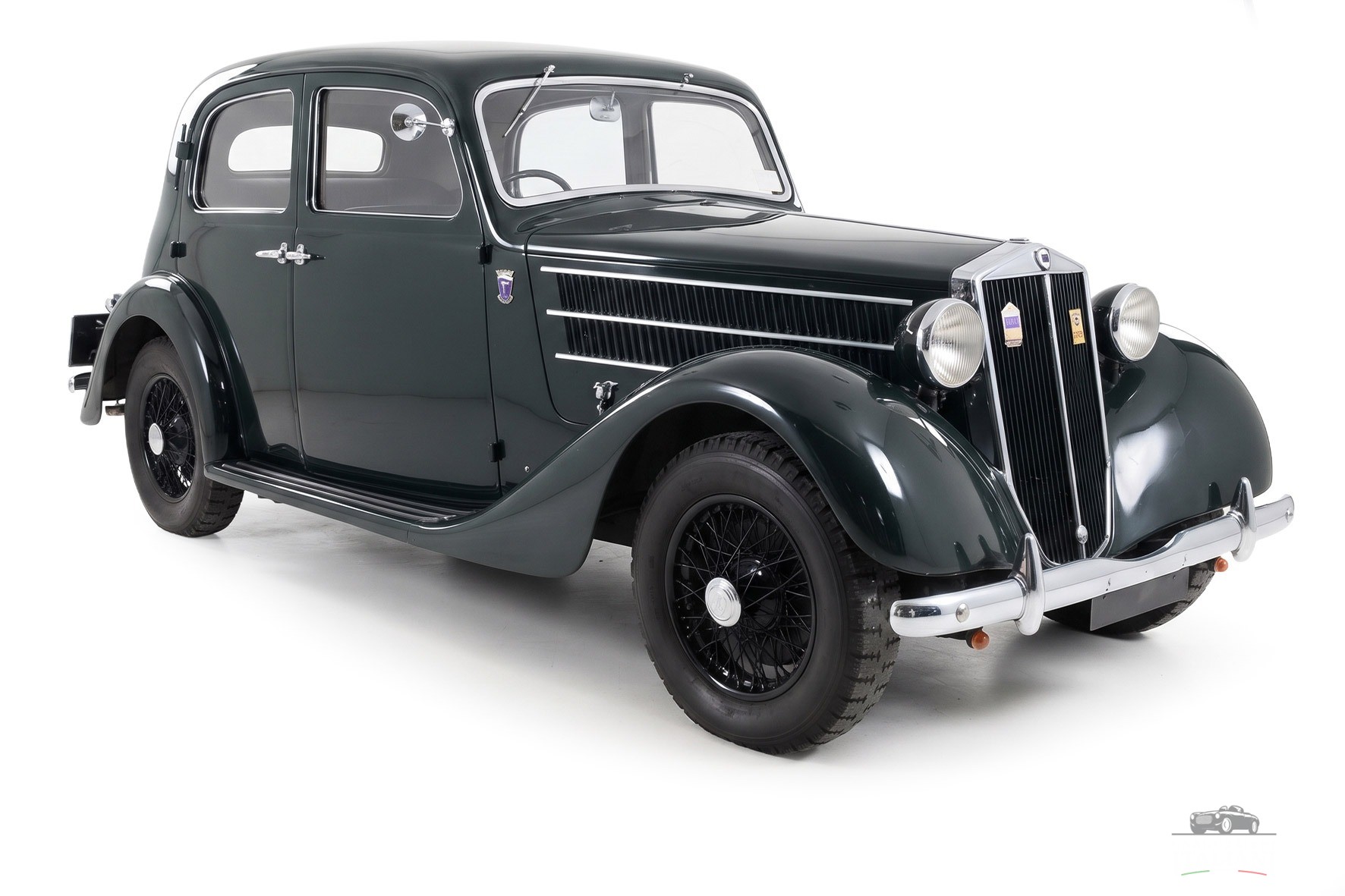
The Lancia Augusta (1935) was coachbuilt by Stabilimenti Farina and designed by Mario Revelli di Beaumont. The Lancia Augusta was developed during a period marked by significant advancements in automotive engineering and design, reflecting the evolving tastes and technological capabilities of the era. The coachbuilding process employed by Stabilimenti Farina involved meticulous attention to proportions and construction methods, resulting in a vehicle that balanced aesthetic appeal with functional design. The bodywork featured smooth lines and an elegant silhouette, characteristic of the craftsmanship associated with coachbuilders of the time.
Mechanically, the Lancia Augusta was equipped with a robust chassis that facilitated a comfortable ride and stable handling. Documentation indicates that the vehicle was powered by an inline-four engine, which contributed to its performance and efficiency. The suspension system was designed to enhance ride quality, making the Augusta suitable for both urban and rural driving conditions. In production terms, the Augusta was a response to market demands for stylish yet practical vehicles, and its design reflected contemporary trends in automotive aesthetics.
Surviving examples are recorded, highlighting the enduring legacy of the Lancia Augusta within the context of pre-war automotive history. The vehicle has been exhibited at various automotive events and is documented in private collections and institutional archives, providing reference for researchers of postwar coachbuilding. The Lancia Augusta Stabilimenti Farina remains an important subject of study for automotive historians, illustrating the collaboration between manufacturers and designers in the pursuit of innovation and excellence in vehicle design.



THE CONVERSATION
Comments 0