
Sala
Cesare Sala was a Milanese carriage and automobile coachbuilder whose work ranged from nineteenth-century aristocratic coaches to early custom motorcar bodies.
Explore record ↗
1931Coachwork by Sala
THE VEHICLE AT A GLANCE
THE PEOPLE BEHIND THE CAR
Cesare Sala was a Milanese carriage and automobile coachbuilder whose work ranged from nineteenth-century aristocratic coaches to early custom motorcar bodies.
Explore record ↗01 / THE STORY
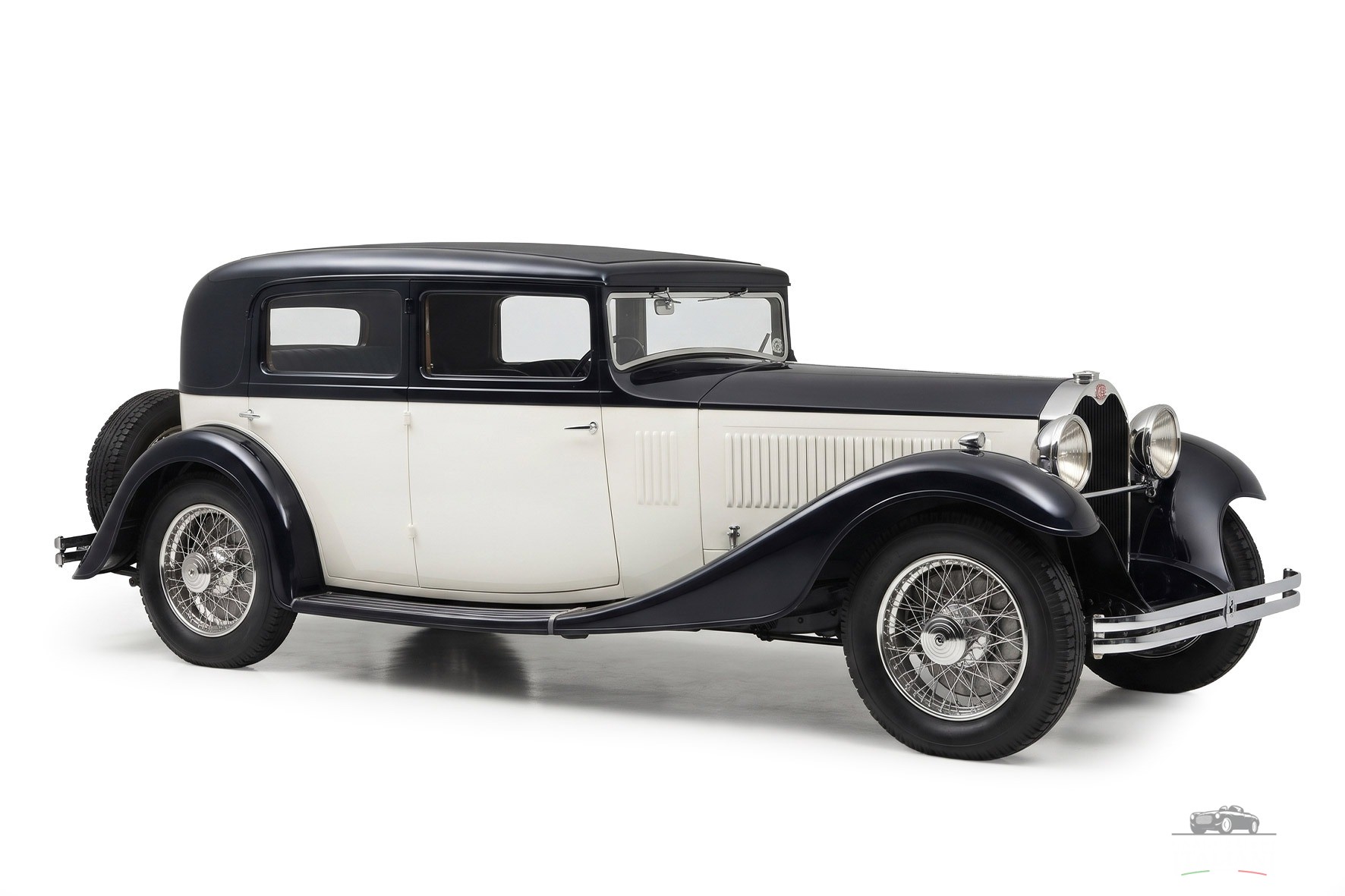
The Lancia Dilambda Guida Interna by Cesare Sala was a formal six-passenger saloon constructed on the long-wheelbase chassis of the second-series Dilambda. Presented at the 1931 Salone dell’Automobile di Milano, the specimen shown was finished in black with fine contrasting pinstripes, reflecting the restrained aesthetic typical of official and representational vehicles of the period. The guida interna configurationfeaturing an integrated passenger and driver compartmentwas intended for private use or discreet institutional service, offering a degree of privacy and refinement aligned with the expectations of high-level clientele. Cesare Sala, among the most established Milanese coachbuilders, maintained a close relationship with Lancia during this era. His execution of the Dilambda’s coachwork followed a conservative idiom: high rooflines, broad glass surfaces, minimal exterior ornamentation, and balanced proportions anchored in functional clarity. The coachbuilder’s approach remained rooted in the formal tradition of Italian carriage design, adapted for motorized use but still favoring elegance through discretion rather than stylistic innovation. The Lancia Dilambda itself was conceived as a grand touring chassis capable of accommodating a wide range of custom bodies. Equipped with a 4-litre narrow-angle V8 engine and independent front suspensionan advanced feature at the timethe Dilambda provided a solid mechanical foundation for high-quality coachwork. Sala’s berlina body, in its 1931 show presentation, illustrated the continued relevance of the vettura di rappresentanza within the broader shift toward more streamlined and performance-oriented designs. Though lacking the flamboyance of contemporaneous work by Castagna or Touring, the Sala-bodied Dilambda Guida Interna remains a notable example of Italian formalism in early 1930s automotive design. Its presence at the 1931 Milan Auto Salon situates it within the final phase of interwar classicism, before the gradual standardization of body types and the full emergence of modern automotive styling.
02 / TECHNICAL IDENTITY
03 / DESIGN, BODY & SUPPLIERS
Coachbuilder / Design studio
Cesare Sala was a Milanese carriage and automobile coachbuilder whose work ranged from nineteenth-century aristocratic coaches to early custom motorcar bodies.
Explore record ↗Attributed designer
04 / CHRONOLOGY
07 / GALLERY
THE CONVERSATION
Comments 0