The competition to replace the original Range Rover
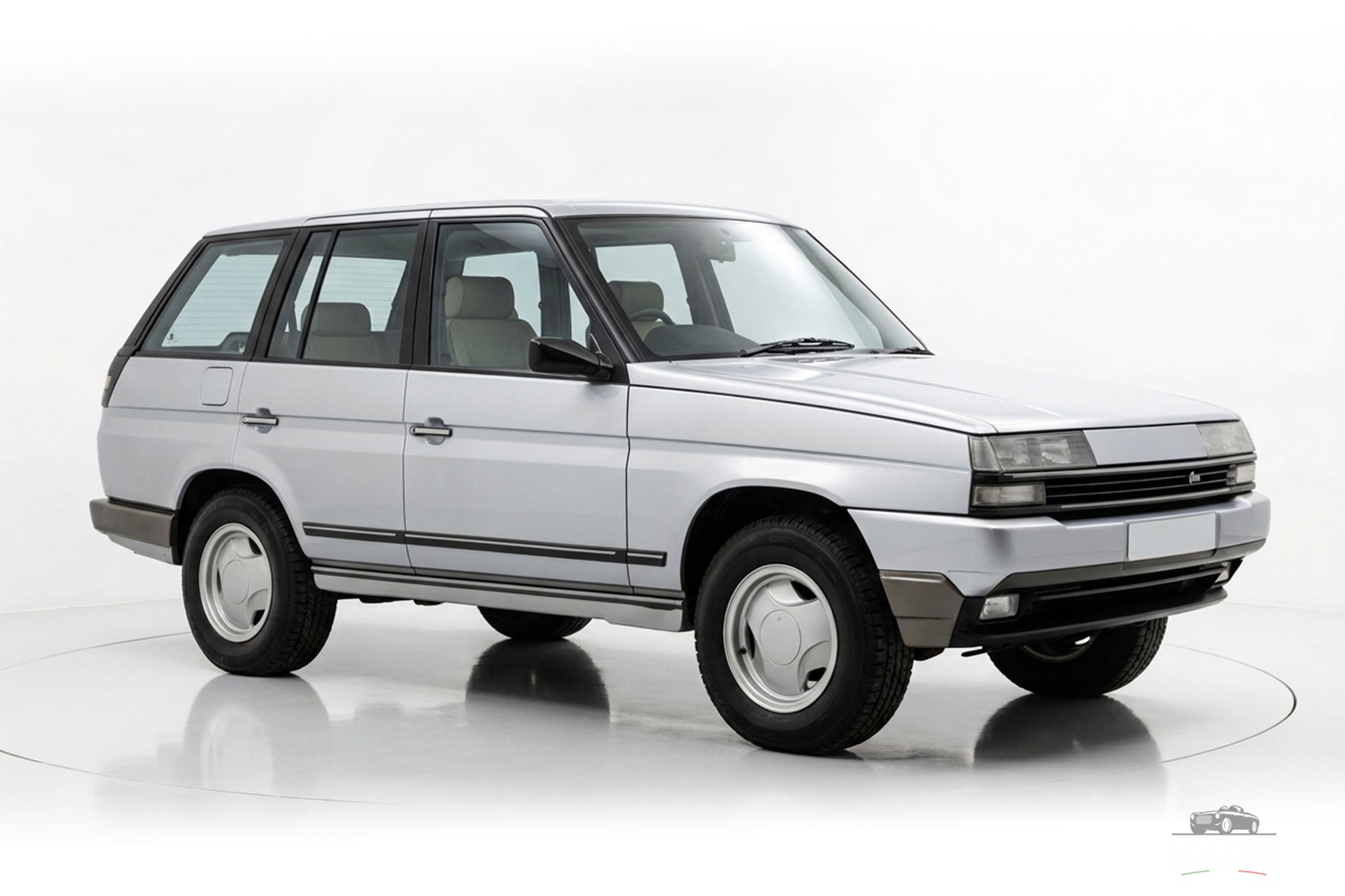
In the late 1980s, Land Rover began work on a successor to the original Range Rover, whose combination of off-road ability and increasingly luxurious appointments had become central to the marque. The development programme, initially known as Pegasus and later as P38A, involved a competition between the company’s own styling department and several external design consultancies. Bertone was among those invited to propose a new direction, alongside Italdesign, Pininfarina and British designers John Heffernan and Ken Greenley. The Italian studio’s proposal is generally dated to 1988, although the precise dates of its successive design and model-making stages have not been established from an original Bertone project file.
The alternatives were evaluated under Land Rover styling director George Thomson. Bertone’s design progressed beyond drawings: historical accounts describe a full-size, 1:1 clay model, as well as a comparable model of the in-house proposal. Both were subjected to customer research as the company tried to reconcile a more contemporary luxury-car appearance with the visual identity of the Range Rover. Accounts of a French customer clinic describe the Bertone study as insufficiently recognisable as a Range Rover. This criticism concerned the character of the design rather than a documented failure of its engineering.
A full-size study, not a production Range Rover
Surviving images associated with the Bertone proposal show an unusually horizontal front treatment, slim rectangular lamps, broad, relatively plain body surfaces and a pronounced glazed upper section. The overall interpretation was more architectural than the production vehicle eventually adopted. The photographs are useful evidence of the styling study, but their authorship and reproduction rights still require confirmation. Nor does the existence of a full-size clay model establish a running prototype: no proposal-specific chassis number, registration, engine installation, dimensions or technical specification has been authenticated.
Land Rover ultimately selected Thomson’s in-house design, retaining characteristic details such as the floating roof, clamshell bonnet, continuous waistline and divided tailgate. The second-generation Range Rover was unveiled in September 1994. Its production engines, four-wheel-drive system, suspension and wheelbase belong to that series vehicle and should not be attributed automatically to the Bertone proposal. The 1988 study also stands apart from earlier special-bodied versions of the original Range Rover, including the Monteverdi four-door conversion and the Pavesi Range Rover Cabriolet. The later Range Rover Stormer belongs to a different design programme, not a documented continuation of Bertone’s rejected P38 study.


THE CONVERSATION
Comments 0