Frua
Frua was a Turin coachbuilder founded in 1944 by Pietro Frua; its later design studio styled Maserati, Renault, Glas, AC and other European automobiles.
Explore record ↗
1963Coachwork by Frua
THE VEHICLE AT A GLANCE
THE PEOPLE BEHIND THE CAR
Frua was a Turin coachbuilder founded in 1944 by Pietro Frua; its later design studio styled Maserati, Renault, Glas, AC and other European automobiles.
Explore record ↗Pietro Frua was an Italian automotive designer and coachbuilder who established his own Turin-based company and became known for elegant, individually styled bodies for European manufacturers.
Explore record ↗01 / THE STORY
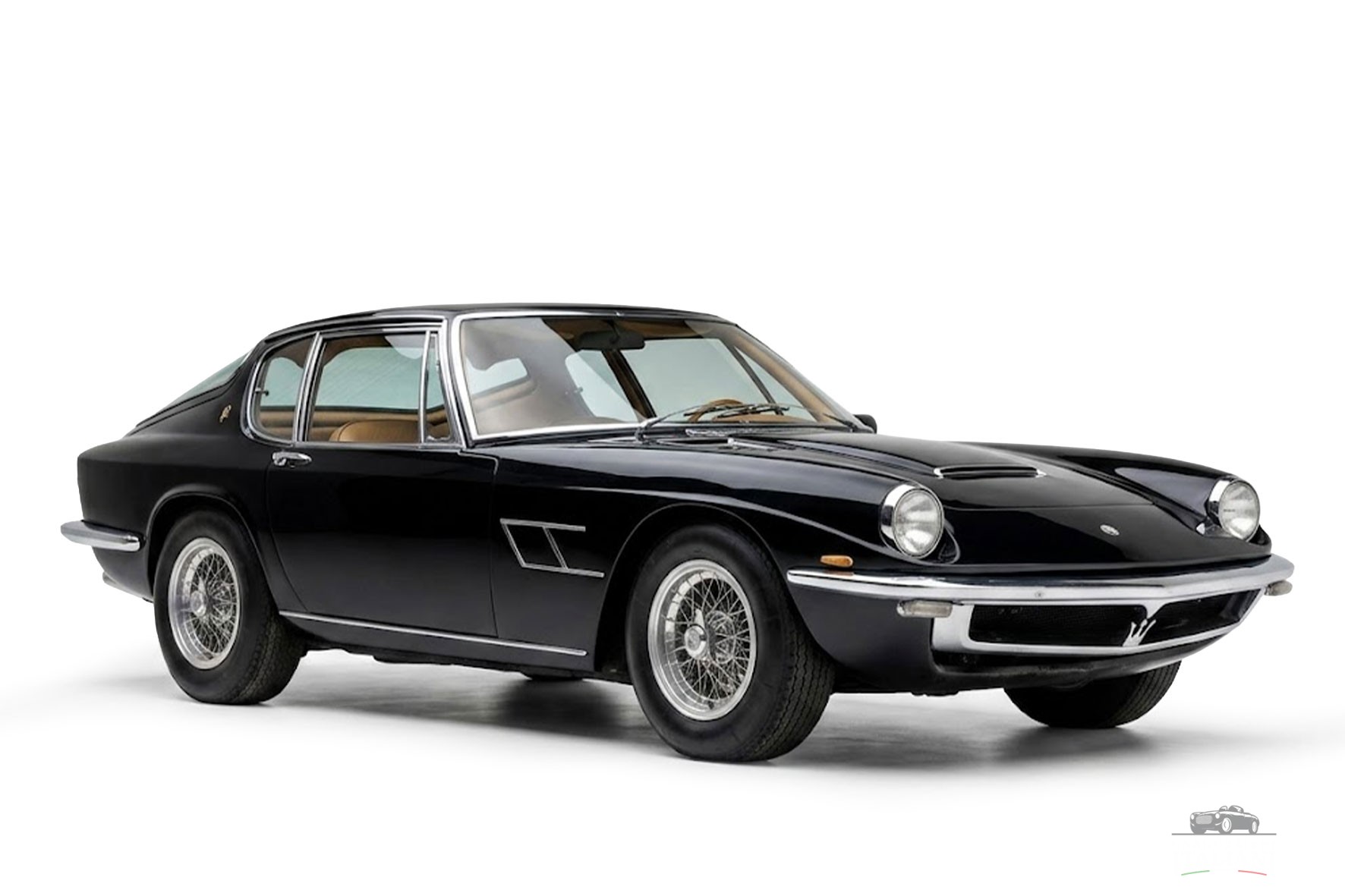
The Maserati Mistral, introduced as the successor to the 3500 GT, represented a significant evolution in Maserati’s lineup. Designed by Pietro Frua and bodied by Maggiora of Turin, the Mistral was named after a cold wind in southern France, a suggestion by Maserati’s French importer, marking the beginning of Maserati’s tradition of naming cars after winds. Internally known as Tipo 109 and originally presented as the 3500 GT 2 posti, the Mistral was available in both coupé and spider versions, with 828 coupés and 125 spiders produced. Frua’s design gave the Mistral a distinct and timeless aesthetic, contributing to its reputation as one of Maserati’s most beautiful models. Under the hood, the Mistral retained the revered 6-cylinder twin-cam engine, derived from the legendary 250 F Formula 1 car that won the 1957 World Championship with Juan Manuel Fangio at the wheel. This engine featured hemispherical combustion chambers and, notably, was initially equipped with Lucas indirect fuel injectiona pioneering feature for an Italian sports car at the time. While the Lucas system improved performance, many owners in the USA, facing tuning challenges, opted to replace it with Weber carburetors. At its launch, the Mistral was powered by the same 3.5-liter engine found in the 3500 GT, producing 235 horsepower. Subsequently, Maserati offered more potent variants: a 3.7-liter engine with 245 horsepower and a 4-liter engine generating 255 horsepower, all inline-six configurations. These engines were coupled with a ZF 5-speed gearbox, ensuring a dynamic driving experience suited for both spirited touring and competitive racing. Debuting at the 1963 Turin Motor Show, the Mistral’s Frua-designed bodywork cemented its status as a design icon. Its graceful lines and balanced proportions contributed to its timeless appeal, distinguishing it from other sports cars of its era. Occasionally mistaken for the similar AC Frua, also designed by Pietro Frua but larger and more powerful, the Mistral stood out for its combination of performance, elegance, and craftsmanship, a hallmark of Maserati’s engineering prowess and design excellence.
02 / TECHNICAL IDENTITY
03 / DESIGN, BODY & SUPPLIERS
Coachbuilder / Design studio
Frua was a Turin coachbuilder founded in 1944 by Pietro Frua; its later design studio styled Maserati, Renault, Glas, AC and other European automobiles.
Explore record ↗Designer
Pietro Frua was an Italian automotive designer and coachbuilder who established his own Turin-based company and became known for elegant, individually styled bodies for European manufacturers.
Explore record ↗Prototype builder
Frua was a Turin coachbuilder founded in 1944 by Pietro Frua; its later design studio styled Maserati, Renault, Glas, AC and other European automobiles.
Explore record ↗04 / CHRONOLOGY
05 / PEOPLE, COLLECTIONS & MUSEUMS
07 / CHASSIS REGISTER
08 / GALLERY
THE CONVERSATION
Comments 0