Giovanni Michelotti
Giovanni Michelotti was a prolific Italian automotive designer whose independent Turin studio produced coachwork and production-car designs for Vignale, Triumph, BMW and numerous other manufacturers.
Explore record ↗
1962Coachwork by Vignale
THE VEHICLE AT A GLANCE
THE PEOPLE BEHIND THE CAR
Giovanni Michelotti was a prolific Italian automotive designer whose independent Turin studio produced coachwork and production-car designs for Vignale, Triumph, BMW and numerous other manufacturers.
Explore record ↗Founded by Alfredo Vignale in Turin in 1948, Carrozzeria Vignale produced bespoke sports and grand touring bodies for Ferrari, Fiat, Maserati and other manufacturers.
Explore record ↗01 / THE STORY
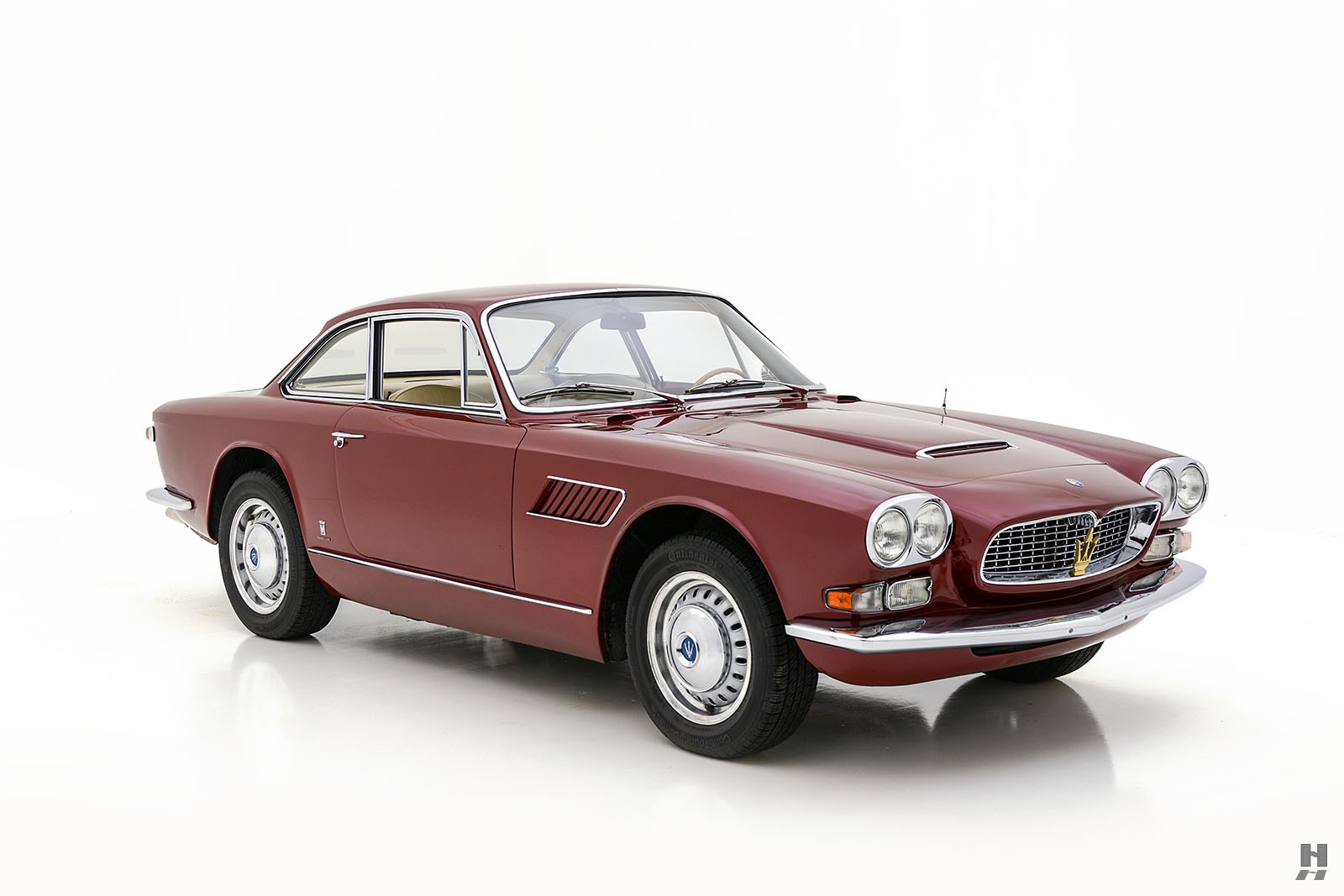
The Maserati Sebring: The pinnacle of Maserati’s legendary motor racing accomplishments came in the 1950s and early 1960s with cars such as the iconic 250F Grand Prix car, and a series of innovative sports racers including the A6G, 300S, and Tipo 61 “Birdcage.” Like their rivals at Ferrari and Lancia, motorsports directly influenced Maserati’s road cars, but even well into the 1950s, they were still only a boutique manufacturer that trickled out the occasional road car for the purpose of funding their racing exploits. Maserati brothers had no interest in building road cars, and departed to form OSCA in 1947. By the early 1960s, Maserati’s wealthy-industrialist owner Adolfo Orsi found himself in some financial difficulties, and needed a way to boost sales by a significant margin. Orsi tapped his gifted engineer Giulio Alfieri to design a new GT car that could finally establish the marque as a volume manufacturer. Alfieri created a tubular chassis design which he paired with a 3,486cc inline-six with dual overhead camshafts to form the new 3500 GT. The engine shared its roots with the 350S sports racer, which itself was based on the 250F Grand Prix car, so it had a proven lineage. Unlike Mr. Ferrari, Alfieri was a proponent of technology like disc brakes on all four wheels and even fuel injection. The 3500 initially wore triple Weber carbs, then Alfieri adapted the sophisticated Lucas P.I. fuel injection system which boosted horsepower by about 20. He later increased displacement from 3.5 to 3.7, then 4.0 liters for even more grunt. Maserati did very well with the 3500, outselling Ferrari regularly and cementing Maserati’s status as a fullfledged manufacturer of beautiful, high-performance GT cars. The chassis of the 3500 GT served as the basis of several models, including the shortenedwheelbase Sebring 2+2, and the lighter, stiffer Frua-bodied Mistral. With the Vignale-bodied Sebring, Maserati targeted Ferrari’s primary audience in America. The Maserati Sebring was shorter and slightly sportier than a 3500, but it still offered two occasional rear seats, a spacious cabin, and available niceties such as air conditioning and even an automatic transmission. Such luxuries appealed particularly to American buyers, and Maserati sold approximately 600 examples worldwide between 1962 and 1966. The Maserati Sebring proved to be a terrific driver’s car, with the gutsy twin-plug, dual-overhead-cam inline-six, and luxurious cabin. The handsome styling by Giovanni Michelotti for Vignale, bore a strong resemblance to the 3500 GT, with an understated sophistication that defined Maserati’s superb Gran Turismos of the era. Photo courtesy of Hyman Ltd.
02 / TECHNICAL IDENTITY
03 / DESIGN, BODY & SUPPLIERS
Coachbuilder / Design studio
Founded by Alfredo Vignale in Turin in 1948, Carrozzeria Vignale produced bespoke sports and grand touring bodies for Ferrari, Fiat, Maserati and other manufacturers.
Explore record ↗Designer
Giovanni Michelotti was a prolific Italian automotive designer whose independent Turin studio produced coachwork and production-car designs for Vignale, Triumph, BMW and numerous other manufacturers.
Explore record ↗04 / CHRONOLOGY
07 / GALLERY
THE CONVERSATION
Comments 0