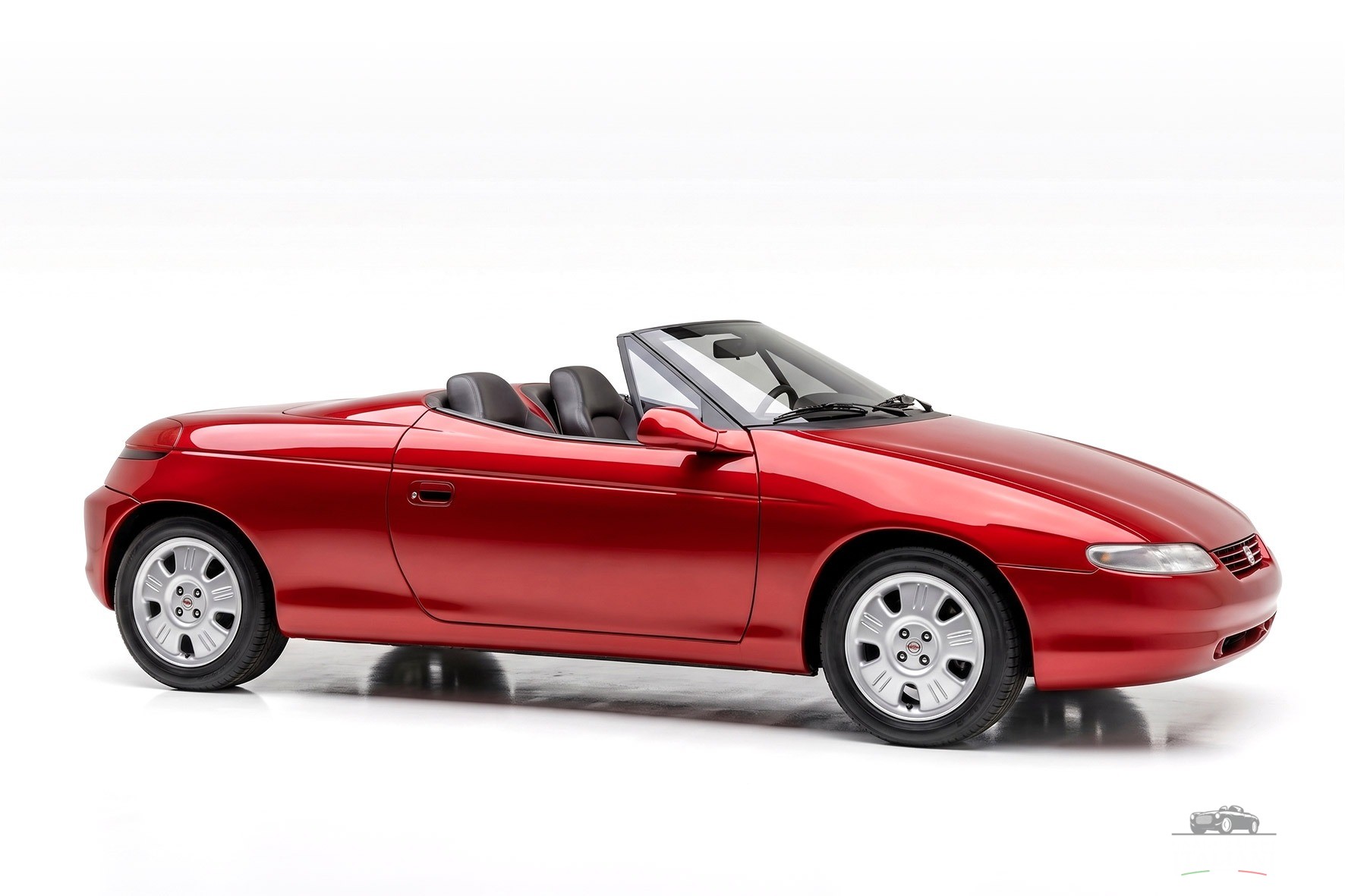
The Opel Spider concept was developed by Bertone under the direction of Marc Deschamps and presented in 1990 as a design proposal for a compact, two-seater roadster. Built on the platform of the forthcoming Opel Astra (F), launched in 1991, the Spider was conceived as a smaller counterpart to the Opel Calibra, extending the brand’s sports car image to a lower market segment. The project aimed to capitalise on the anticipated success of the Astra platform while introducing a dedicated, compact speedster to the Opel range. The concept featured a minimalist exterior design with flush surfaces, integrated bumpers, and concealed door handles, reflecting contemporary trends toward aerodynamic efficiency. The design proportions were defined by a long front overhang, short rear deck, and a relatively stretched wheelbase, which, despite accommodating only two occupants, was unusually long. This lent the vehicle a slightly unbalanced side profile. The front was characterised by a narrow intake grille flanked by elongated headlamp units, and a near-seamless hood surface. The tail treatment included a continuous light strip, echoing styling cues seen in other early 1990s European concept vehicles. Side mirrors were mounted directly to the doors, a detail that may have influenced later production Opel models. Inside, the Spider featured a spartan two-seat layout with a low-set dashboard and open-top configuration. The design did not include a visible provision for a roof or weather protection, further underlining its conceptual nature as a pure roadster. No drivetrain details were released, though it is presumed that the vehicle would have used front-wheel-drive mechanicals derived from the Astra donor platform. The Opel Spider remained a one-off design study and was never pursued beyond the concept stage. The car was not presented at a major international auto show and remained largely unknown to the public until photographs surfaced in design archives. It remains an example of Bertone’s early 1990s experimentation with compact, lifestyle-oriented vehicles and reflects General Motors’ broader exploration of youth-market sports cars within its European divisions.


THE CONVERSATION
Comments 0