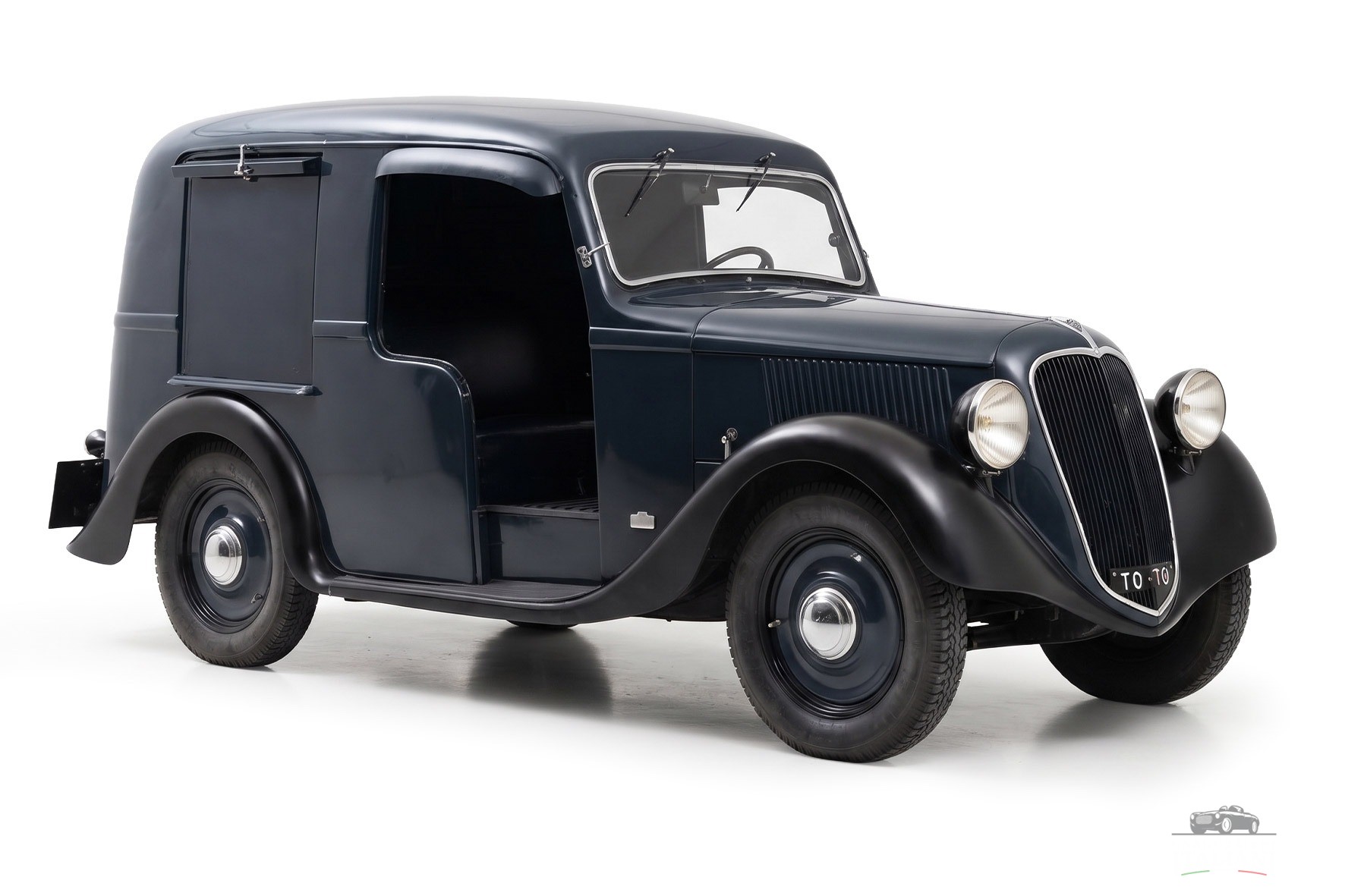
The Stigler electric delivery van bodied by Carrozzeria Bertone in 1935 represents an early and uncommon instance of electrically powered commercial transportation in pre-war Italy. Produced on a proprietary Stigler electric chassis, this vehicle illustrates the pragmatic application of electric propulsion within an urban context, where limited speed and range were acceptable trade-offs for operational efficiency and mechanical simplicity. Officine Meccaniche Stigler, a Turin-based manufacturer active from the early 1920s to the early 1940s, specialized in electric commercial vehicles, particularly small vans and trucks suited for municipal and industrial use. The 1935 chassis likely featured a direct-drive electric motor powered by a lead-acid battery system. Although technical specifications remain limited, comparable Stigler models of the time produced approximately 4 to 5 horsepower, offering a top speed near 50 km/h and a maximum range of roughly 80 to 100 kilometers, depending on load and terrain. The body was commissioned from Carrozzeria Bertone, which by 1935 had expanded its operations beyond sporting and passenger vehicles to include light commercial applications. The design, conceived with functional priority, consists of a compact enclosed cab with upright proportions, sliding side doors for ease of access, and a paneled cargo area at the rear with vertically hinged access. The simplicity of the structure reflects both the practical demands of its intended use and the economic constraints of the period. This van was part of a small production run, and it is probable that the Bertone-bodied version was a unique or near-unique commission. No confirmed chassis numbers or subsequent ownership records have been published, and no known surviving example has been documented in public collections. The broader production figures for Stigler electric vehicles remain unverified but are understood to have been modest.


THE CONVERSATION
Comments 0