
I.DE.A Institute
Italian automotive design, engineering and prototype-development institute founded near Turin in 1978, active on experimental and series-vehicle programmes until 2019.
Explore record ↗
2006
THE VEHICLE AT A GLANCE
THE PEOPLE BEHIND THE CAR
Italian automotive design, engineering and prototype-development institute founded near Turin in 1978, active on experimental and series-vehicle programmes until 2019.
Explore record ↗01 / THE STORY
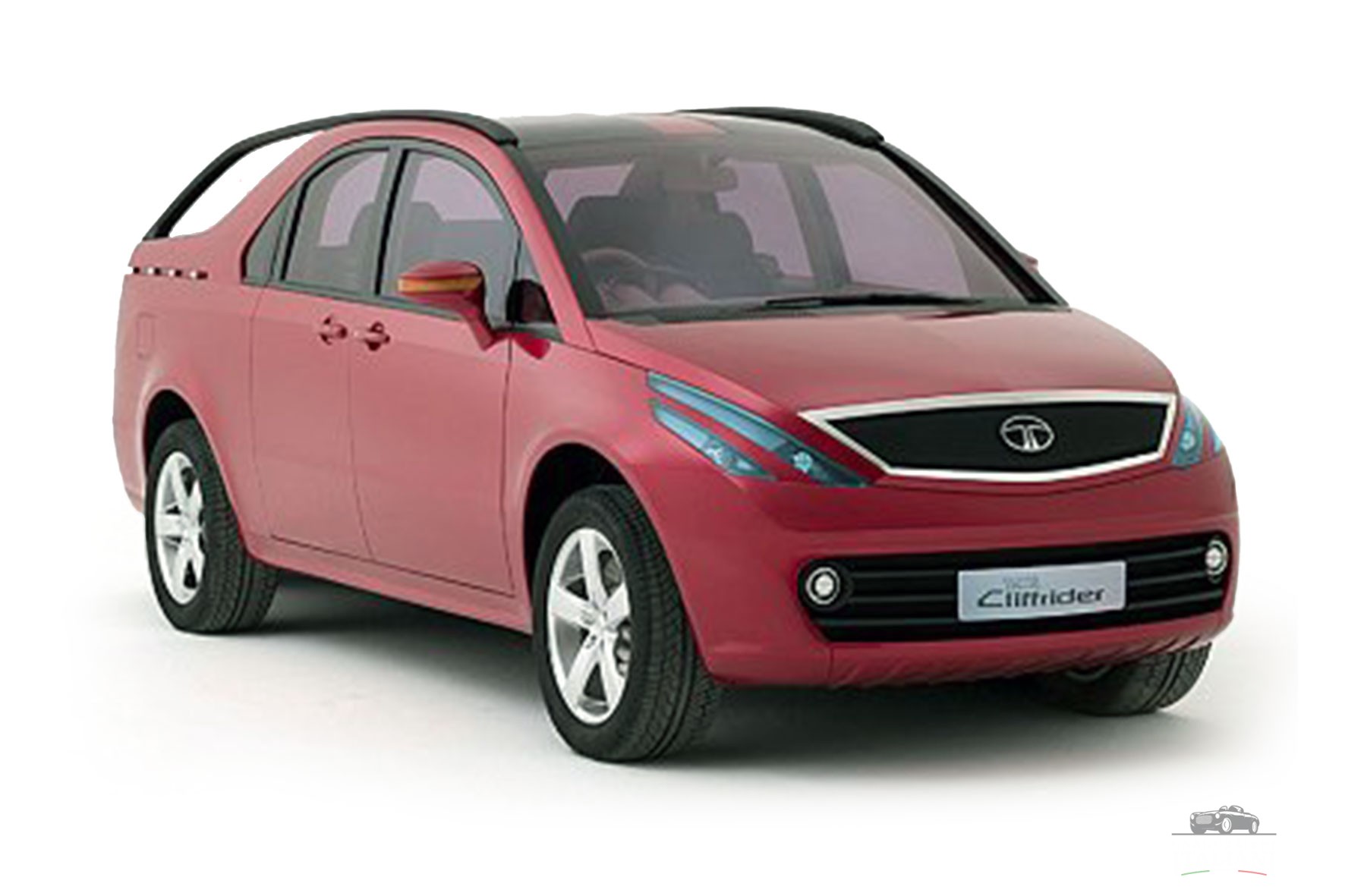
The Tata Cliffrider is a concept vehicle unveiled by Tata Motors at the 2006 Geneva Motor Show. Designed by I.DE.A Institute as a “Multi-Utility Lifestyle Vehicle,” the Cliffrider aimed to combine the practicality of a pickup truck with the comfort and styling of a sedan. It was developed on the same platform as the Tata Xover concept, which debuted the previous year, and reflected Tata’s ambition to explore new vehicle formats for both domestic and international markets. The Cliffrider featured a high-riding stance with a dynamic, streamlined silhouette. Its exterior design blended robust utility cues—such as a functional cargo bed—with smooth, car-like body lines. One of its most notable design elements was the rear-hinged back doors, also known as suicide doors, which, along with the elimination of the B-pillar, allowed for wide, unobstructed access to the cabin. The design was intended to enhance ease of entry while creating a visually seamless side profile. The vehicle’s interior was geared toward comfort and versatility, with a focus on modern aesthetics and ergonomics. The dashboard was designed to be driver-centric, and the steering column incorporated a novel integrated air-vent system. The rear cargo area was intended to support recreational lifestyles, equipped to carry gear such as mountain bikes or surfboards. A retractable cover was fitted to protect cargo from the elements. Powertrain options for the Cliffrider were proposed to include a range of Euro IV-compliant engines, such as a V6 petrol unit and advanced common rail diesel engines. The concept was envisioned to be available in both two-wheel-drive and four-wheel-drive configurations, indicating an intention to cater to both urban and off-road use. Safety and convenience technologies proposed for the model included ABS, traction control, multiple airbags, and an in-car navigation system. Although the Cliffrider remained a design study and did not reach production, its styling themes and conceptual layout influenced later Tata vehicles. Design elements and engineering principles from the Cliffrider were carried forward in the Tata Aria crossover, which eventually led to the Tata Hexa. The Cliffrider thus occupies a transitional role in Tata’s early efforts to modernize and globalize its vehicle lineup.
02 / TECHNICAL IDENTITY
03 / DESIGN, BODY & SUPPLIERS
Coachbuilder / Design studio
Italian automotive design, engineering and prototype-development institute founded near Turin in 1978, active on experimental and series-vehicle programmes until 2019.
Explore record ↗Attributed designer
04 / CHRONOLOGY
07 / GALLERY
THE CONVERSATION
Comments 0