Giovanni Michelotti
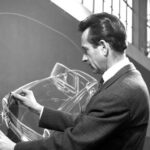
Giovanni Michelotti was a prolific Italian automotive designer whose independent Turin studio produced coachwork and production-car designs for Vignale, Triumph, BMW and numerous other manufacturers.
Explore record ↗
1964
THE VEHICLE AT A GLANCE
THE PEOPLE BEHIND THE CAR
Giovanni Michelotti was a prolific Italian automotive designer whose independent Turin studio produced coachwork and production-car designs for Vignale, Triumph, BMW and numerous other manufacturers.
Explore record ↗Founded in Turin by Giovanni Michelotti, Studio Michelotti developed original automotive styling, full-scale models and prototypes for international manufacturers and specialist coachbuilders.
Explore record ↗01 / THE STORY
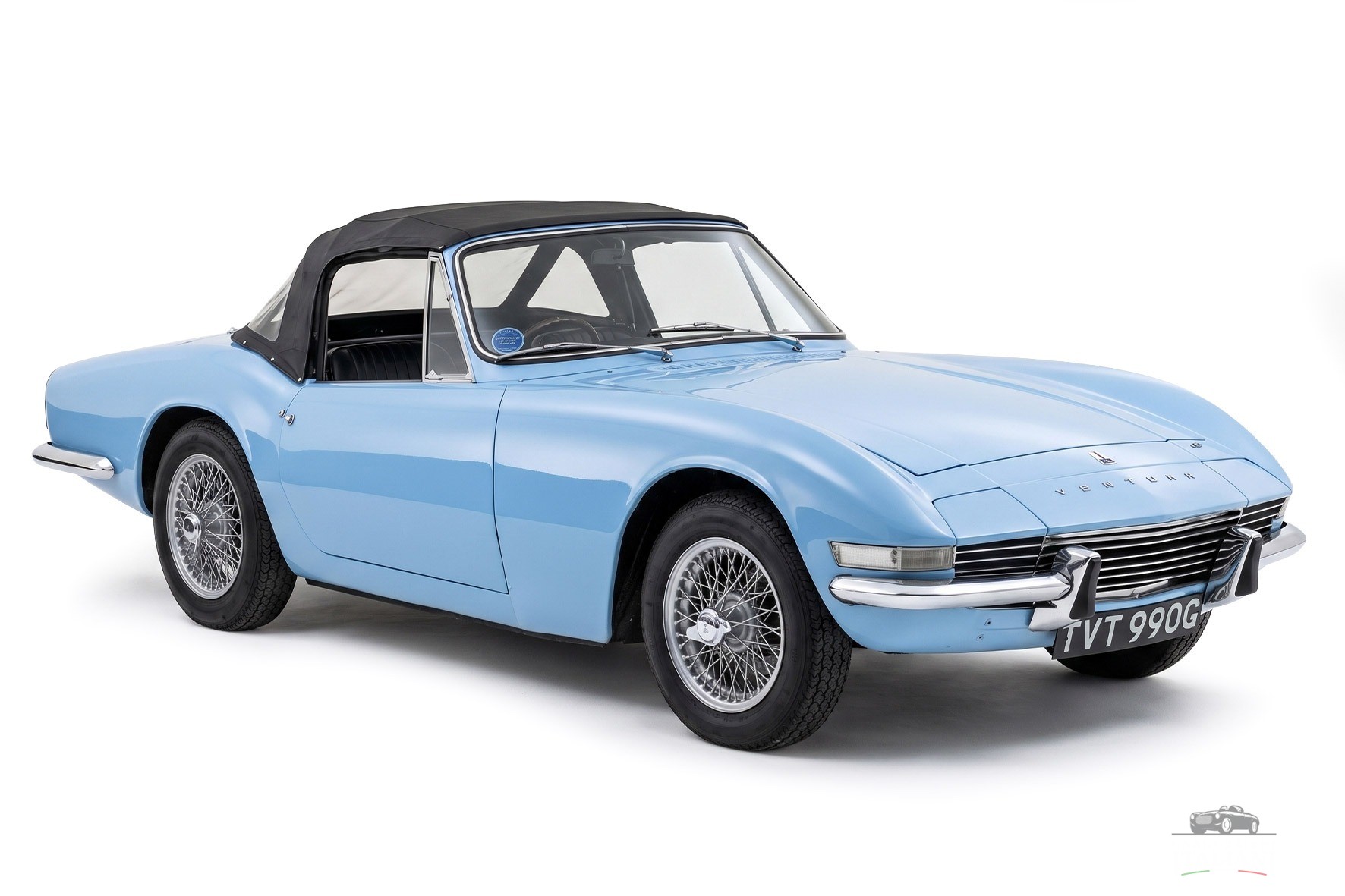
The Triumph Fury was a one-off prototype developed in 1965 as an internal research and design exercise. It was not commissioned for public exhibition and was never formally presented as a production-ready model. The car was designed by Giovanni Michelotti during a period in which Triumph was evaluating alternatives to the traditional separate-chassis layout used on the TR series. The Fury was constructed in the same year as the launch of the TR4A. Unlike contemporary Triumph sports cars, it used a monocoque structure, marking the first application of unitary construction to a Triumph sports prototype. The chassis was paired with the six-cylinder engine from the Triumph 2000. Suspension layout consisted of MacPherson struts at the front and transverse wishbones at the rear. Contemporary sources also reference design studies showing alternative configurations, including a V8 engine derived from Triumph’s four-cylinder unit and MacPherson struts at both axles. The body was designed as a two-seat open roadster. Overall proportions were compact, with visual similarity to an enlarged Spitfire. The name “Fury,” drawn from a British fighter aircraft, reinforced the association with the Spitfire nameplate. Design features included retractable headlights and a fully trimmed interior consistent with Triumph saloon standards of the period. The styling placed the car closer in appearance to contemporary high-end European sports cars than to the existing TR range. The Fury was not related to the later Triumph Stag project. Although similarities in layout and intent have led to retrospective comparisons, the Stag originated separately as a Michelotti show car and followed a different development path. The Fury instead represented an exploration of a new technical direction for Triumph sports cars, particularly in anticipation of increasing competition in the United States market during the late 1960s. At the time of the Fury’s construction, Triumph management was aware of the limitations of the TR chassis concept, which still relied on components and tooling dating back to the 1940s. The Fury demonstrated the feasibility of a modern, mass-producible sports car using shared components with Triumph saloons. However, the projected costs of development and retooling were considered high compared to extending the life of the existing TR platform. No production programme was approved. Triumph proceeded instead with the TR5 and later the TR6, both retaining the separate chassis architecture. The Fury prototype remained a single example and was later documented in private collections. It is now regarded as an unadopted technical and stylistic study rather than a cancelled production model.
02 / TECHNICAL IDENTITY
03 / DESIGN, BODY & SUPPLIERS
Coachbuilder / Design studio
Founded in Turin by Giovanni Michelotti, Studio Michelotti developed original automotive styling, full-scale models and prototypes for international manufacturers and specialist coachbuilders.
Explore record ↗Designer
Giovanni Michelotti was a prolific Italian automotive designer whose independent Turin studio produced coachwork and production-car designs for Vignale, Triumph, BMW and numerous other manufacturers.
Explore record ↗07 / GALLERY

THE CONVERSATION
Comments 0