Giovanni Michelotti
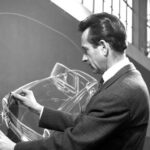
Giovanni Michelotti was a prolific Italian automotive designer whose independent Turin studio produced coachwork and production-car designs for Vignale, Triumph, BMW and numerous other manufacturers.
Explore record ↗
1962
THE VEHICLE AT A GLANCE
THE PEOPLE BEHIND THE CAR
Giovanni Michelotti was a prolific Italian automotive designer whose independent Turin studio produced coachwork and production-car designs for Vignale, Triumph, BMW and numerous other manufacturers.
Explore record ↗Founded in Turin by Giovanni Michelotti, Studio Michelotti developed original automotive styling, full-scale models and prototypes for international manufacturers and specialist coachbuilders.
Explore record ↗01 / THE STORY
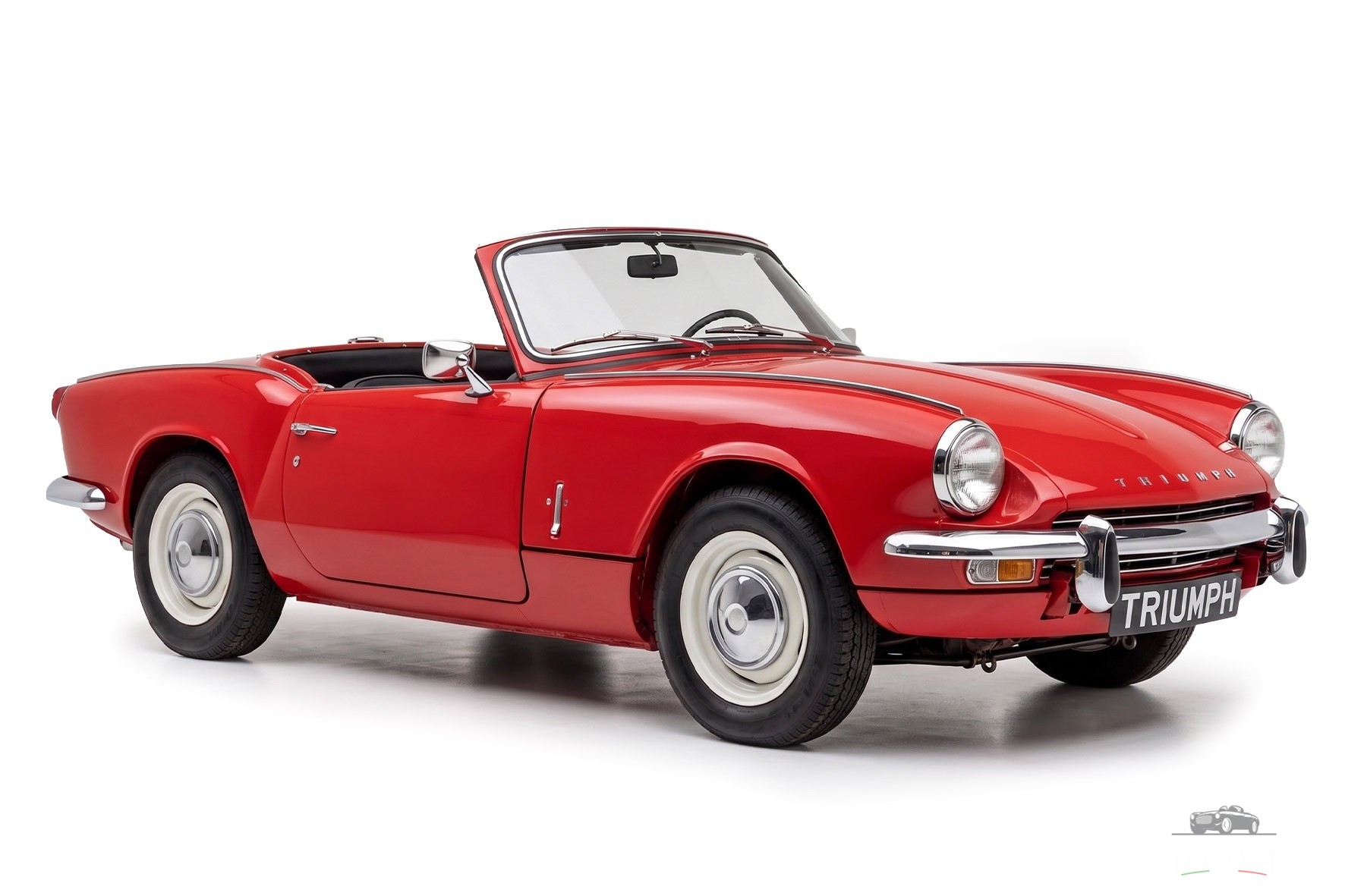
The Triumph Spitfire is a two-seat open sports car produced by the Triumph Motor Company between 1962 and 1980. It was styled by Giovanni Michelotti and developed as an entry-level sports model positioned below the TR range. The Spitfire was derived mechanically from the Triumph Herald, using a shortened version of its separate chassis and many shared components. The car was first exhibited at the 1962 London Motor Show at Earls Court, where it was presented as a lightweight, affordable roadster aimed at export markets, particularly North America. Production commenced shortly thereafter at Triumph’s Canley plant. The Spitfire employed a steel backbone chassis with bolt-on body panels. Front suspension used unequal-length wishbones with coil springs, while the rear initially employed a swing-axle layout with a transverse leaf spring, inherited from the Herald. Steering was rack and pinion. Braking was by front discs and rear drums on most versions. Early Spitfires were powered by a 1,147 cc inline four-cylinder engine, producing approximately 63 bhp, coupled to a four-speed manual transmission. Overdrive became available on later models. Progressive development led to increased engine displacement and output over the model’s lifespan. The Mk III, introduced in 1967, adopted a 1,296 cc engine, while the final Spitfire 1500, launched in 1974, used a 1,493 cc unit to meet market expectations and emissions requirements. Body revisions occurred periodically, most notably with the Spitfire Mk IV, which adopted revised front and rear styling and changes to suspension geometry. The later models incorporated a revised rear suspension to address handling issues associated with the original swing-axle design. Total production exceeded 315,000 units, making the Spitfire one of Triumph’s most successful sports cars. It remained in continuous production for 18 years, outlasting several contemporaries.
02 / TECHNICAL IDENTITY
03 / DESIGN, BODY & SUPPLIERS
Coachbuilder / Design studio
Founded in Turin by Giovanni Michelotti, Studio Michelotti developed original automotive styling, full-scale models and prototypes for international manufacturers and specialist coachbuilders.
Explore record ↗Designer
Giovanni Michelotti was a prolific Italian automotive designer whose independent Turin studio produced coachwork and production-car designs for Vignale, Triumph, BMW and numerous other manufacturers.
Explore record ↗04 / CHRONOLOGY
07 / GALLERY

THE CONVERSATION
Comments 0