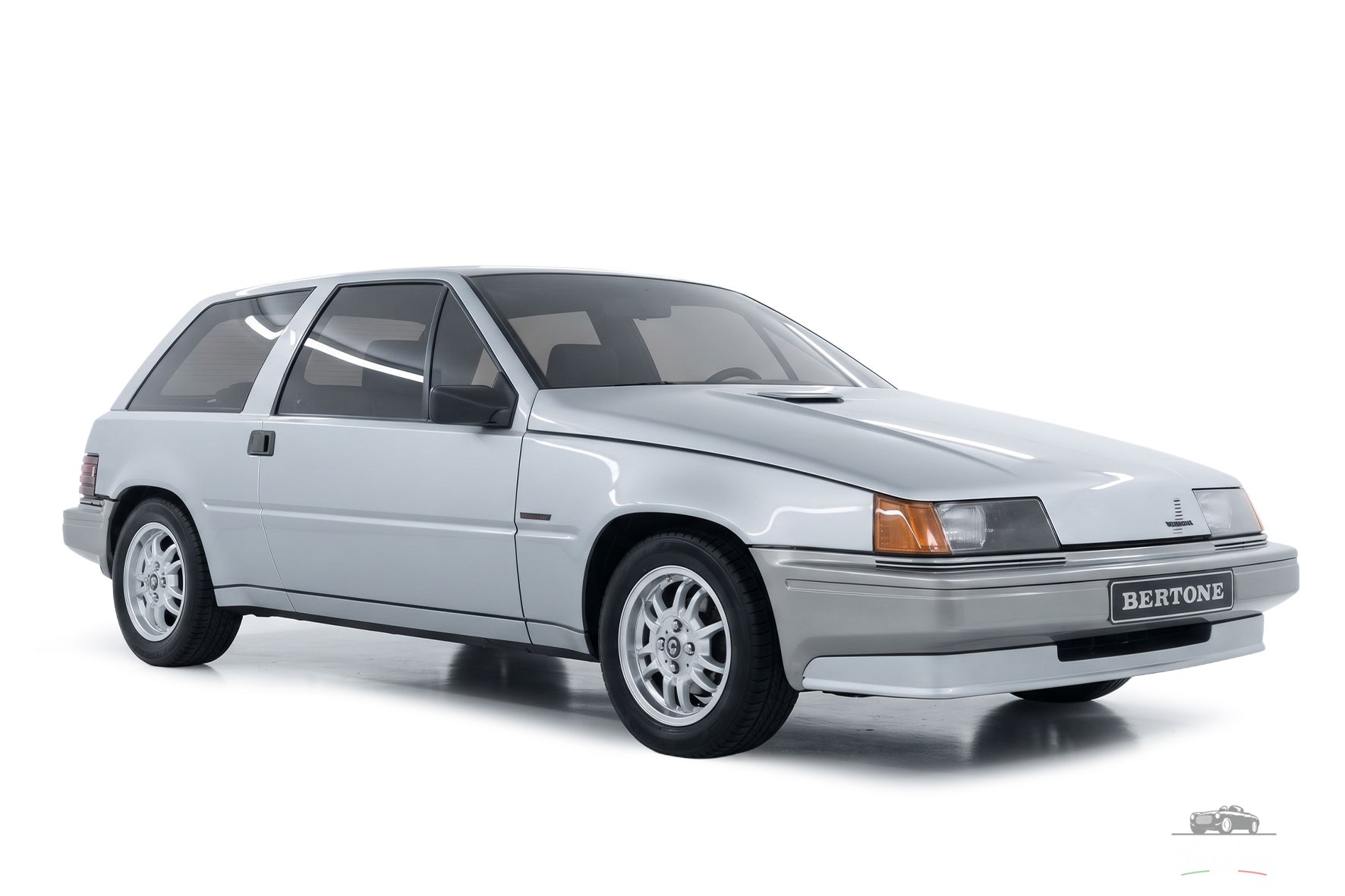
The Volvo G13 Bertone was one of four full-scale design proposals developed during the early stages of the Volvo Galaxy Project, the programme that ultimately led to the Volvo 480, 440 and 460. The proposal was created by Carrozzeria Bertone in 1980–1981, following Volvo’s decision to invite external design studios to participate alongside its in-house styling department. The Galaxy Project was launched to develop a new generation of front-wheel-drive compact cars for the 1980s. Initially known as the G1 project, it aimed to replace the Volvo 340/360 while also serving as the basis for a larger model that later evolved into the Volvo 850. Approximately 80 design sketches were produced before four concepts were selected for full-scale evaluation. Two were developed by Volvo in Sweden, one by Dutch designer John de Vries, and one by Bertone. Bertone’s proposal was based on the G13 coupé programme, which later became the Volvo 480. The design followed the technical package established by Volvo, including a 2,400 mm wheelbase, an overall length of approximately 3.9 metres, front-wheel drive and a transversely mounted engine. The body featured a three-door hatchback configuration with a pronounced wedge profile, a low bonnet and a large glazed tailgate. Although more angular than the final production model, the Bertone proposal anticipated several themes that appeared on the Volvo 480, including the compact proportions and the sharply inclined rear hatch. The G13 was conceived primarily for the North American market, where it was intended to become Volvo’s first sporting coupé since the 1800ES. The design programme also had to satisfy future United States safety regulations, including headlamp height requirements, a factor that ultimately contributed to the adoption of pop-up headlights on the production Volvo 480. In June 1981, Volvo evaluated the final proposals and selected the design developed by John de Vries, considering it more consistent with the brand’s identity and practical requirements. Bertone’s proposal was therefore not adopted, but it remains an important part of the Volvo Galaxy Project, illustrating the range of styling directions explored before the launch of the Volvo 480 in 1986.


THE CONVERSATION
Comments 0