
Frua
Frua was a Turin coachbuilder founded in 1944 by Pietro Frua; its later design studio styled Maserati, Renault, Glas, AC and other European automobiles.
Explore record ↗
1957Coachwork by Frua
THE VEHICLE AT A GLANCE
THE PEOPLE BEHIND THE CAR
Frua was a Turin coachbuilder founded in 1944 by Pietro Frua; its later design studio styled Maserati, Renault, Glas, AC and other European automobiles.
Explore record ↗Pelle Petterson, a Swedish industrial designer trained at Pratt Institute, drew the winning proposal for the Volvo P1800 while working at Pietro Frua in Turin in 1957. His authorship was kept out of the public account for years. Petterson later became an accomplished yacht designer and Olympic sailor.
Explore record ↗01 / THE STORY
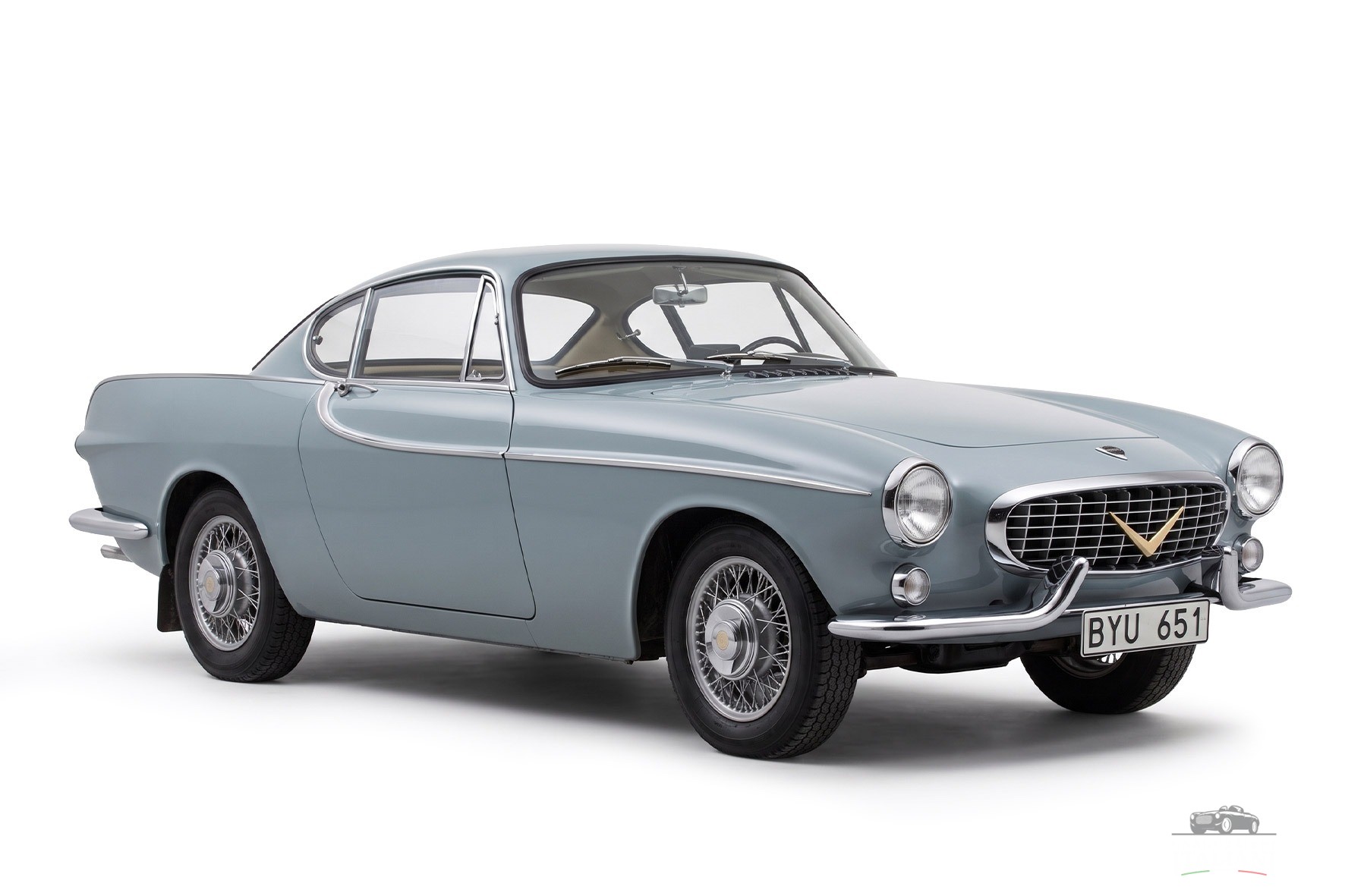
Volvo P1800 Prototype (1957–1958) refers to three hand-built sports coupés commissioned by Volvo and constructed by Carrozzeria Frua in Turin. The cars formed the first physical development stage of the P1800 programme and are identified in historical accounts as P958-X1, P958-X2 and P958-X3. These designations distinguish the experimental vehicles; they should not be treated as a single production chassis number. The prototypes were based on Volvo Amazon mechanical components, with styling principally developed by Pelle Petterson.
The programme began in 1957 as Volvo sought a closed sports car after the limited commercial success of the open P1900. Helmer Petterson, a Volvo consultant involved in the project, arranged for his son Pelle, a graduate of the Pratt Institute in New York, to work in Pietro Frua’s Turin organisation. Volvo considered several Italian styling proposals, but selected Pelle Petterson’s design. Its authorship was not openly credited to him at the time, and Frua’s name remained closely associated with the project for many years. The division of responsibilities was nevertheless distinct: Petterson was the principal stylist, Frua’s workshop developed and built the prototype bodies, and Volvo supplied the engineering programme.
Volvo engineers developed the experimental understructure using the Amazon as a mechanical starting point. Åke Björksund worked on the chassis arrangements, and body and floor components were prepared at Volvo’s Olofström facilities before the rolling assemblies went to Turin. The development specification called for a shorter and lower structure than the contemporary Amazon, while retaining as much proven suspension and drivetrain hardware as practicable. At Frua, craftsmen constructed steel coupé bodies and finished the interior and exterior details. The resulting cars were working test vehicles, not simply static styling models.
The programme must be distinguished from the specifications of the later production P1800. Although the production car eventually used Volvo’s B18 sports engine, a single production-engine power figure cannot be assigned indiscriminately to all three earlier prototypes. Individual engine numbers, conventional chassis serials and subsequent modifications require identification by prototype.
P958-X1 was the first completed prototype, developed in the closing months of 1957 and subsequently used for assessment by Volvo and prospective manufacturing partners. P958-X2 followed in 1958; its documented early finish was cream with a pale-blue interior. It was modified during testing, including work to its rear bodywork and braking system. P958-X3, the final Italian-built example, was completed in the spring of 1958 in a grey finish with red interior details. The cars were not exact duplicates: their trim, fittings and engineering details evolved during the programme.
The second prototype, P958-X2, was displayed at the Brussels Motor Show in January 1960. P958-X3 appeared at the New York International Auto Show later that year. These appearances belong to specific experimental cars, not to an undifferentiated prototype or to the later production vehicles. Volvo also employed the three cars for testing, photography and preparation of manufacturing tooling.
Volvo examined several possible manufacturing arrangements, including discussions with Karmann. Series production ultimately began in 1961 with body manufacture by Pressed Steel and assembly by Jensen Motors in Britain. That industrial arrangement was separate from the three Frua-built development cars, all of which Volvo subsequently reported as surviving. The P1800 programme later produced other experimental body styles, including the 1968 Frua Rocket and the Coggiola Beach Car; neither should be confused with the Turin prototypes of 1957–1958.
02 / TECHNICAL IDENTITY
03 / DESIGN, BODY & SUPPLIERS
Coachbuilder / Design studio
Frua was a Turin coachbuilder founded in 1944 by Pietro Frua; its later design studio styled Maserati, Renault, Glas, AC and other European automobiles.
Explore record ↗Attributed designer
Pelle Petterson, a Swedish industrial designer trained at Pratt Institute, drew the winning proposal for the Volvo P1800 while working at Pietro Frua in Turin in 1957. His authorship was kept out of the public account for years. Petterson later became an accomplished yacht designer and Olympic sailor.
Explore record ↗04 / CHRONOLOGY
07 / GALLERY
CONTINUE READING
Pietro Frua, an influential Italian automotive designer born in 1913, left an indelible mark on the industry with his visionary work, shaping iconic cars and pioneering aesthetic excellence.
Read story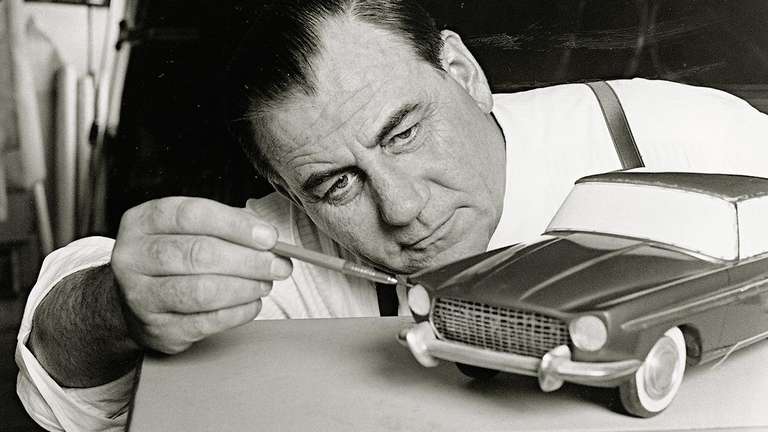
THE CONVERSATION
Comments 0