
Giorgetto Giugiaro
Giorgetto Giugiaro is an Italian automotive and industrial designer whose career includes Italdesign and GFG Style, with a lasting influence on production-car and concept-car design.
Explore record ↗
1987
THE VEHICLE AT A GLANCE
THE PEOPLE BEHIND THE CAR
Giorgetto Giugiaro is an Italian automotive and industrial designer whose career includes Italdesign and GFG Style, with a lasting influence on production-car and concept-car design.
Explore record ↗Established in 1968 by Giorgetto Giugiaro and Aldo Mantovani, Italdesign is an Italian design and engineering company known for production-car styling, concepts and prototypes for global manufacturers.
Explore record ↗01 / THE STORY
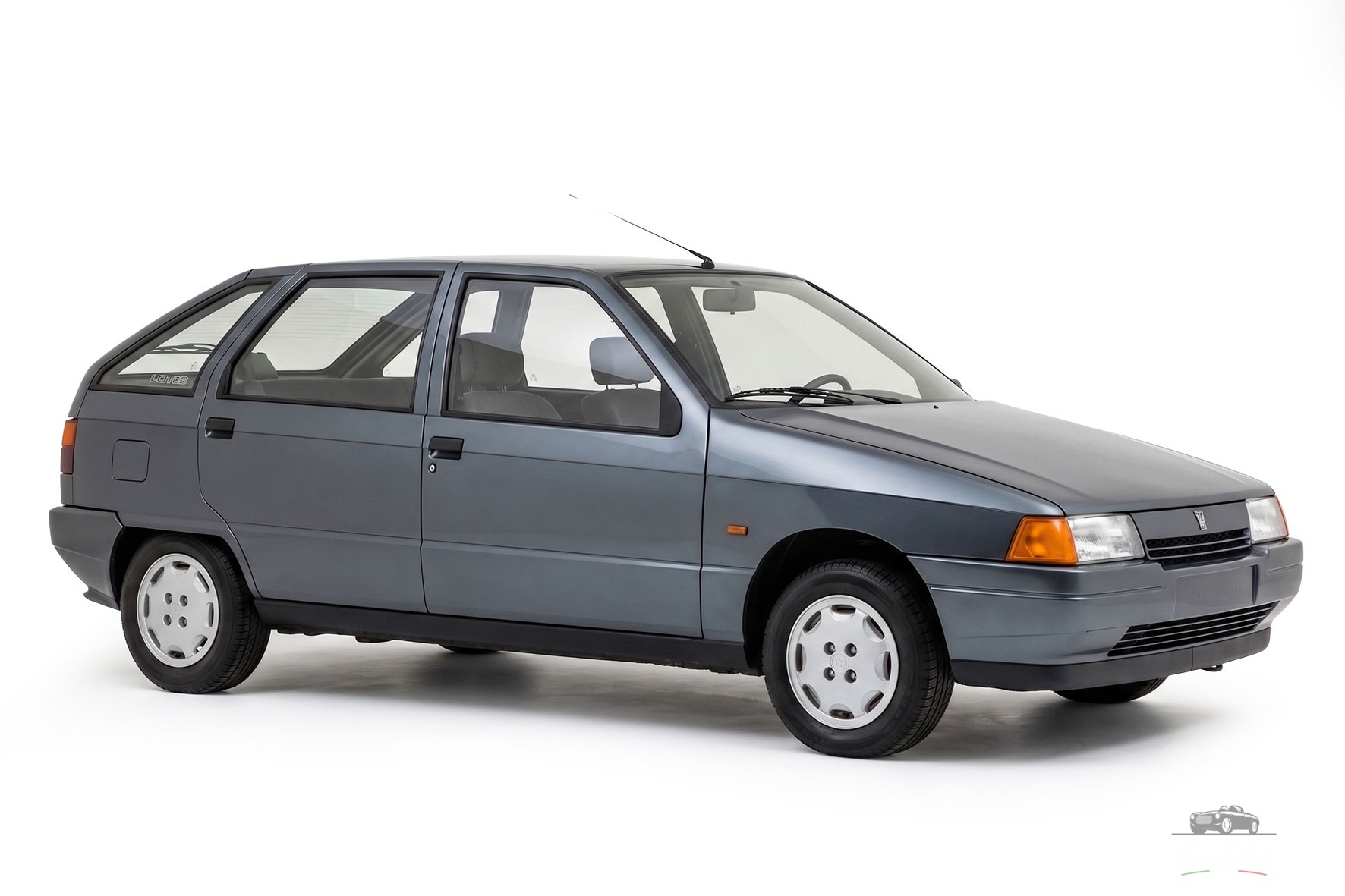
The Zastava Florida, also known by the manufacturer’s ZCZ abbreviation, was a five-door hatchback developed by the Yugoslav carmaker Zastava with the Italian design and engineering company Italdesign. Conceived as project Z-103, it represented an attempt to move beyond the smaller cars that had established Zastava’s reputation. The model was unveiled at the Belgrade Motor Show in April 1987 and entered series production in 1988. These dates describe two different stages: the presentation of the design and the start of regular manufacture.
In 1983, ZCZ began looking for a successor to the Yugo, whose architecture was derived from the Fiat 127. According to Italdesign’s project record, the Italian company participated in styling, planning, prototyping and development. Giorgetto Giugiaro was the named designer. The relationship was therefore broader than the supply of a sketch, but it should not be confused with coachbuilding: Zastava remained the manufacturer of the series-production Florida, while Italdesign was the design and development partner.
The programme sought to offer more passenger room and a more modern presentation than Zastava’s established small-car range. Although its proportions placed it among European family hatchbacks rather than experimental concept cars, the Florida introduced a substantially different appearance to the company’s catalogue. The design was developed with production in mind, not as a unique show-car body.
The production proposal combined a sharply inclined windscreen with a sloping bonnet, an upright rear window and an abruptly terminated tail. Its five-door arrangement provided rear-passenger access and a practical luggage opening without sacrificing a relatively compact footprint. Italdesign reported an aerodynamic drag coefficient of 0.279 for the project. This is a figure associated with the original design, not proof that every later trim or derivative had exactly the same aerodynamic properties.
Published specifications for early five-door versions give a wheelbase of 2,500 mm and a height of approximately 1,410 mm. Sources differ slightly over the nominal length and width, while equipment and mechanical specification also changed over the model’s life. Those discrepancies should be resolved against period manufacturer documentation before a single set of dimensions is applied indiscriminately to every variant.
The Florida was intended for volume manufacture and used a conventional front-engine, front-wheel-drive layout. Four-cylinder engines and manual transmissions were offered in different versions and markets. Engine displacement, output and ancillary equipment cannot be treated as uniform across the full production series. The later history of the model included changes in specification and branding; in the British market it was also known as the Yugo Sana. The Florida’s engineering history therefore belongs to a continuing production programme rather than a single, individually identified chassis.
The Florida illustrates cooperation between a Yugoslav mass-production manufacturer and an Italian design consultancy during the final years of the Cold War. The contribution of Italdesign is documented by the studio itself and by the Giugiaro project archive, while the manufacture of customer cars remained a separate industrial operation. This distinction matters when assigning the roles of manufacturer, designer and design studio in the vehicle record.
The wider relationship between Italian design houses and Eastern European manufacturers is discussed in Italian Coachbuilders Across the Iron Curtain, which also identifies the Florida within the Zastava programme. The example of a 1988 Florida preserved in the Giugiaro collection is useful evidence of the production design and its contemporary mechanical specification, but those details belong to that particular car and should not be generalized to every Florida built.
02 / TECHNICAL IDENTITY
03 / DESIGN, BODY & SUPPLIERS
Coachbuilder / Design studio
Established in 1968 by Giorgetto Giugiaro and Aldo Mantovani, Italdesign is an Italian design and engineering company known for production-car styling, concepts and prototypes for global manufacturers.
Explore record ↗Designer
Giorgetto Giugiaro is an Italian automotive and industrial designer whose career includes Italdesign and GFG Style, with a lasting influence on production-car and concept-car design.
Explore record ↗07 / GALLERY

THE CONVERSATION
Comments 0