
Andre Dubonnet
THE STORY
Overview
Biography and competition
André Dubonnet (28 June 1897 – 20 January 1980) was a French aviator, racing driver, industrial heir and automotive inventor. He served as a fighter pilot during the First World War, subsequently competed in motor racing, and represented France in bobsleigh at the 1928 Winter Olympic Games. Driving a Hispano-Suiza, he won the Coupe Georges Boillot at Boulogne-sur-Mer in July 1921 and the Grand Prix d’Automne at Monza in 1922. His competition career also included the Targa Florio and Grand Prix races with Hispano-Suiza, Duesenberg, Delage and Bugatti machinery.
Hispano-Suiza commissions
Dubonnet commissioned the 1924 Hispano-Suiza H6C ‘Tulipwood’ Torpedo, chassis 11012, engine 320001, with lightweight mahogany bodywork by aircraft manufacturer Nieuport-Astra to a design by Henri Chasseriaux. Dubonnet drove the car in the Targa Florio on 27 April 1924, finishing sixth overall, and in the accompanying Coppa Florio, finishing fifth. The surviving automobile was sold at RM Sotheby’s Monterey auction in August 2022 for USD 9,245,000, long after his ownership; that result is not a sale by Dubonnet.
Suspension and aerodynamic development
In the early 1930s Dubonnet developed a self-contained independent wheel-suspension system subsequently licensed to manufacturers including General Motors. He demonstrated the system in a specially adapted Hispano-Suiza at the Paris Motor Show in 1932 and later pursued streamlined coachwork with aerodynamicist Jean Andreau. Their projects included the Ford-based Dubonnet Dolphin and the 1938 Hispano-Suiza Dubonnet Xenia. The latter used modified Hispano-Suiza H6B running gear, a larger H6C engine and streamlined coachwork built by Saoutchik to Andreau’s design. The Xenia carries its own Automobiles André Dubonnet identification plate, type Xenia, number 103; it must not be confused with the 1924 Tulipwood chassis 11012. Dubonnet retained the Xenia for personal use.
Écurie Dubonnet and the Talbot-Maserati
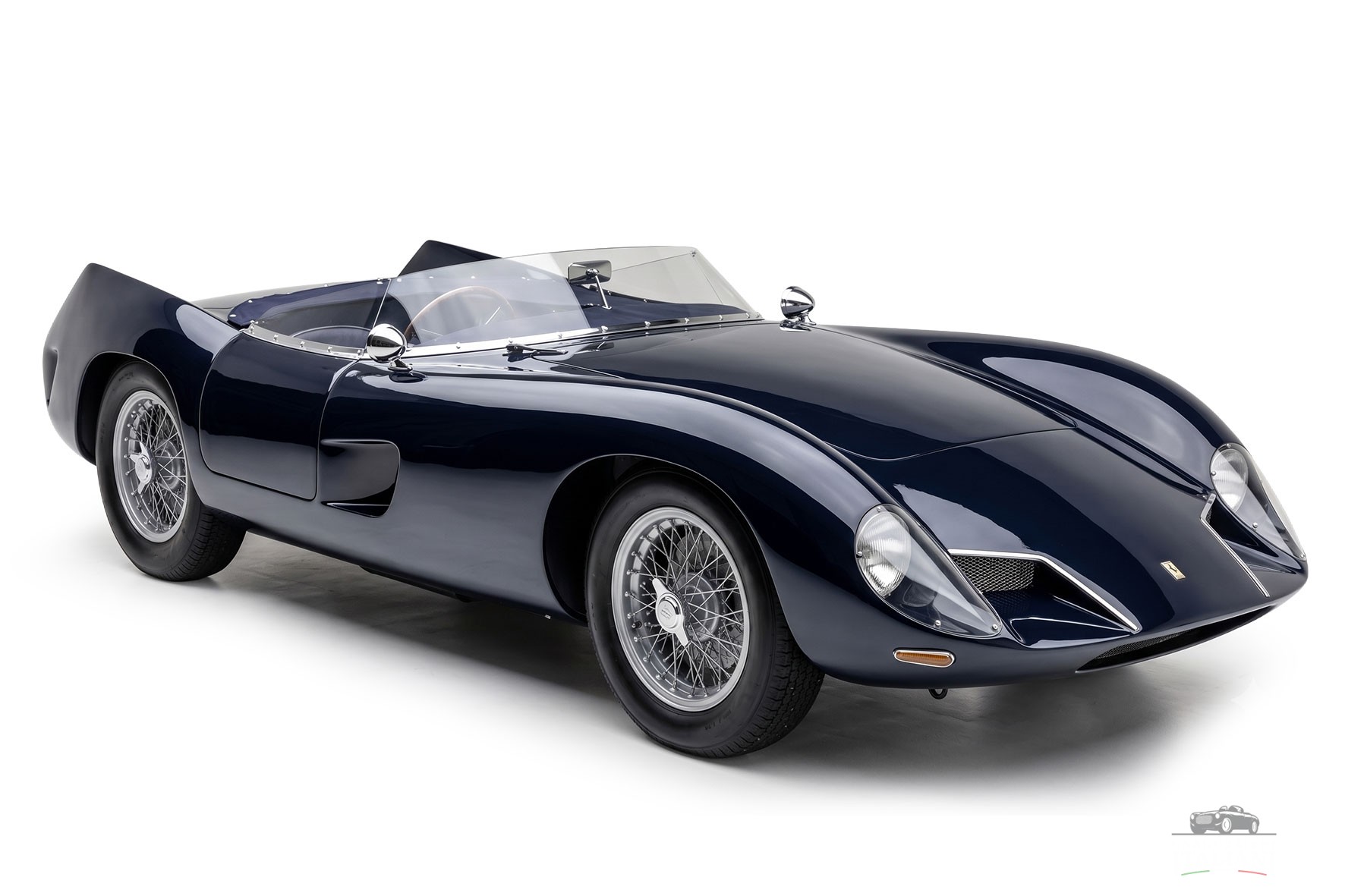
Dubonnet also became associated with two Talbot-Lago sports prototypes powered by Maserati engines, originally raced at Le Mans in 1956. The cars were subsequently acquired for Écurie Dubonnet and rebodied by the Modena firm Carrozzeria Campana for the 1957 Le Mans programme. The cars entered as numbers 22 and 23 had different starting and retirement histories. The surviving CI 2.0 record Talbot-Maserati Campana represents this two-car programme; individual chassis identities have not yet been independently established. Dubonnet’s role was that of owner and racing patron, not the coachwork manufacturer or the driver in the 1957 entries.
CONTINUE EXPLORING

THE CONVERSATION
Comments 0