
Pininfarina
Founded by Battista Pinin Farina in Turin in 1930, Pininfarina became one of the most influential Italian styling and coachbuilding houses, particularly through its work for Ferrari and other international manufacturers.
Explore record ↗
1982Coachwork by Pininfarina
THE VEHICLE AT A GLANCE
THE PEOPLE BEHIND THE CAR
Founded by Battista Pinin Farina in Turin in 1930, Pininfarina became one of the most influential Italian styling and coachbuilding houses, particularly through its work for Ferrari and other international manufacturers.
Explore record ↗01 / THE STORY
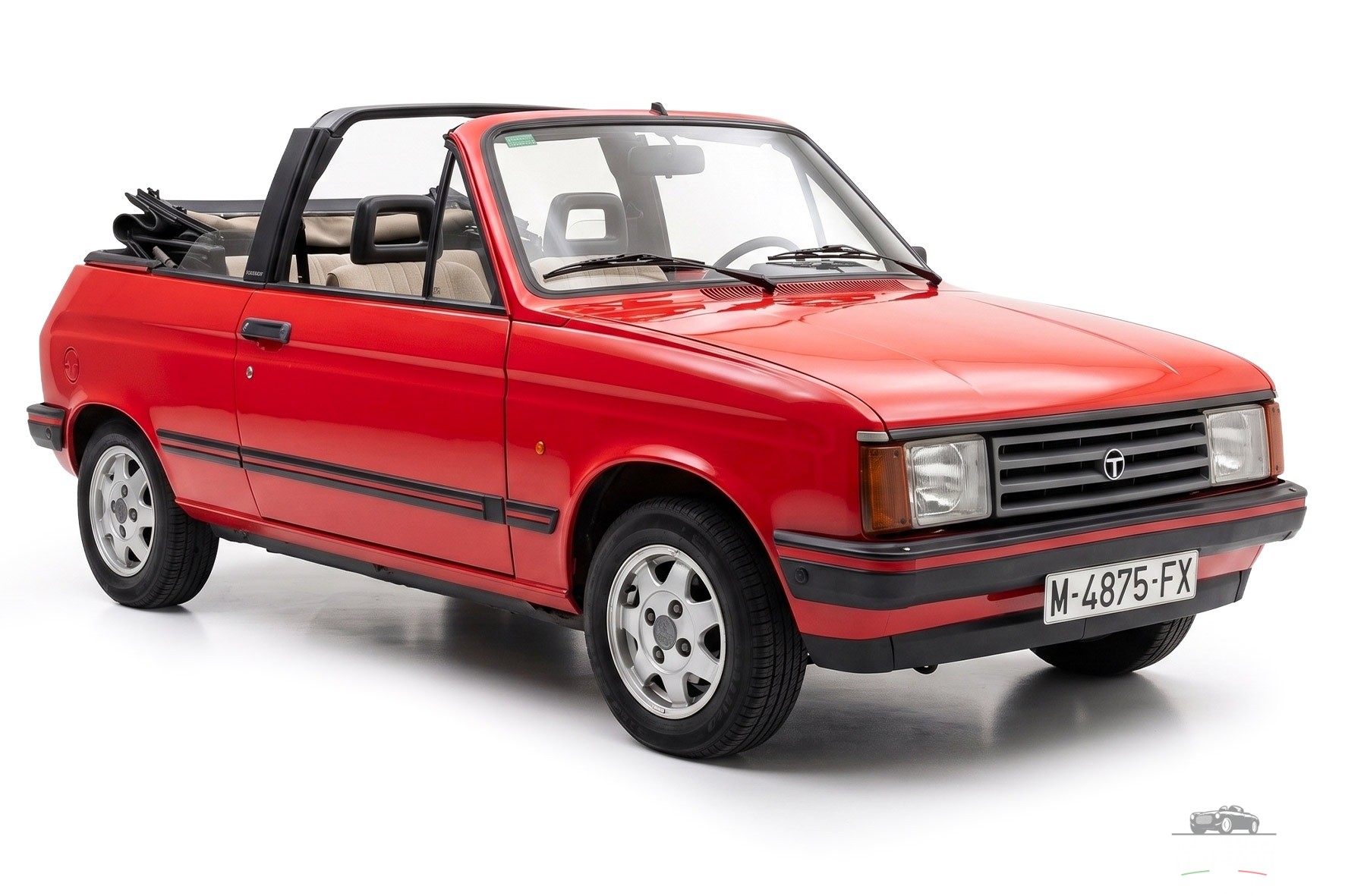
The Talbot Samba Cabriolet, introduced in 1982, was a notable collaboration between Talbot and Pininfarina, the renowned Italian coachbuilder with a history of designing open-top Peugeots since the 1960s. This convertible variant was designed to complement the standard three-door hatchback model, offering a more glamorous option in the compact car segment. Powered by a 1360 cc engine, the Samba Cabriolet initially came with two engine choices: 53 kW (72 PS) and 59 kW (80 PS). The latter engine, shared with the Rallye model, provided ample performance for its size and class. Updates in 1984 introduced a revised cabriolet featuring the modernized Peugeot 104 dashboard, twin carburetors, and an improved convertible roof. Pininfarina’s craftsmanship ensured that the Samba Cabriolet not only looked stylish but also delivered agile handling, manageability, and fuel efficiency, appealing particularly to younger drivers and urban commuters. It quickly became a sought-after choice in the small convertible market, distinguishing itself as the sole cabriolet offering from Talbot at the time. Production figures reflect its popularity, with Pininfarina building a total of 13,062 Talbot Samba Cabriolet during its manufacturing run. This rarity adds to its allure among collectors and enthusiasts today, highlighting its significance in automotive history as a well-crafted and distinctive convertible from the 1980s.
02 / TECHNICAL IDENTITY
03 / DESIGN, BODY & SUPPLIERS
Coachbuilder / Design studio
Founded by Battista Pinin Farina in Turin in 1930, Pininfarina became one of the most influential Italian styling and coachbuilding houses, particularly through its work for Ferrari and other international manufacturers.
Explore record ↗04 / CHRONOLOGY
07 / GALLERY
THE CONVERSATION
Comments 0