
Pininfarina
Founded by Battista Pinin Farina in Turin in 1930, Pininfarina became one of the most influential Italian styling and coachbuilding houses, particularly through its work for Ferrari and other international manufacturers.
Explore record ↗
1972
THE VEHICLE AT A GLANCE
THE PEOPLE BEHIND THE CAR
Founded by Battista Pinin Farina in Turin in 1930, Pininfarina became one of the most influential Italian styling and coachbuilding houses, particularly through its work for Ferrari and other international manufacturers.
Explore record ↗Paolo Martin worked with Giovanni Michelotti before joining Bertone and Pininfarina. At Pininfarina he developed the Ferrari 512 S Modulo and Fiat 130 Coupe, and also worked on the Rolls-Royce Camargue. He later became styling director at Ghia.
Explore record ↗01 / THE STORY
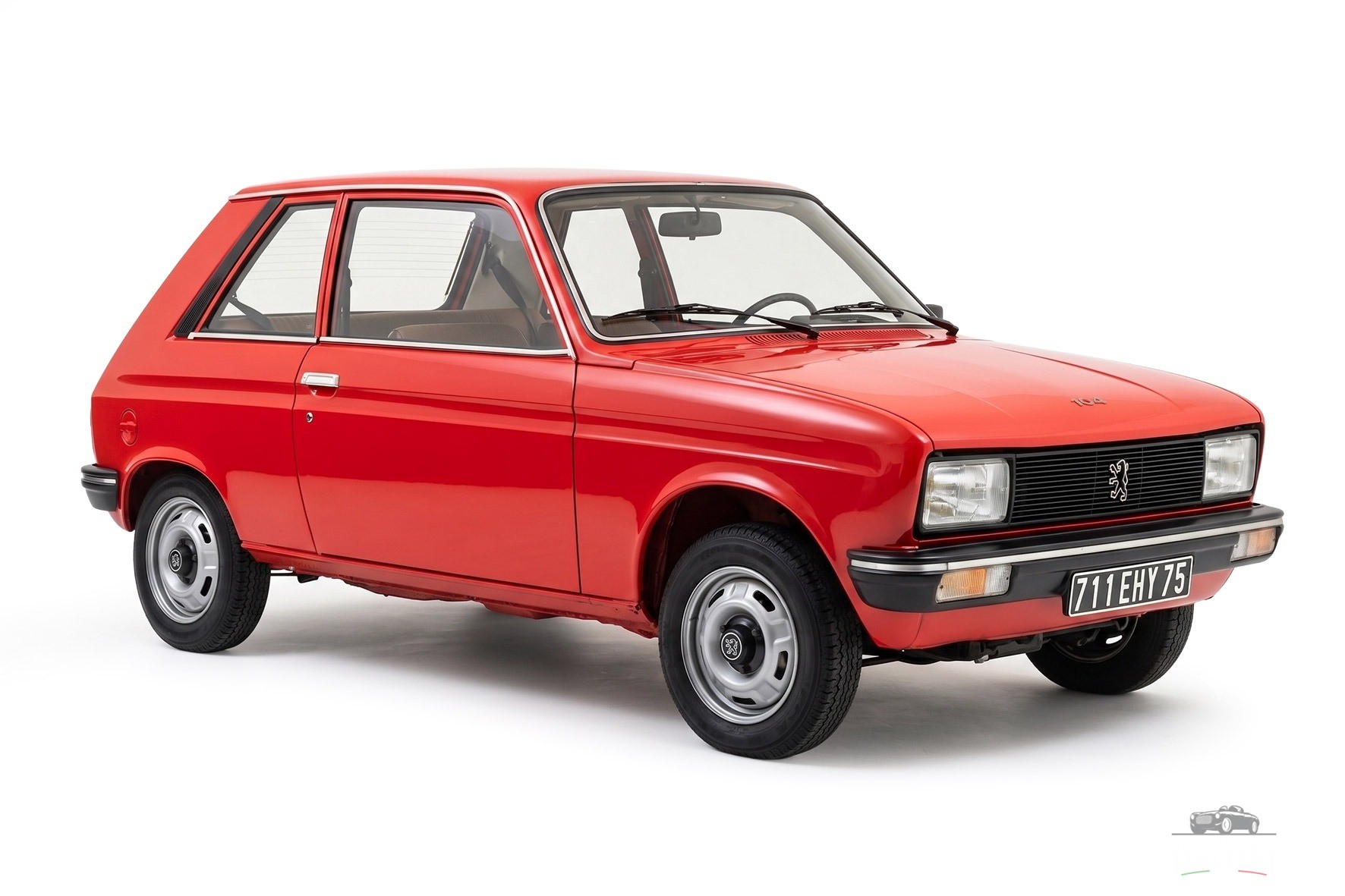
The Peugeot 104 is a charming and practical supermini that was designed by Paolo Martin at Pininfarina. Produced by the French car manufacturer Peugeot from 1972 to 1988, the 104 was an important model for the brand, being the first car made at their Mulhouse plant. It also marked a shift for Peugeot, as it was the first new model since 1955 to not offer a diesel option. The car made its debut at the September 1972 Paris Motor Show, where it quickly caught the attention of the public with its compact and stylish design. At launch, the Peugeot 104 was offered as a four-door fastback, with a sleek sloping rear end that hinted at the idea of a hatchback, but it retained a traditional separate boot/trunk, typical of saloon cars. This practical design made the car highly versatile while maintaining a chic and modern aesthetic. Under the hood, the Peugeot 104 was powered by a 954 cc Douvrin engine, known as the PSA X engine. This engine, developed in collaboration with Renault, was an all-aluminium alloy unit with a chain-driven overhead cam, and it featured a unique gearbox-in-sump arrangement. The transmission-in-sump design was similar to the system used in the iconic Mini, providing excellent fuel efficiency and contributing to the overall refinement of the car. The engine was mounted at a 72-degree backward lean, which not only improved balance but also enhanced the car’s driving dynamics. Thanks to its efficient engine and exceptional chassis, the Peugeot 104 delivered an outstanding combination of comfort, ride quality, and handling. Whether navigating city streets or taking on longer journeys, the 104’s compact size and impressive performance made it a favorite among those seeking an economical yet enjoyable driving experience. The Peugeot 104 is a testament to Peugeot’s ability to create cars that are both functional and stylish, with a lasting appeal that endures even decades after its production ceased.
02 / TECHNICAL IDENTITY
03 / DESIGN, BODY & SUPPLIERS
Coachbuilder / Design studio
Founded by Battista Pinin Farina in Turin in 1930, Pininfarina became one of the most influential Italian styling and coachbuilding houses, particularly through its work for Ferrari and other international manufacturers.
Explore record ↗Attributed designer
Paolo Martin worked with Giovanni Michelotti before joining Bertone and Pininfarina. At Pininfarina he developed the Ferrari 512 S Modulo and Fiat 130 Coupe, and also worked on the Rolls-Royce Camargue. He later became styling director at Ghia.
Explore record ↗04 / CHRONOLOGY
07 / GALLERY
THE CONVERSATION
Comments 0