
Balbo
Founded in Turin by Alfonso Balbo, Carrozzeria Balbo produced coachbuilt bodies on Fiat and Lancia chassis, including special sporting and formal designs during the 1920s.
Explore record ↗
1953Coachwork by Balbo
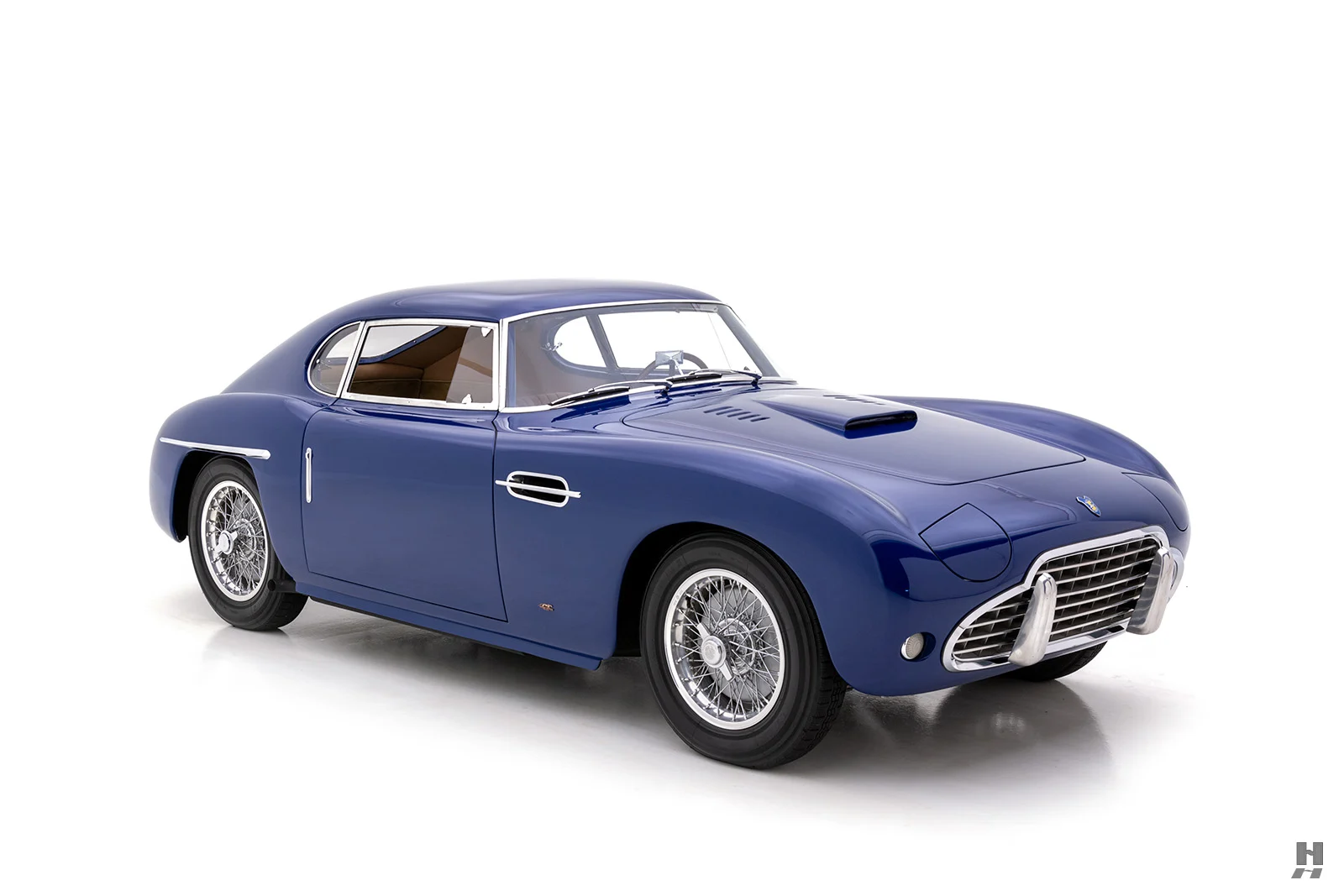
THE VEHICLE AT A GLANCE
THE PEOPLE BEHIND THE CAR
Founded in Turin by Alfonso Balbo, Carrozzeria Balbo produced coachbuilt bodies on Fiat and Lancia chassis, including special sporting and formal designs during the 1920s.
Explore record ↗01 / THE STORY
The Siata 208 CS Balbo was introduced in 1952 at the Turin Auto Show, it was the successor to the Siata Daina. 18 Siata 208 CS are said to have been built, of which, 11 were bodied by Balbo, while the other 7 featured bodies by Stabilimenti Farina. A handful of the 11 cars bodied by Balbo were badged as “200 CS” while the rest were “208 CS”. At least one of the Stabilimenti Farina bodied cars built was a convertible/spyder model. Fiat devised a strategy to manufacture a four-door car specifically for the American market. Realizing that a 569 cc four-cylinder Topolino would not be popular in the United States, they opted to develop a completely new 2.0-liter V8 engine with the assistance of Siata. Regrettably, the sedan design did not receive a favorable response. However, recognizing the potential of the new all-aluminum engine, Fiat decided to install it in their new 8V “Otto Vu” sports car. Despite being highly competitive, the 8V faced slow sales in a post-war economy. Fortunately, Fiat offered Siata around 50 surplus 8V engines to power their own custom-designed cars, marking a stroke of luck for both parties. Siata embarked on the task of developing the specifications for their new 208S (Spider) and 208CS (Coupe) models, armed with a powerplant. The 208 was a technologically advanced vehicle for its time, featuring a tubular ladder chassis construction and independent suspension on all four wheels. The 8V engine, enhanced with Siata intake, camshaft, and carburetor tuning, generated approximately 125 horsepower, which was transmitted to the rear wheels through a five-speed transmission. Collaborating with renowned Italian coachbuilders, Siata offered the 208S barchetta with hand-formed aluminum bodies crafted by Michelotti and Carrozzeria Motto, while the 208CS berlinetta initially had bodies from Stabilimenti Farina and later from Carrozzeria Balbo. Regardless of the coachbuilder, both versions of the 208 exemplify the aesthetics and construction techniques of their era, exuding a captivating beauty. Throughout its production, around 53 208 Siatas were sold, out of which only 18 were produced as 208CS Berlinetta coupes. A mere eleven of these were elegantly bodied by Carrozzeria Balbo. During the early 1950s, Siata, a small specialty manufacturer, managed to establish an impressive network of dealers in the United States. Prominent individuals such as Ernie McAfee, John Edgar, and Pavia & Co enthusiastically embraced Siata’s offerings. However, it was Tony Pompeo, the operator of Fergus Motors located at 444 West 55th Street in New York, who played a crucial role in introducing Siata to American enthusiasts. Interestingly, Pompeo’s involvement in the automotive industry extended beyond Siata. His diverse portfolio included brands like Bandini, Stanguellini, Abarth, Cisitalia, and occasionally Alfa Romeo and Maserati, as these specialty cars catered to a niche market. Notably, Pompeo was renowned for exclusively importing competition-oriented vehicles. Renowned racer René Dreyfus revealed that Pompeo was not particularly skilled as a driver, often entrusting the racing of his imported cars to individuals like Robert Grier, the first owner of chassis number CS 071. Grier likely participated in races such as the Floyd Bennett Grand Prize Cup, a 100-lap event held at Brooklyn’s Floyd Bennett Field on August 29, 1953, where the Siata finished 18th out of 43 competitors. Additionally, Grier also took part in the Keene Mountain Hill Climb in upstate New York.
Photo courtesy of Hyman Ltd.
02 / TECHNICAL IDENTITY
03 / DESIGN, BODY & SUPPLIERS
Coachbuilder / Design studio
Founded in Turin by Alfonso Balbo, Carrozzeria Balbo produced coachbuilt bodies on Fiat and Lancia chassis, including special sporting and formal designs during the 1920s.
Explore record ↗04 / CHRONOLOGY
05 / PEOPLE, COLLECTIONS & MUSEUMS
07 / CHASSIS REGISTER
08 / GALLERY
THE CONVERSATION
Comments 0