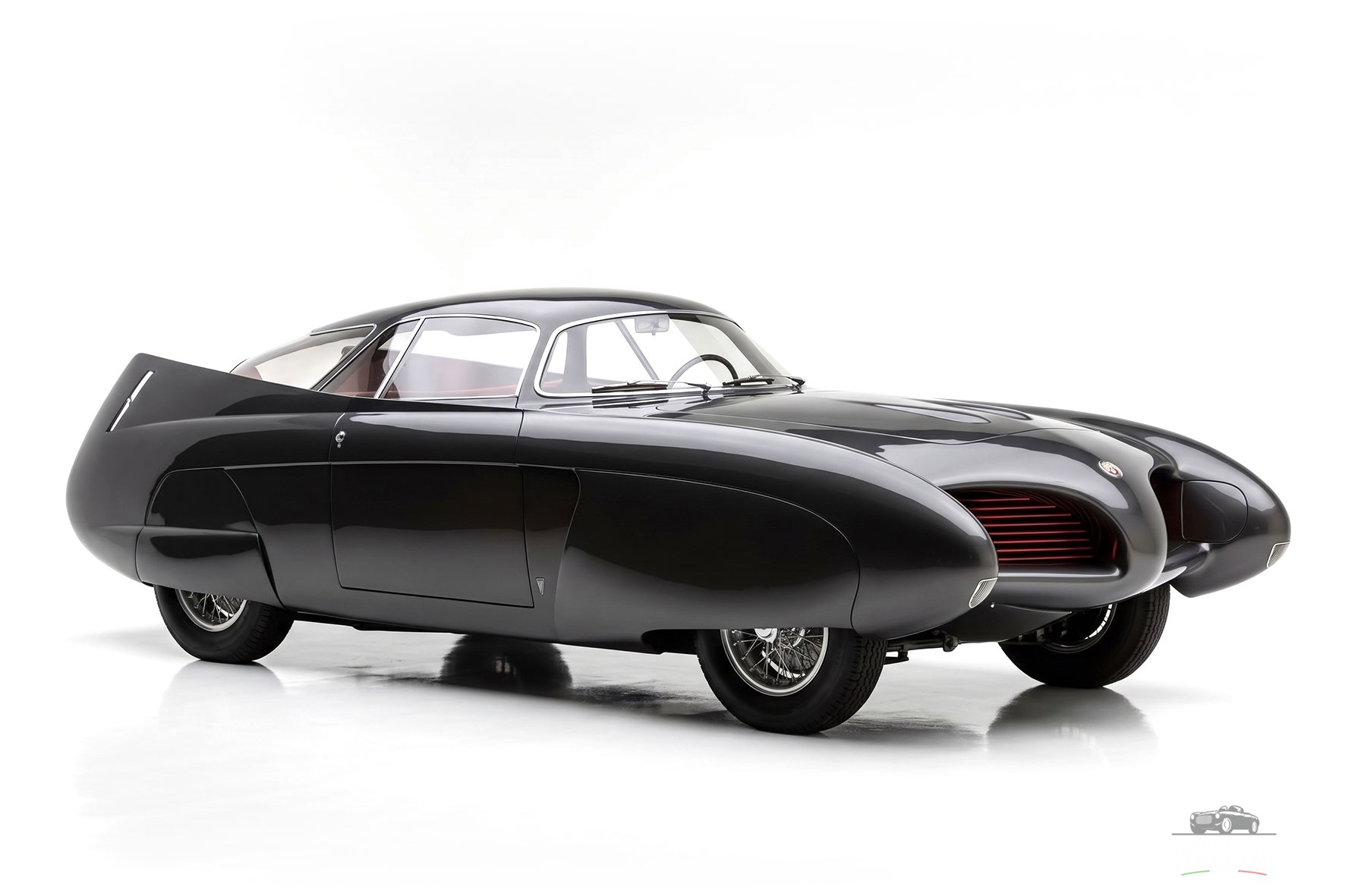
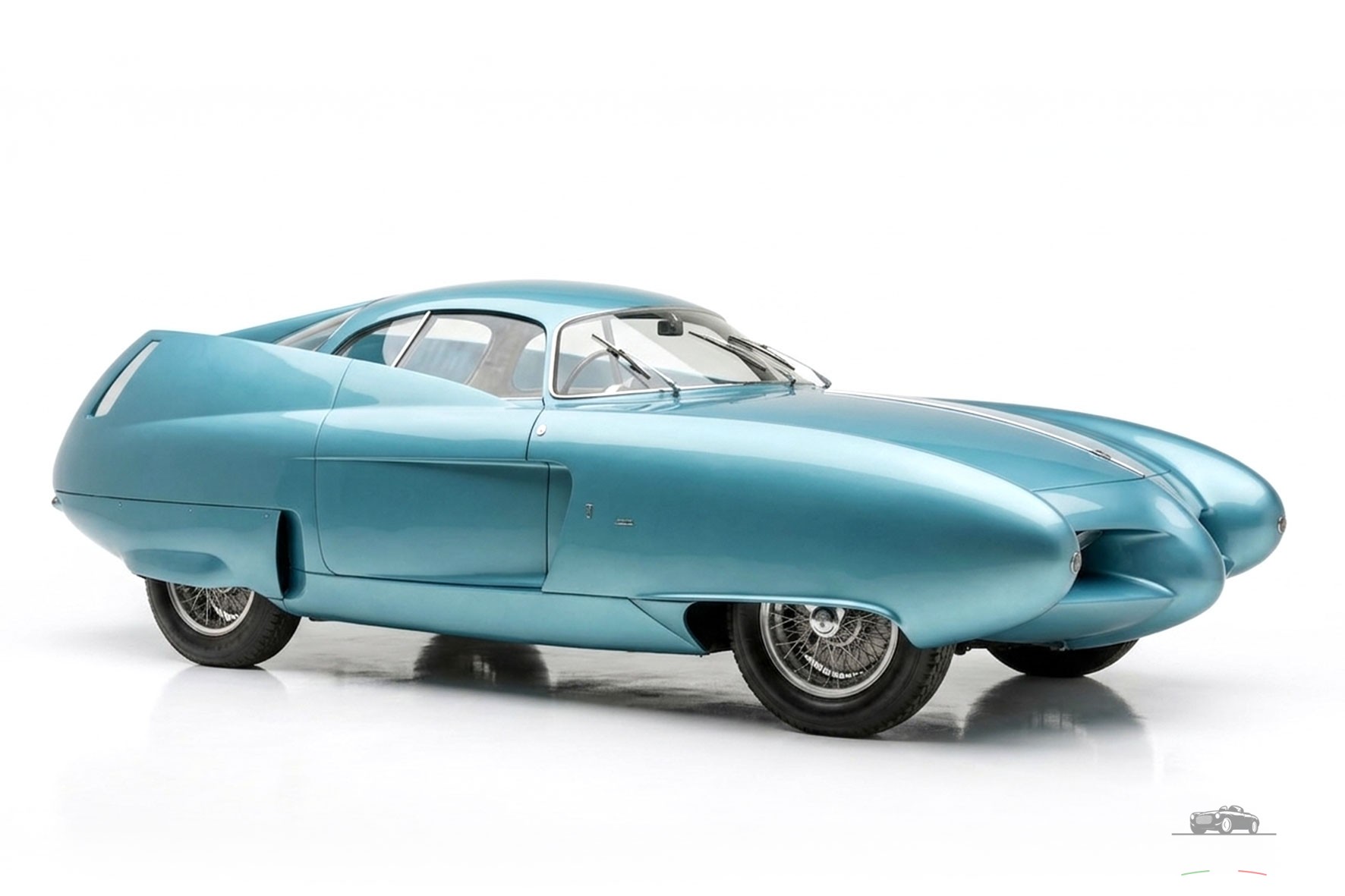
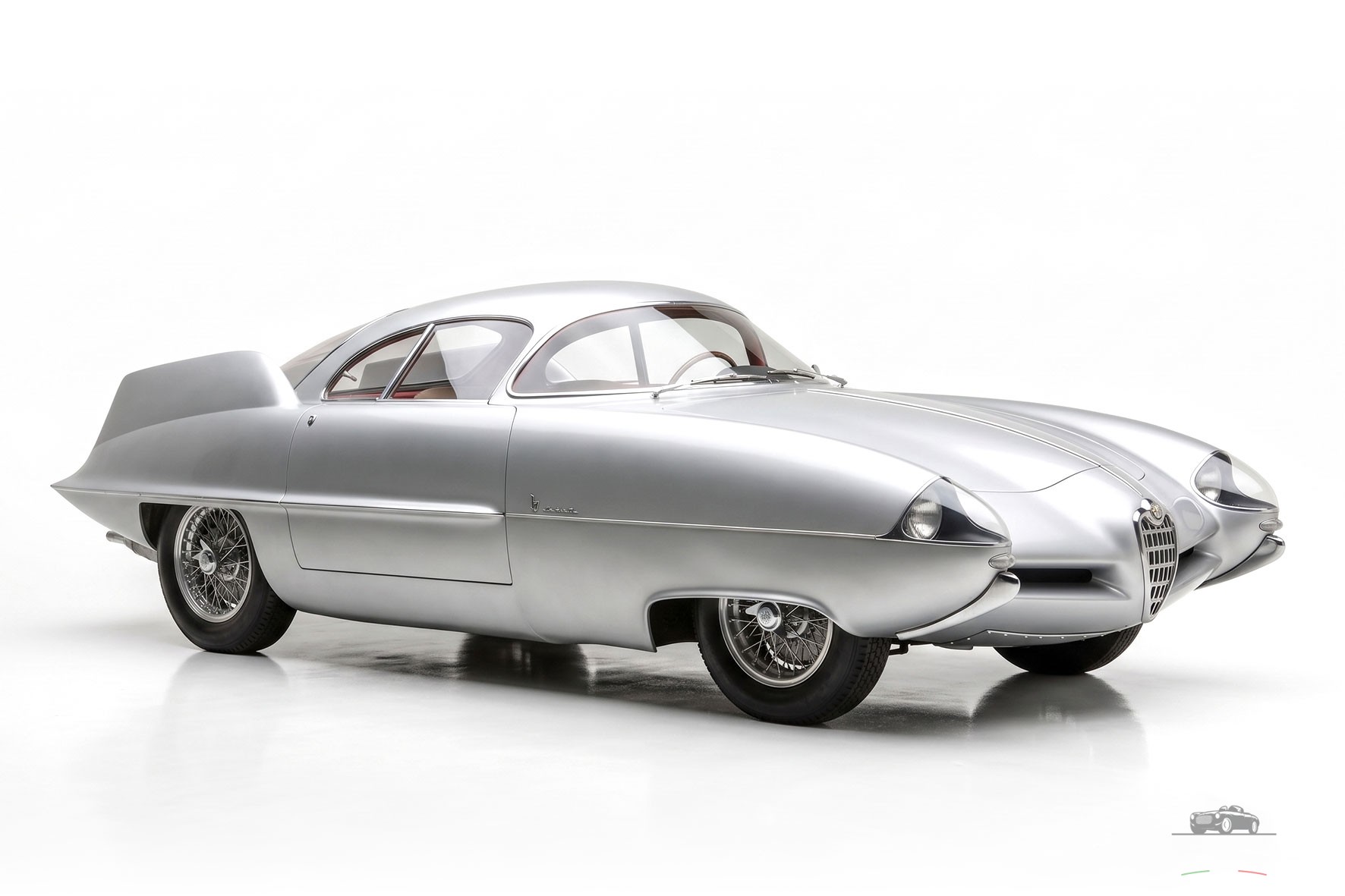
The Alfa Romeo B.A.T. 5 (1953) is an experimental two-door coupé designed by Franco Scaglione and constructed by Carrozzeria Bertone on Alfa Romeo 1900 mechanical foundations. Its documented chassis identity is AR1900 01396. The initials stand for Berlinetta Aerodinamica Tecnica, the name of a sequence of aerodynamic studies developed in Turin. B.A.T. 5 was the first completed car of the three historic prototypes and was unveiled at the Turin Motor Show in April 1953.
Project and coachwork
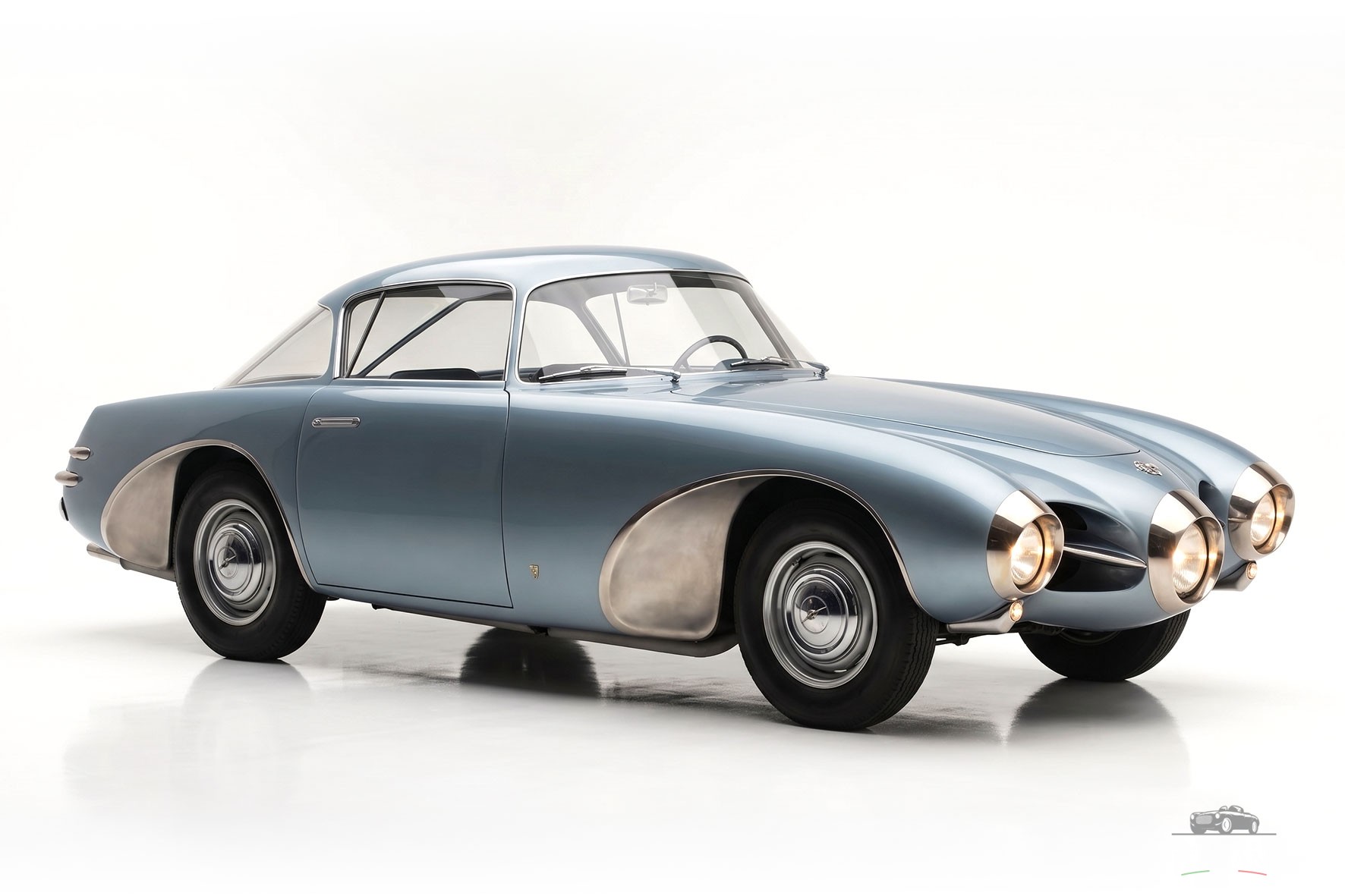
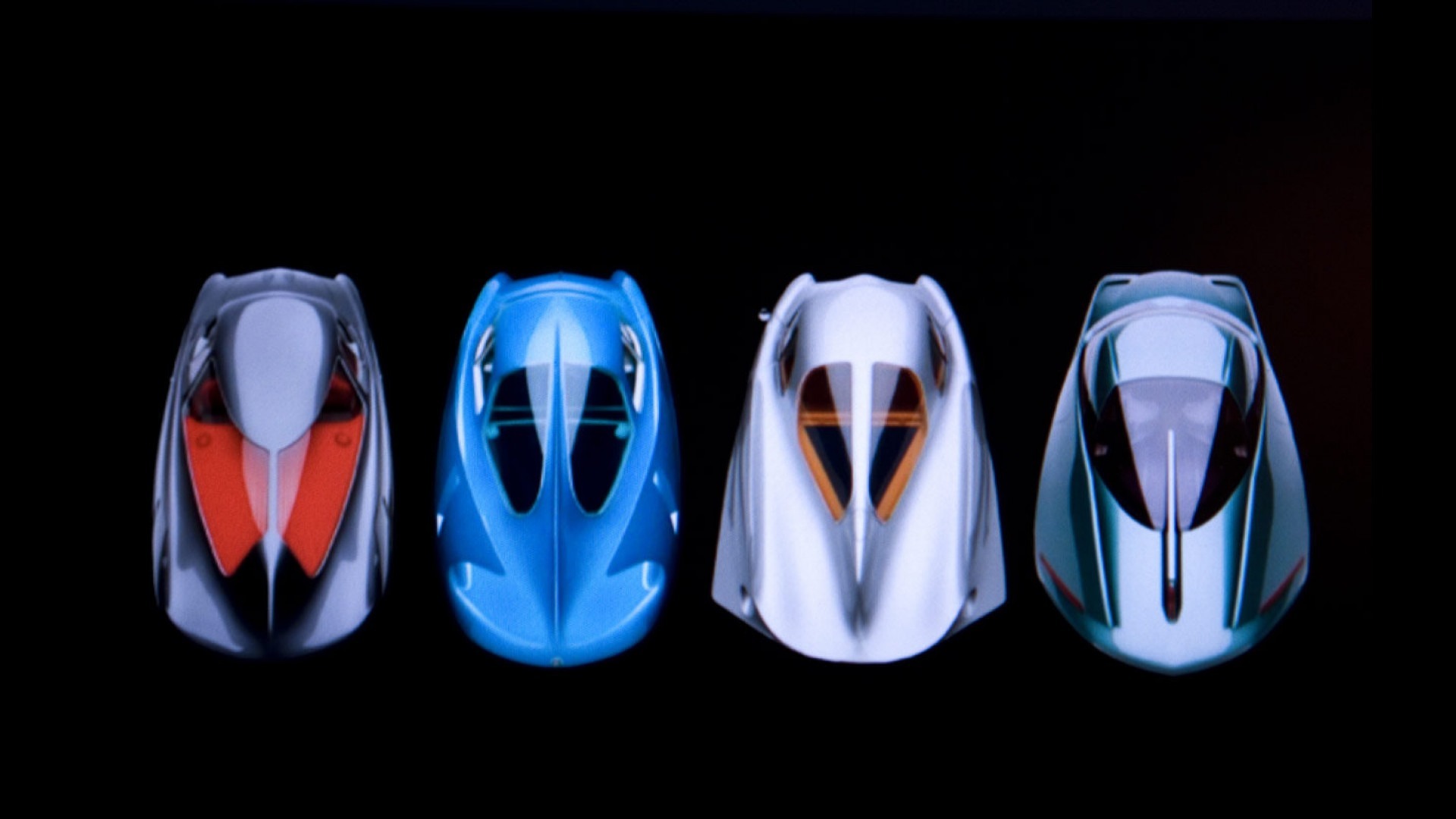
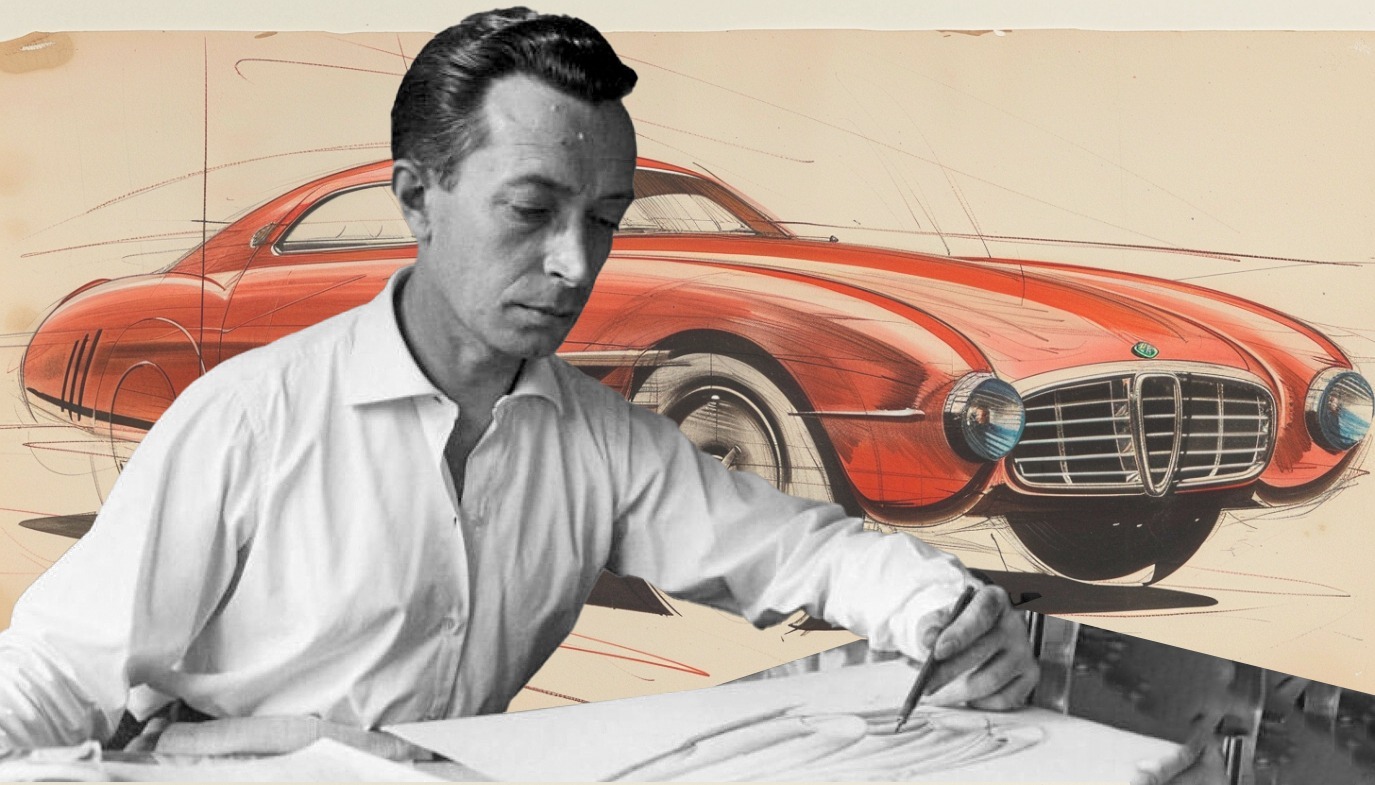
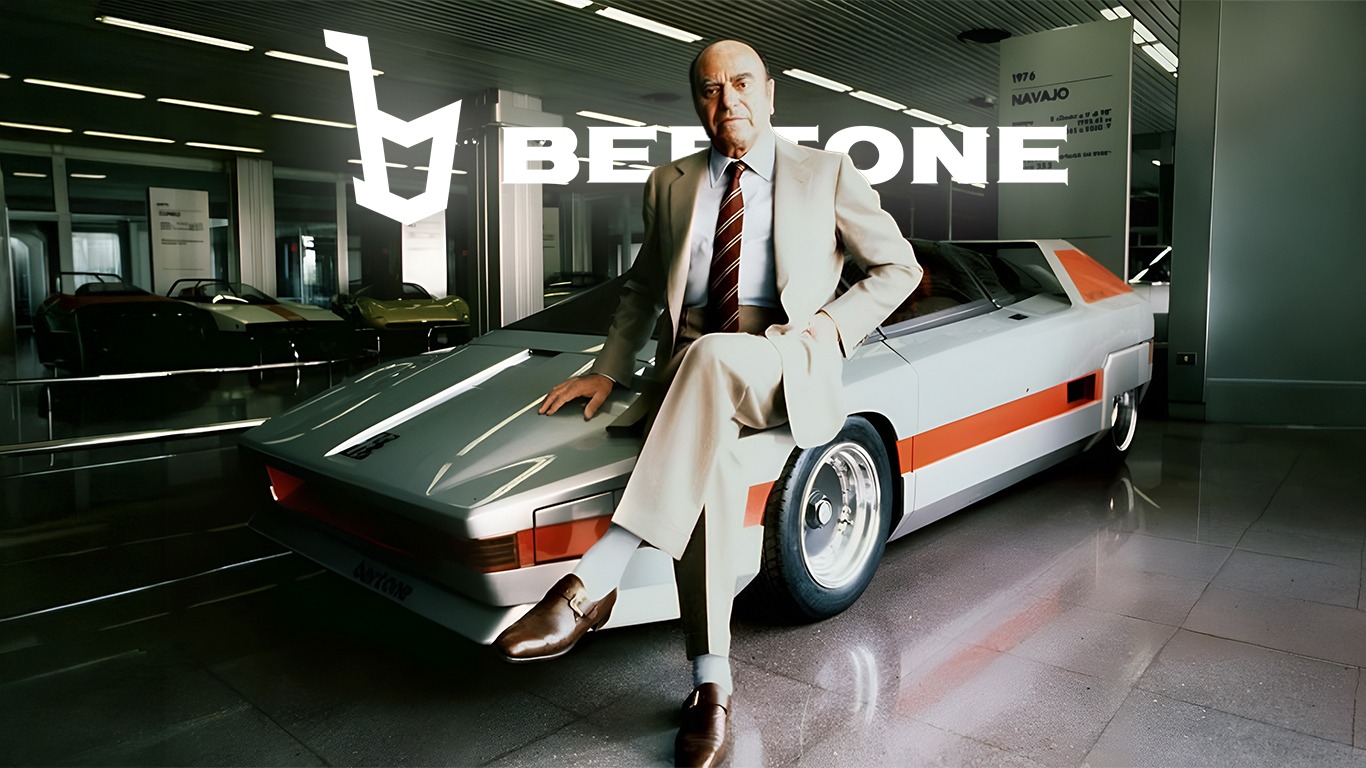
The design followed experiments undertaken at Bertone under Nuccio Bertone, including the Abarth 1500 Biposto of 1952. Scaglione explored the relationship between body volume, wheel openings, glazing and airflow around a moving car. According to the 2020 Sotheby’s historical catalogue, four full-size design studies preceded the finished B.A.T. 5, accounting for the numeral in its name. Bertone’s craftsmen translated the final proposal into a hand-built body intended to demonstrate aerodynamic efficiency rather than a new Alfa Romeo production range.
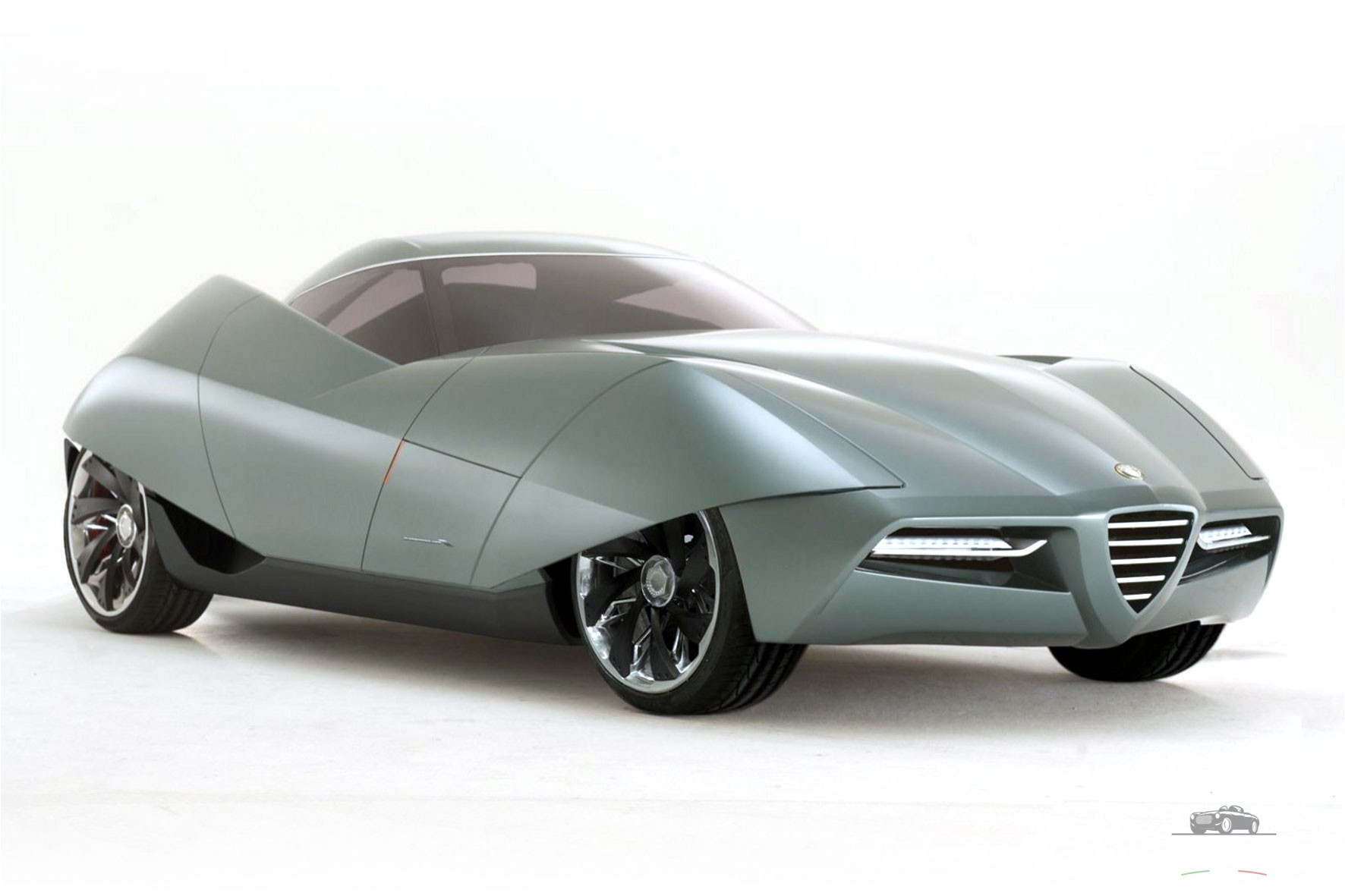
The front wings extend into rounded pontoon forms around a relatively narrow central nose. Retractable headlamps were incorporated into the wings so that the lighting equipment could be concealed within the contours. The front wheel openings were carefully shaped and the rear wheels largely covered. A broad, curved windscreen leads into a low cabin, while a divided rear window and inward-sweeping tail fins define the back of the car. The arrangement reduced exposed discontinuities and sought to manage the wake behind the body.
Mechanical specification and aerodynamics
The car retained an Alfa Romeo four-cylinder, twin-overhead-camshaft powertrain mounted at the front, driving the rear wheels through a four-speed manual gearbox. The specialist chassis record for 01396 identifies a displacement of 1,975 cc and a wheelbase of 2,500 mm. It describes twin Solex carburettors, hydraulic drum brakes and independent front suspension with double wishbones and coil springs. The documented unladen weight is approximately 1,100 kg. Published engine-output figures are inconsistent: the Automotive Masterpieces specification gives 115 hp at 5,500 rpm, while a Frist Art Museum description gives 75 hp. A definitive power figure should therefore not be assigned without further examination of the original engine specification.
A drag coefficient of approximately 0.23 is widely reported for B.A.T. 5, and the Sotheby’s catalogue cites a measured speed of 123.6 mph, approximately 199 km/h. The surviving published descriptions do not establish the full methodology for the aerodynamic measurement. These values are historical reports, rather than independently reproduced contemporary test results.
Exhibitions and individual history
Following its appearance in Turin in 1953, B.A.T. 5 entered the possession of American importer Stanley H. Arnolt. It appeared at the International Motor Sports Show in New York in February 1954. Later ownership is documented through Joe Prysak and Said Marouf, although the available histories disagree over the exact year in which Prysak acquired the car. In August 1989 B.A.T. 5 was reunited with its two successors at Pebble Beach, where Nuccio Bertone attended the exhibition. The trio returned to Pebble Beach in 2005, was shown at the Frist Art Museum in Nashville in 2016, and appeared together again at the 75th-anniversary Pebble Beach Concours d’Elegance in August 2026.
The B.A.T. sequence
The experiment continued with the B.A.T. 7 of 1954, chassis AR1900C 01485, and the B.A.T. 9d of 1955, chassis AR1900 01600. Each is a separate automobile with its own history and mechanical identity. The three prototypes were eventually assembled in one collection and sold as a single group in 2020, without an individual sale price allocated to B.A.T. 5. Their design development is examined in the Bertone B.A.T. programme history. The later B.A.T. 11 was a distinct, non-running Bertone design model commissioned decades afterward.


THE CONVERSATION
Comments 0