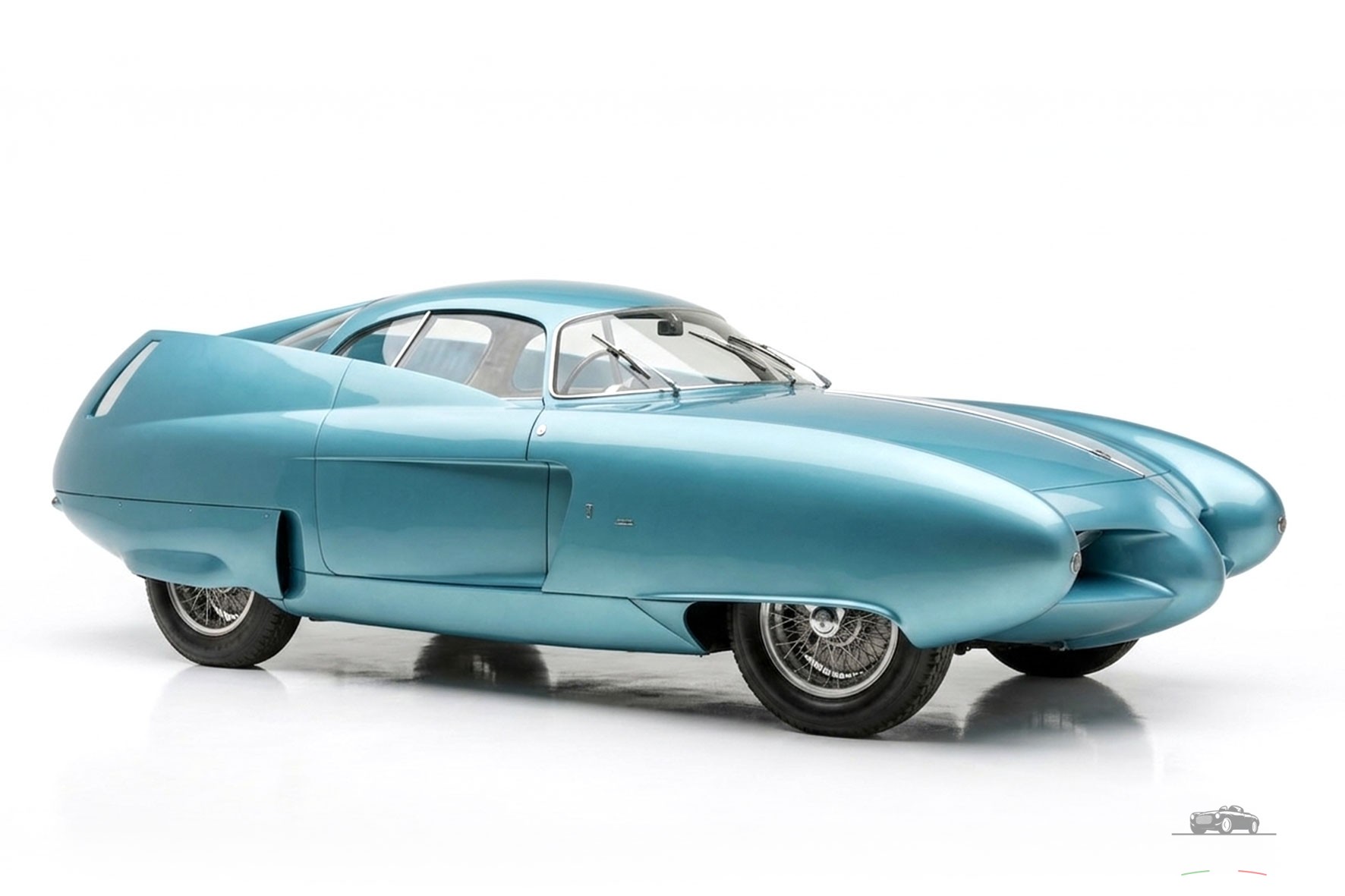
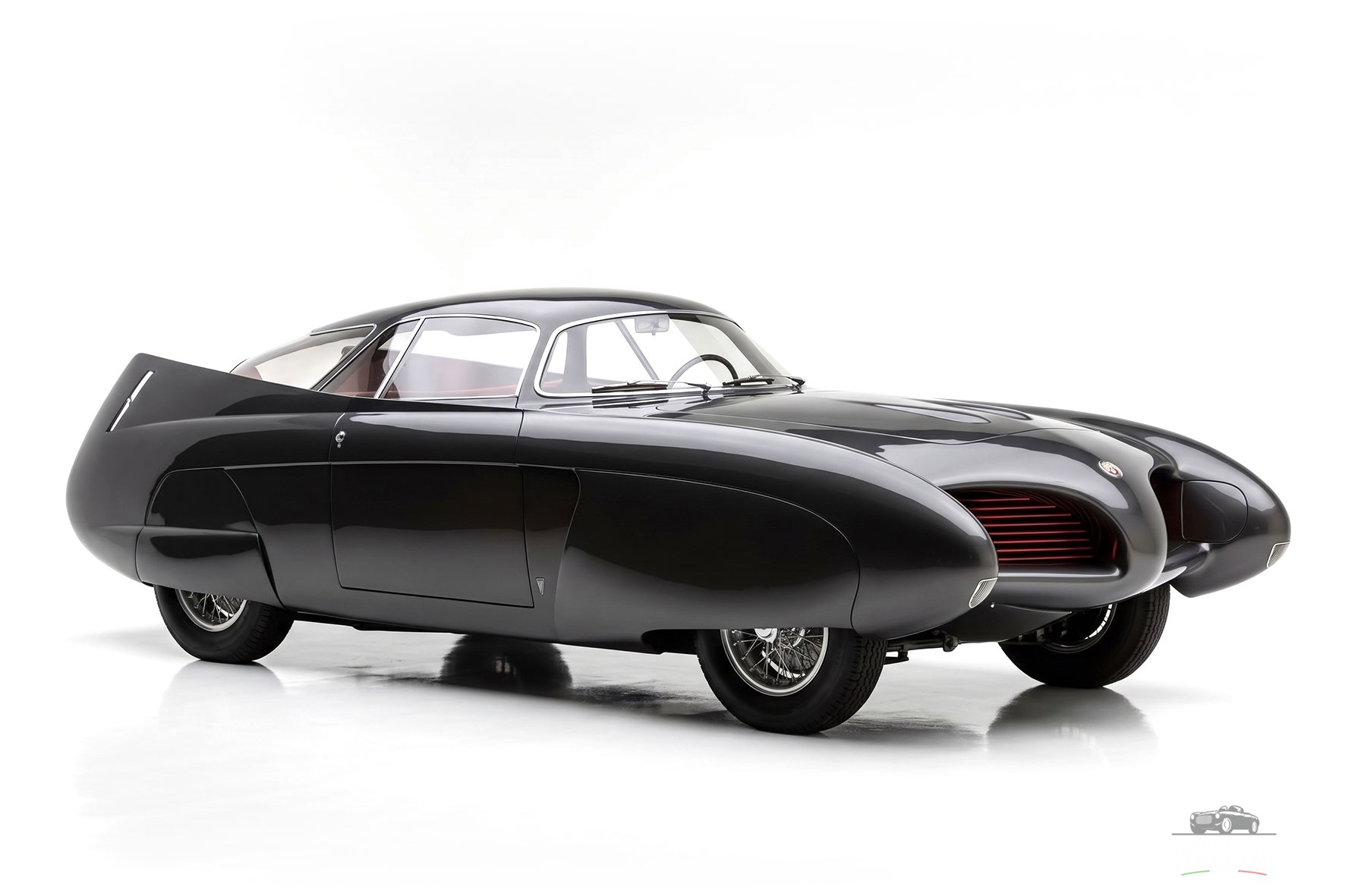
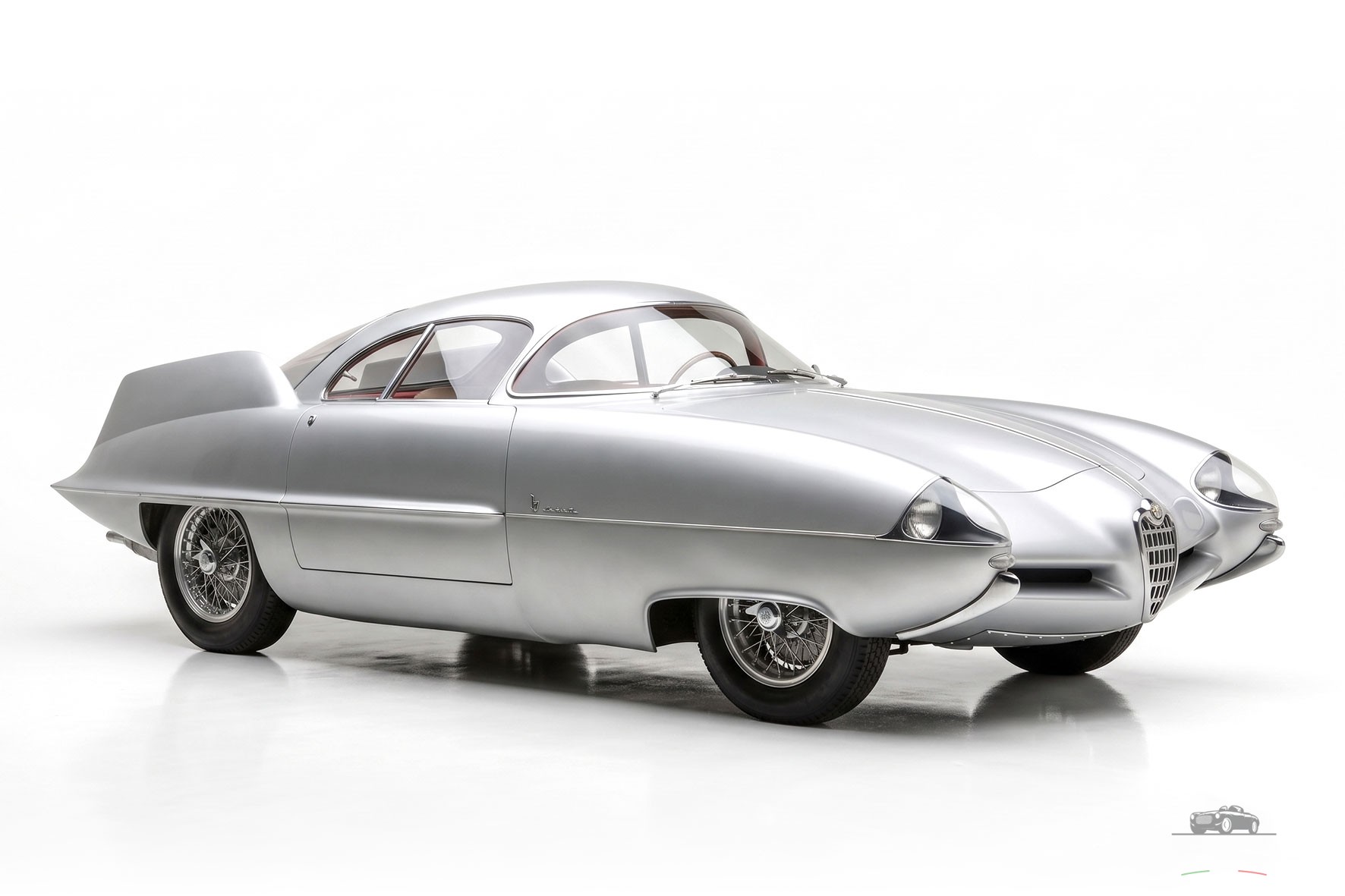
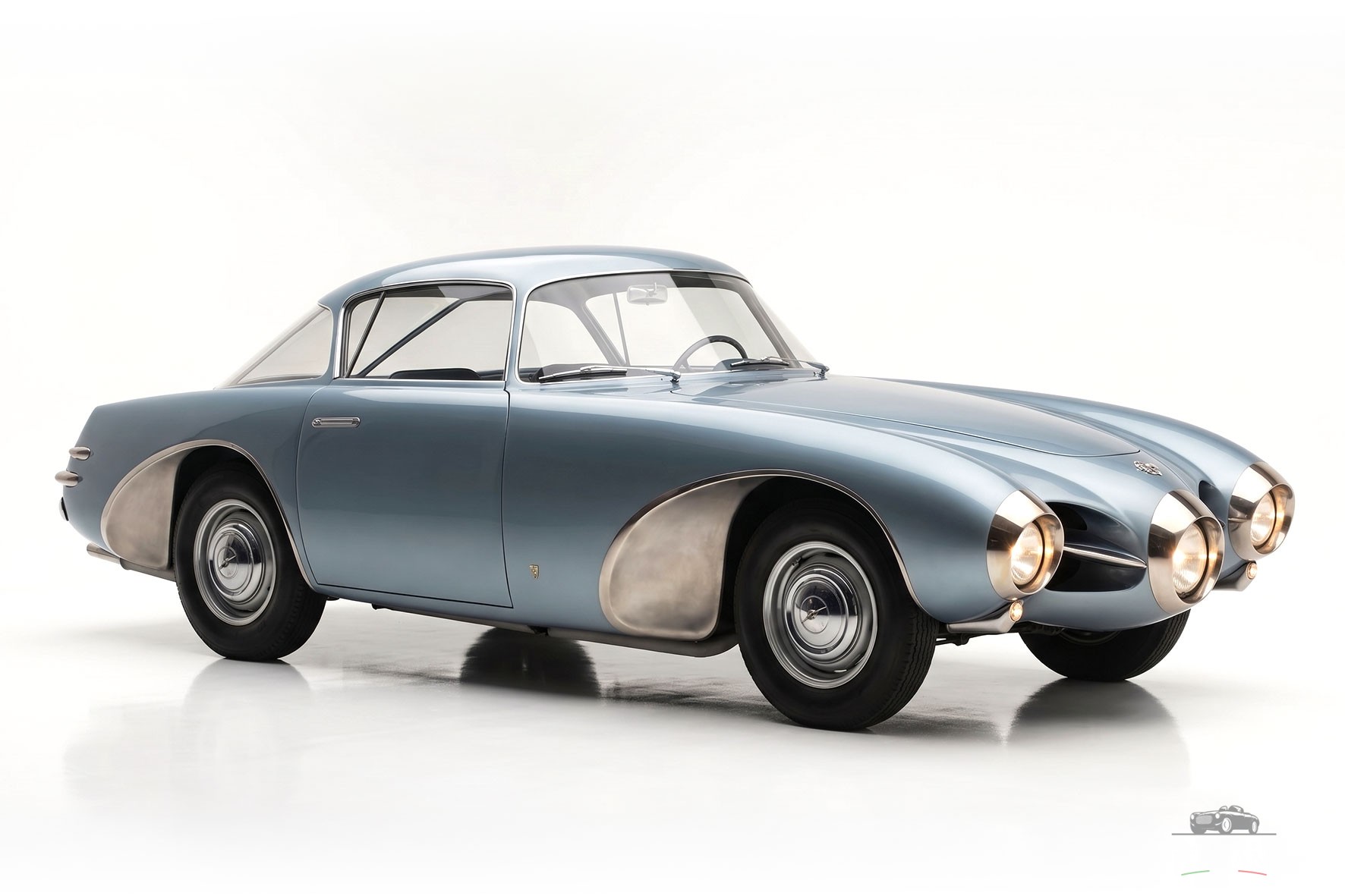
The 1954 Alfa Romeo B.A.T. 7 is a one-off aerodynamic coupé designed by Franco Scaglione and constructed by Carrozzeria Bertone on an Alfa Romeo 1900C chassis. Identified as AR1900C 01485 in the 2020 Sotheby’s catalogue, it was the second car in the Berlinetta Aerodinamica Tecnica programme, following the B.A.T. 5 of 1953 and preceding the B.A.T. 9d of 1955. B.A.T. 7 was presented at the Turin Motor Show in April 1954 as an experimental, fully bodied automobile rather than a design drawing or a planned series-production model.
Design and aerodynamic programme
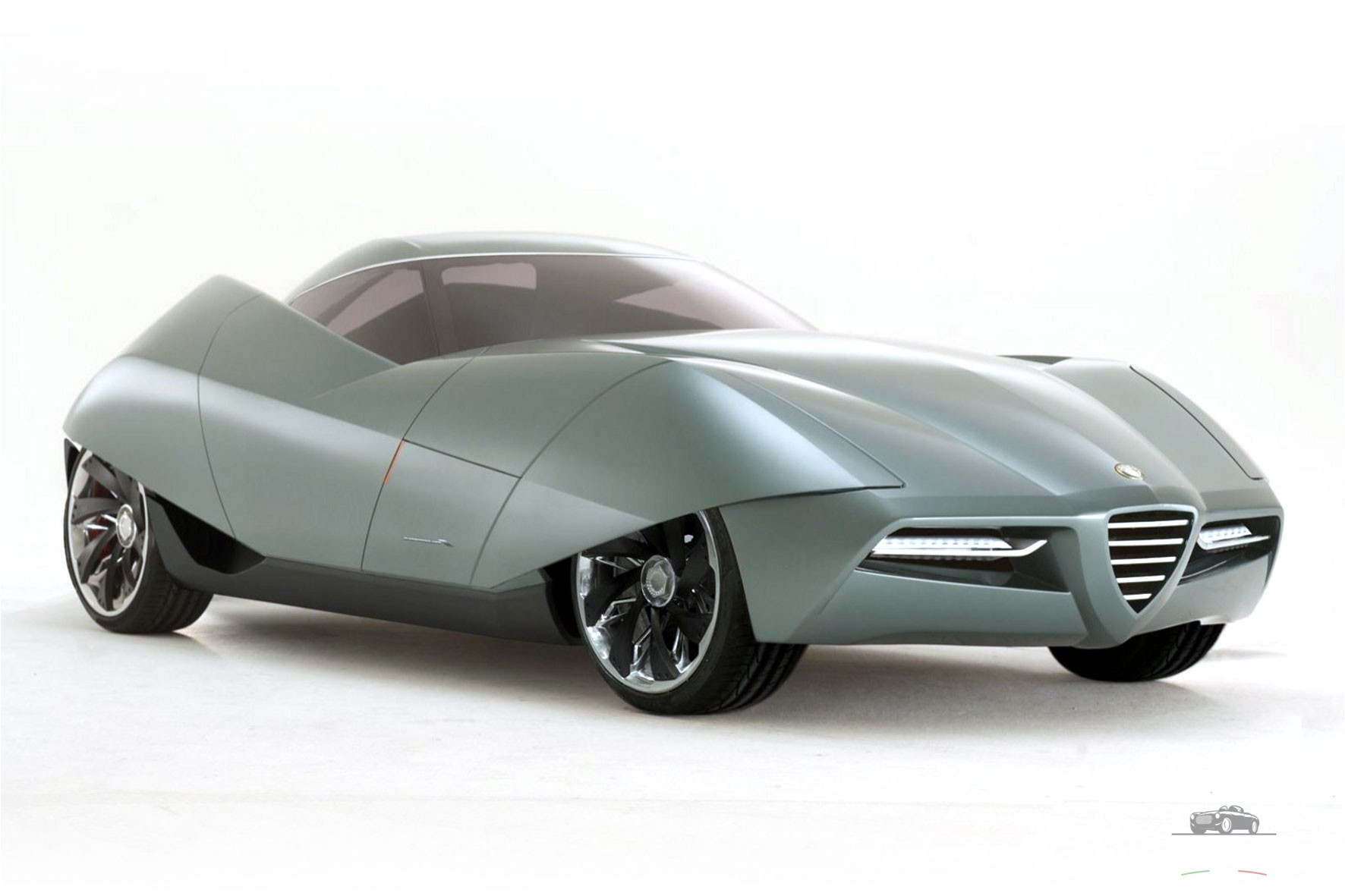
The B.A.T. programme explored how a road-car body could reduce aerodynamic resistance through its proportions and treatment of airflow. Scaglione retained the enclosed rear wheels and pronounced side intakes of the first prototype, but lowered the bonnet, reduced the frontal openings and extended the rear fins. The fins curved towards the centreline, creating a distinctive pair of elevated trailing surfaces separated by the rear window. The shallow nose carried small lamps on either side of its centre section, arranged to move downward for use. The body incorporated a curved roof and extensive glazing, with panel shapes developed around the front wheels, cockpit and tail.
A drag coefficient of approximately 0.19 is repeatedly attributed to B.A.T. 7 in Alfa Romeo’s historical material and the Sotheby’s account. The figure is a reported period aerodynamic result, not an independently verified wind-tunnel measurement established by the surviving documents reviewed here. The car was an exploration of airflow as well as a demonstration of Bertone’s metal-shaping and prototype construction capabilities. The wider history of the three prototypes is discussed in The Bertone B.A.T. Mobiles.
Chassis and mechanical specification
The car uses the short-wheelbase Alfa Romeo 1900C mechanical foundation, associated with chassis AR1900C 01485. Specialist records for this individual car describe a front-mounted, water-cooled, four-cylinder, twin-overhead-camshaft petrol engine with a displacement of 1,975 cc. They give a wheelbase of 2,499 mm, an overall length of 4,542 mm, a width of 1,892 mm and a height of 1,290 mm. The body is a two-door coupé, and power is transmitted to the rear wheels. These dimensions describe the coachbuilt prototype, not every Alfa Romeo 1900 variant.
Published figures for output and transmission are not entirely consistent. Automotive Masterpieces records 115 hp at 5,500 rpm and a four-speed gearbox, whereas Alfa Romeo’s later account refers to the 90 CV engine associated with the 1900 base. The original engine serial number has not been verified. Similarly, specialist sources disagree over the original steering position. Version-dependent figures should therefore not be treated as conclusively established specifications for chassis 01485 without further factory or period documentation.
Subsequent history and body alterations
After its Turin presentation, B.A.T. 7 was shown in the United States in 1955 and subsequently used beyond the exhibition circuit. Accounts of its American history include competition appearances and road use in California. During this period the rear fins were removed, substantially altering the silhouette. Contemporary documentation and later specialist histories do not always agree on the dates of every alteration, ownership transfer or restoration, so individual claims should be associated with their supporting records rather than combined into a continuous assumed ownership sequence.
Sotheby’s records the car at the Pebble Beach Concours d’Elegance in August 1958 and its appearance with the other B.A.T. prototypes at Pebble Beach in 1989. The fins were eventually reconstructed, restoring the aerodynamic outline of the original Bertone body. The three cars were subsequently exhibited together on several occasions, including Pebble Beach in 2005. Their separate identities, original chassis and later body histories remain distinct despite those group appearances.
Preservation and collective sale
B.A.T. 7 was offered with B.A.T. 5 and B.A.T. 9d at Sotheby’s New York Contemporary Art Evening Auction on 28 October 2020, as a single lot comprising three individually identified cars. The transaction belongs to the group and cannot be divided into an evidenced sale value for chassis 01485. The related Franco Scaglione retrospective provides further context for the designer’s experimental work at Bertone. No individual chassis-specific auction result is inferred from the trio’s collective sale.


THE CONVERSATION
Comments 0