
Beccaris
AT A GLANCE
- Founded
- 1938
- Closed
- 1962
- Historical city
- Turin
- Country
- Italy
THE STORY
Overview
Origins and the first workshop
Beccaris was a Turin-area coachbuilding concern whose history spans a sequence of workshops and business partnerships rather than a single continuously documented company. The name is associated with Temistocle Beccaris, who is reported to have established a small sheet-metal workshop in late 1938. Its initial work comprised formed panels, body components and complete bodies commissioned by other coachbuilders. The historical account places the original premises at Via Sostegno 83, in the Grugliasco–Turin area. It describes an interruption during the Second World War and a resumption of activity in 1945. These dates and addresses are retained from the historical record, although the corporate registrations and contemporary premises records have not yet been independently examined.
In 1952 the workshop is reported to have moved to Via Francesco De Sanctis 150/12 in Turin, at an address later described as Via Santa Maria Mazzarello 30/12. In 1955 Temistocle Beccaris, his son Carlo and Michele Giovara were associated with ILLAT, the Industria Lavorazione Lamiera Automobili Torino. The available histories describe a larger facility at Via Col di Lana 32 and the workshop’s later use by the Corna brothers. ILLAT must be treated as a distinct phase of the enterprise: a shared family connection does not establish uninterrupted legal continuity with either the earlier sole-proprietor workshop or the later Beccaris & Teraschi partnership.
Beccaris & Teraschi and the Abarth programme
In 1959 Carlo Beccaris and Egidio Teraschi formed Beccaris & Teraschi S.n.c., with Temistocle Beccaris also involved according to the published history. Its workshop is placed at Strada Antica di Grugliasco 295. The firm became closely associated with Carlo Abarth’s lightweight competition and road-going bodies. Beccaris specialised in shaping and joining aluminium-alloy panels to create compact coupés and, on some programmes, open racing bodies. The precise division of bodywork between its own premises and other subcontractors needs to be established vehicle by vehicle.
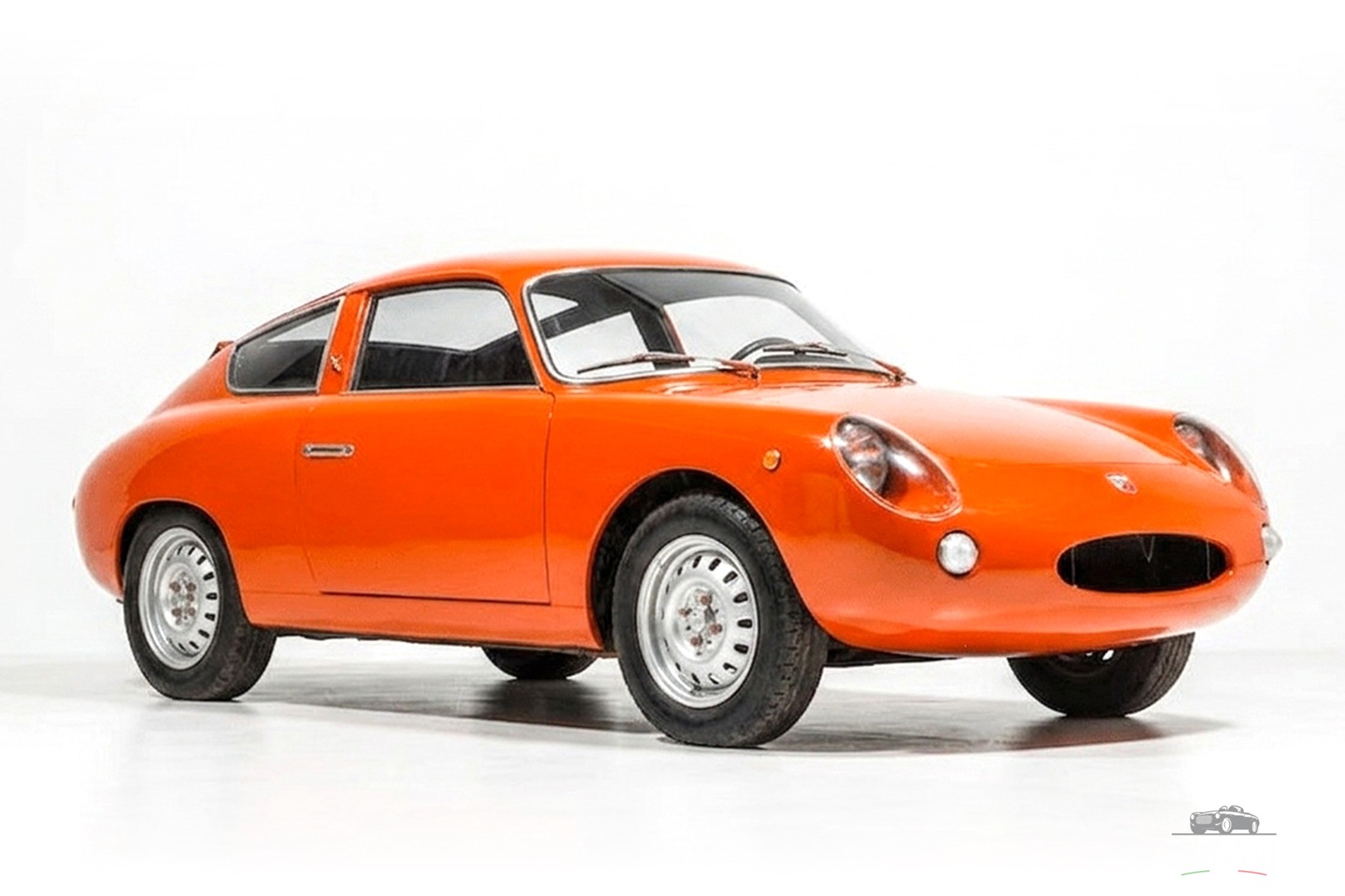
Beccaris’s contribution must be distinguished from Abarth’s design and engineering. Engineer Mario Colucci worked on the appearance and technical development of Abarth’s small GT cars, while external workshops manufactured bodywork. Some period cars bore ‘Carrozzeria Abarth’ identification even where fabrication was subcontracted; the badge does not independently identify the workshop. After the end of the Zagato relationship, Beccaris was an important supplier of redesigned 1000 Bialbero bodies. A documented example is the 1961 Fiat-Abarth 1000 GT Bialbero, chassis 1128948, catalogued with Beccaris coachwork. Other surviving cars have individually documented Beccaris bodies, but their provenance must not be transferred to another chassis.
Monomille, sports racers and Abarth–Simca
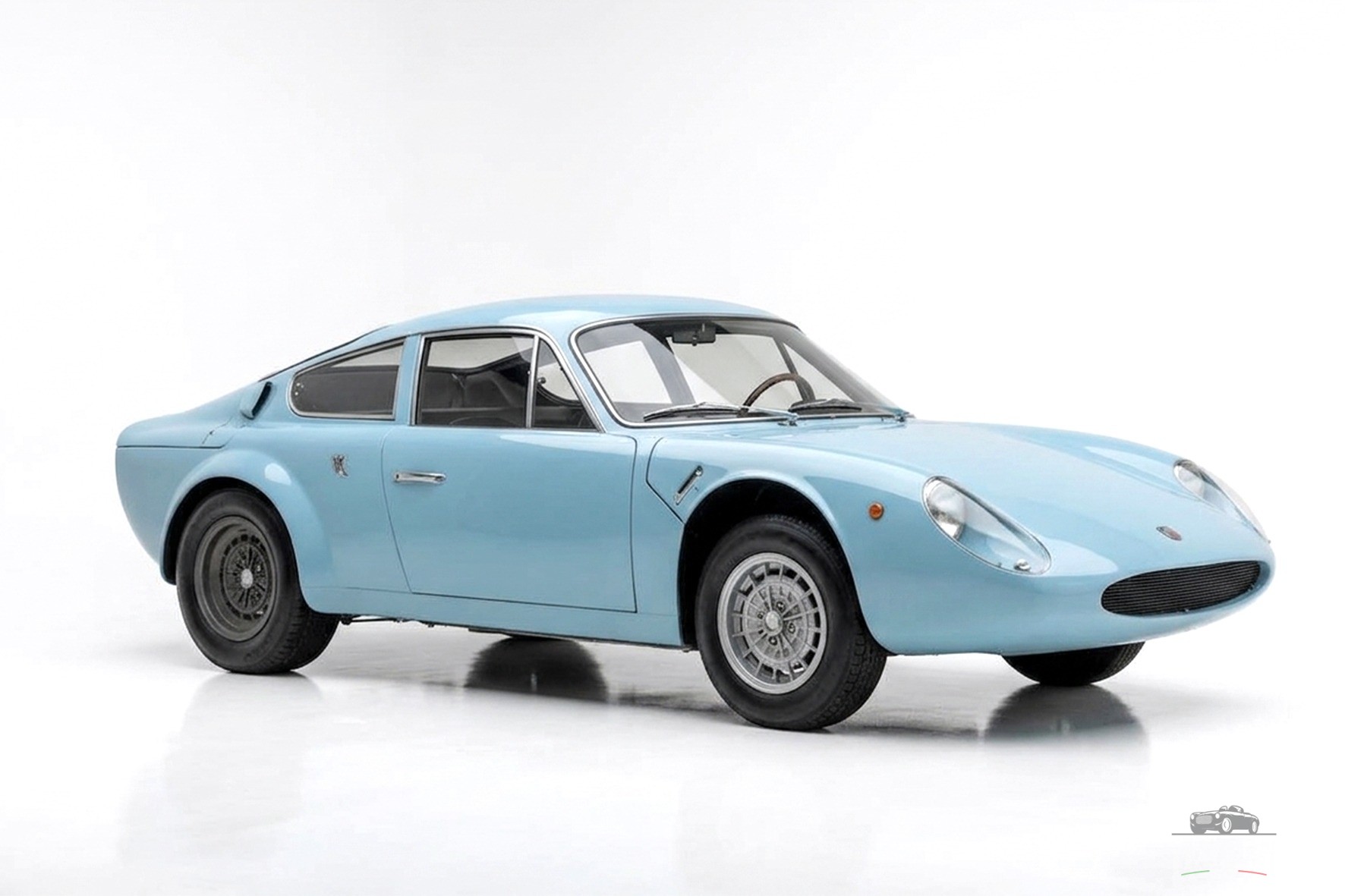
The road-oriented Abarth Monomille GT shared the small-coupé idiom of the racing Bialbero, with body details evolving across the early 1960s. Period and later photographs show differences in headlamp treatment, engine-lid forms and rear-body profiles. Not every ‘Monomille’ can be attributed automatically to Beccaris, and an auctioned example with a recorded chassis is not necessarily the same car as a model-level database entry.
The Abarth 1000 Sport 131-MC Spider Tubolare is also associated with Beccaris in the archive. The exact chassis 131-003 is documented in a Bonhams auction catalogue, although the bodybuilder attribution requires qualification. It should therefore remain a documented programme connection rather than proof that Beccaris produced every tubular-chassis spider of the type.
For the Abarth–Simca project, Abarth developed the mechanical package around components from the Simca 1000, while Colucci and his colleagues worked on the sporting GT design. Body construction involved specialist firms including Beccaris and Sibona & Basano. The transition was not a simple universal changeover on a fixed date. Bonhams identifies Beccaris coachwork on the 1965 Abarth-Simca 1300 GT Corsa Long-Nose, chassis 130S/00047, with engine 238040001. That specific documented attribution is important because the common account of Beccaris & Teraschi closing around the end of 1962 cannot be used to exclude later Beccaris-attributed bodywork without examining the car’s assembly, rebody and documentation history.
Another historically important Abarth–Simca is the 2000 GT Corsa recorded by Bonhams as chassis 136.0056. The legacy database also gives 136 0056A; the suffix remains an unverified identifier variant and should not generate a second car record. Neither its model year nor its attribution can be generalised to all Abarth–Simca 2000s.
End of activity and historical assessment
The published company history places the closure of Beccaris & Teraschi at the end of 1962, following financial difficulties and the pressures facing small, labour-intensive coachbuilding businesses. This should be presented as the reported closure of that particular partnership, not as a proven end date for all bodies subsequently attributed to the Beccaris name. ILLAT’s history and the use of the Beccaris name require separate corporate-source verification. The surviving Abarth cars demonstrate the specialised contribution of a small Turin metalworking enterprise to Italy’s post-war competition-car industry. Its documented legacy is strongest when roles, production phases and physical chassis identities are kept distinct.
KEY MOMENTS
Timeline
-
Foundation of Beccaris
Turin, Italy
-
Beccaris establishes ILLAT
Turin, Italy
-
Beccaris & Teraschi is established
Turin, Italy
-
Beccaris begins lightweight-body collaboration with Abarth
Turin, Italy
-
Beccaris & Teraschi closes
Italy
Vehicles at a glance
- Related vehicles
- 4
- Limited series
- 4
CONTINUE EXPLORING



THE CONVERSATION
Comments 0