

Beccaris
Founded by Temistocle Beccaris in Turin in the late 1930s, the workshop specialised in sheet-metal craftsmanship, supplying complete bodies and components to other coachbuilders.
Explore record ↗
1963Coachwork by Beccaris
THE VEHICLE AT A GLANCE
THE PEOPLE BEHIND THE CAR
Founded by Temistocle Beccaris in Turin in the late 1930s, the workshop specialised in sheet-metal craftsmanship, supplying complete bodies and components to other coachbuilders.
Explore record ↗PRICE & SALES RECORD
01 / THE STORY
The Abarth–Simca 2000 GT Corsa, chassis 136.0056, is a rear-engined Italian competition coupé with bodywork attributed to Abarth and Carrozzeria Beccaris. It belongs to the two-litre development of the Abarth–Simca grand touring programme and was subsequently preserved in Fabrizio Violati’s Maranello Rosso Collection. Its identity is documented by the surviving Italian registration history and by the catalogue for the Bonhams Goodwood Revival sale of September 2014.
Abarth developed the Simca-based GT cars during its collaboration with the French manufacturer in the early 1960s. The programme employed the rear-engined architecture of the Simca 1000 but incorporated specialised competition engines, chassis modifications and lightweight coupé bodies. The smaller Abarth–Simca 1300 GT preceded the 2000 model, whose racing specification continued to evolve through the mid-1960s. The FIA granted the Abarth–Simca 2000 GT homologation number 151 on 14 January 1964, recording a 1,946 cc four-cylinder engine and rear-wheel drive. These figures describe the homologated model, not necessarily the precise engine installed in chassis 136.0056 at every stage of its life.
The Bonhams catalogue identifies the car as an Abarth–Simca 2000 GT Corsa with coachwork by Abarth and Beccaris. The surviving body has the longer frontal treatment associated with later competition development, distinct from earlier short-nose forms. Abarth’s mechanical engineering and the construction of the body must be treated as separate responsibilities; no individual stylist is established by the available chassis documentation. The auction catalogue dates the car to 1965, whereas a specialist chassis chronology gives 1964 as its year of manufacture. The original completion date and any subsequent body alterations therefore remain under review.
Bonhams records the chassis number as 136.0056. The earlier Carrozzieri Italiani entry used 136 0056A; its additional final letter is not verified by the auction documentation and should be regarded as an unresolved identifier variant rather than evidence of a second vehicle. A specialist register gives engine number 068, but this has not been reconciled with a factory engine ledger or a physical inspection. The car was described in the 2014 catalogue as retaining a four-cylinder twin-cam engine with twin-plug ignition and large Weber carburettors. Such equipment does not, on its own, establish an exact current displacement.
A specialist racing history attributes chassis 136.0056 to Luciano Conti at the 1964 Targa Florio, where it reportedly retired, and subsequently to Gianni Lado, who competed as Matich during 1965 and 1966. It also describes the car’s distinctive matt-black competition finish. Those attributions remain provisional pending direct comparison with contemporary entry lists, registration numbers and photographs of the same chassis. They should not be merged with results recorded for other Abarth–Simca 2000 GT cars.
According to the registration documents discussed in the Bonhams catalogue, the car was apparently registered as 68753 PT in April 1965. The catalogue explicitly notes that part of the surviving document is difficult to read. A clearer entry records its registration as AR 104614 at Arezzo on 4 June 1970, when Bruno Veggenti of San Giovanni Valdarno was named as owner. On 22 September 1977 it passed to Bellancauto, the company associated with Fabrizio Violati, and became part of the Collezione Maranello Rosso in San Marino.
Chassis 136.0056 was offered at Bonhams’ Goodwood Revival sale on 13 September 2014, after its long period in the collection. A later specialist account records its restoration in the matt-black finish linked to its historic competition career and an appearance at Goodwood in 2019. The identity, registration and later collection history are substantially better documented than individual race results, while the disputed year and chassis suffix continue to require primary evidence.
02 / TECHNICAL IDENTITY
03 / DESIGN, BODY & SUPPLIERS
Attributed coachbuilder / design studio
Founded by Temistocle Beccaris in Turin in the late 1930s, the workshop specialised in sheet-metal craftsmanship, supplying complete bodies and components to other coachbuilders.
Explore record ↗04 / CHRONOLOGY
05 / MARKET & PRICE HISTORY
Become a Pro member to explore the full price and sale history.
Membership is not available yet.
View membership optionsMarket observations describe documented transactions, estimates or offers. They are not themselves a current valuation of the vehicle.
06 / CHASSIS REGISTER
07 / GALLERY
CONTINUE EXPLORING
CONTINUE READING
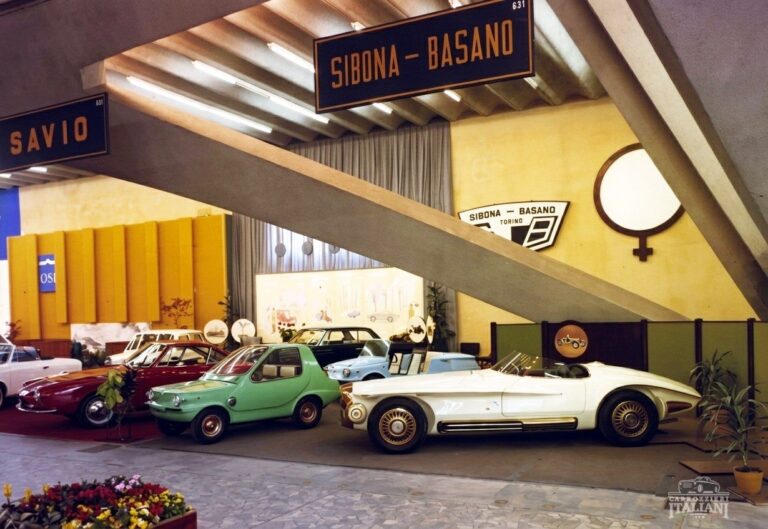
For a brief period in the 1960s, Sibona & Basano occupied a distinctive position in Turin's coachbuilding industry, constructing competition bodies, prototypes and experimental cars for Abarth, American designers and some of…
Read story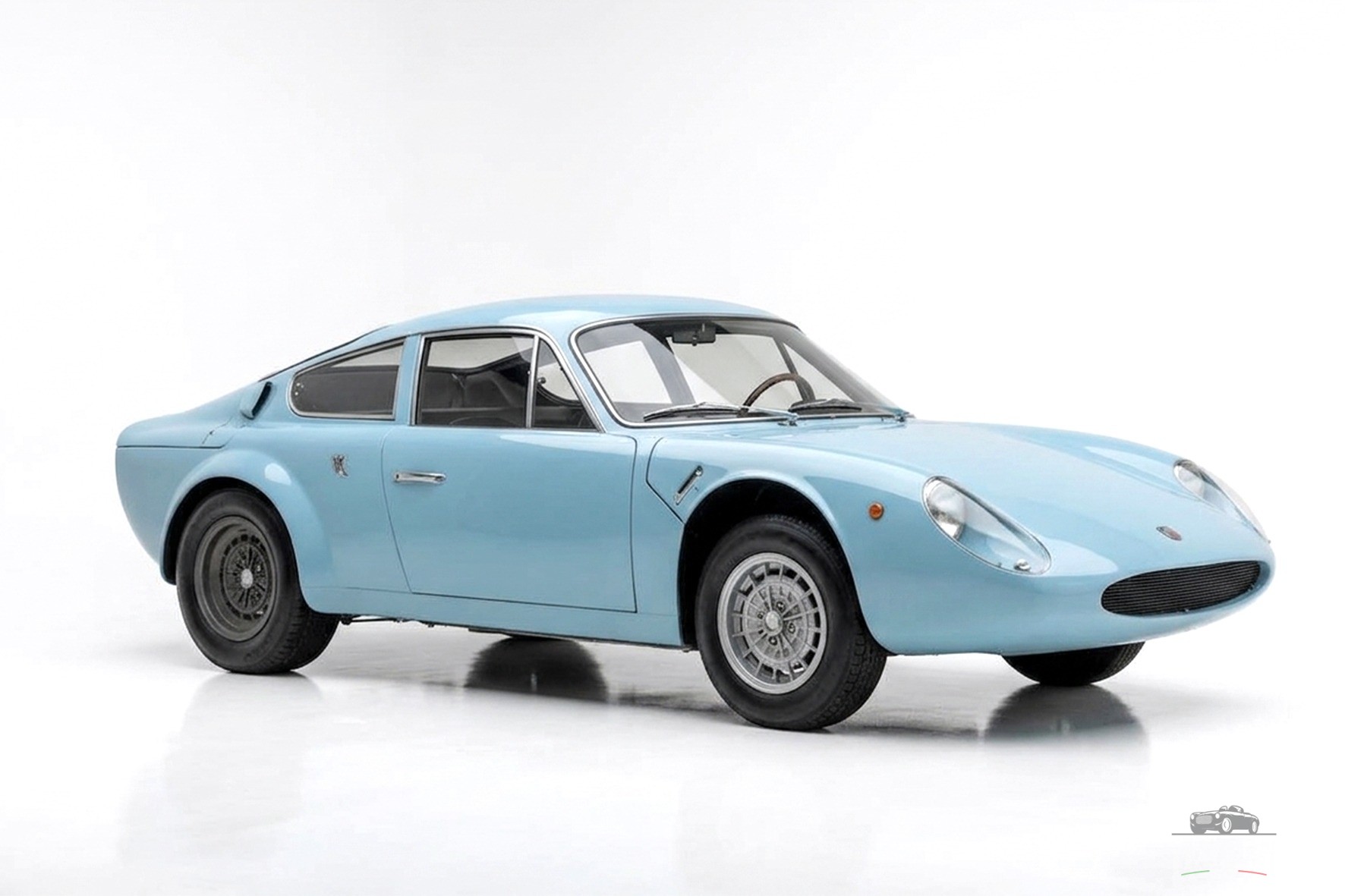
THE CONVERSATION
Comments 0