
Mille Miglia – 1933
AT A GLANCE
- Date
- 1933
- Location
- Italy
THE EVENT
Event overview
The 1933 Mille Miglia took place amid the growing economic impact of the 1929 global financial crisis. One major consequence was the closure of Alfa Romeo’s factory racing department at the end of 1932. From that point forward, Alfa Romeo competition efforts were officially entrusted to Scuderia Ferrari, which managed and fielded cars in both road and circuit races.
For the race, Scuderia Ferrari entered six cars: two Alfa Romeo 6C models and four Alfa Romeo 8C 2300 Spider Zagato. Notable drivers included Tazio Nuvolari–Decimo Compagnoni, Baconin Borzacchini–Ascanio Lucchi, Piero Taruffi–Lelio Pellegrini Quarantotti, and Carlo Felice Trossi–Antonio Brivio. Additional Alfa Romeo entrants included Cortese, Scarfiotti, and Theo Rossi di Montelera, competing in closed-body Touring Berlinettas. Cortese, despite a last-minute fire damaging his car, managed to start the race thanks to overnight repairs.
The international field included Bugatti, Mercedes-Benz, Lancia, and the official MG team, which debuted with three Magnette K3 cars in the 1.1-litre class, entered by Howe–Hamilton, Birkin–Rubin, and Eyston–Lurani. The race also marked the competitive debut of the Fiat 508 S Balilla Sport, with 31 examples entered.
The race started at 7 a.m. under uncertain skies. Early drama saw Trossi retire near Manerbio, followed by the withdrawal of Varzi (Bugatti) and von Brauchitsch (Mercedes) in the Apennines. By Rome, Borzacchini led Nuvolari and Cortese, but mechanical failure forced his retirement shortly after. Nuvolari then took control, despite two late punctures.
FROM THE EVENT ARCHIVE
Photo gallery

RECORDED RESULTS
Awards & Results
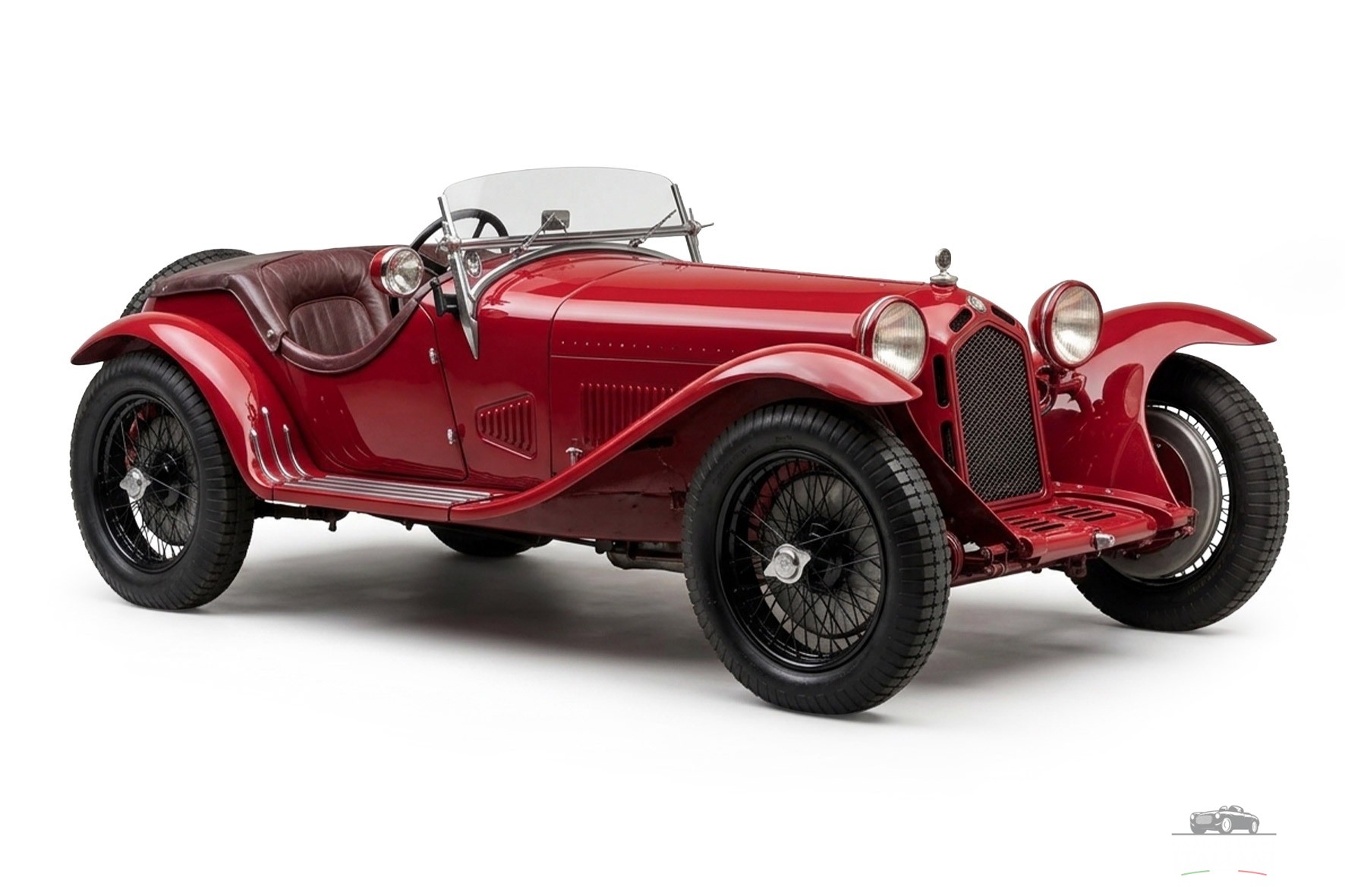

Mille Miglia Winner
CONTINUE EXPLORING

THE CONVERSATION
Comments 0