
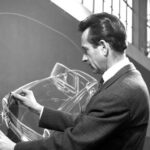
Giovanni Michelotti
Giovanni Michelotti was a prolific Italian automotive designer whose independent Turin studio produced coachwork and production-car designs for Vignale, Triumph, BMW and numerous other manufacturers.
Explore record ↗
1950Coachwork by Vignale
THE VEHICLE AT A GLANCE
THE PEOPLE BEHIND THE CAR
Giovanni Michelotti was a prolific Italian automotive designer whose independent Turin studio produced coachwork and production-car designs for Vignale, Triumph, BMW and numerous other manufacturers.
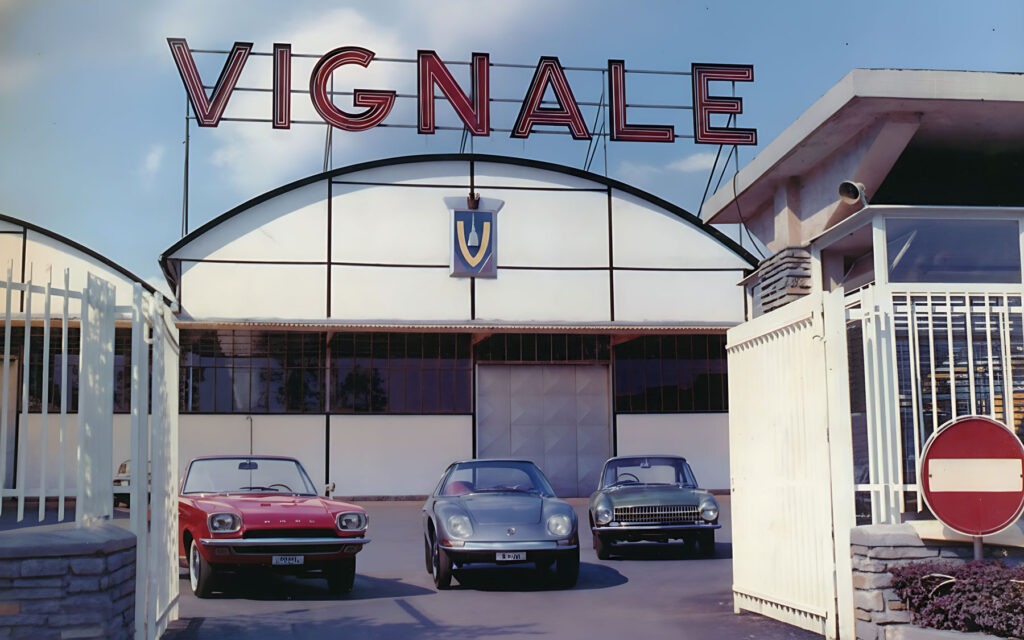
Explore record ↗Founded by Alfredo Vignale in Turin in 1948, Carrozzeria Vignale produced bespoke sports and grand touring bodies for Ferrari, Fiat, Maserati and other manufacturers.
Explore record ↗01 / THE STORY
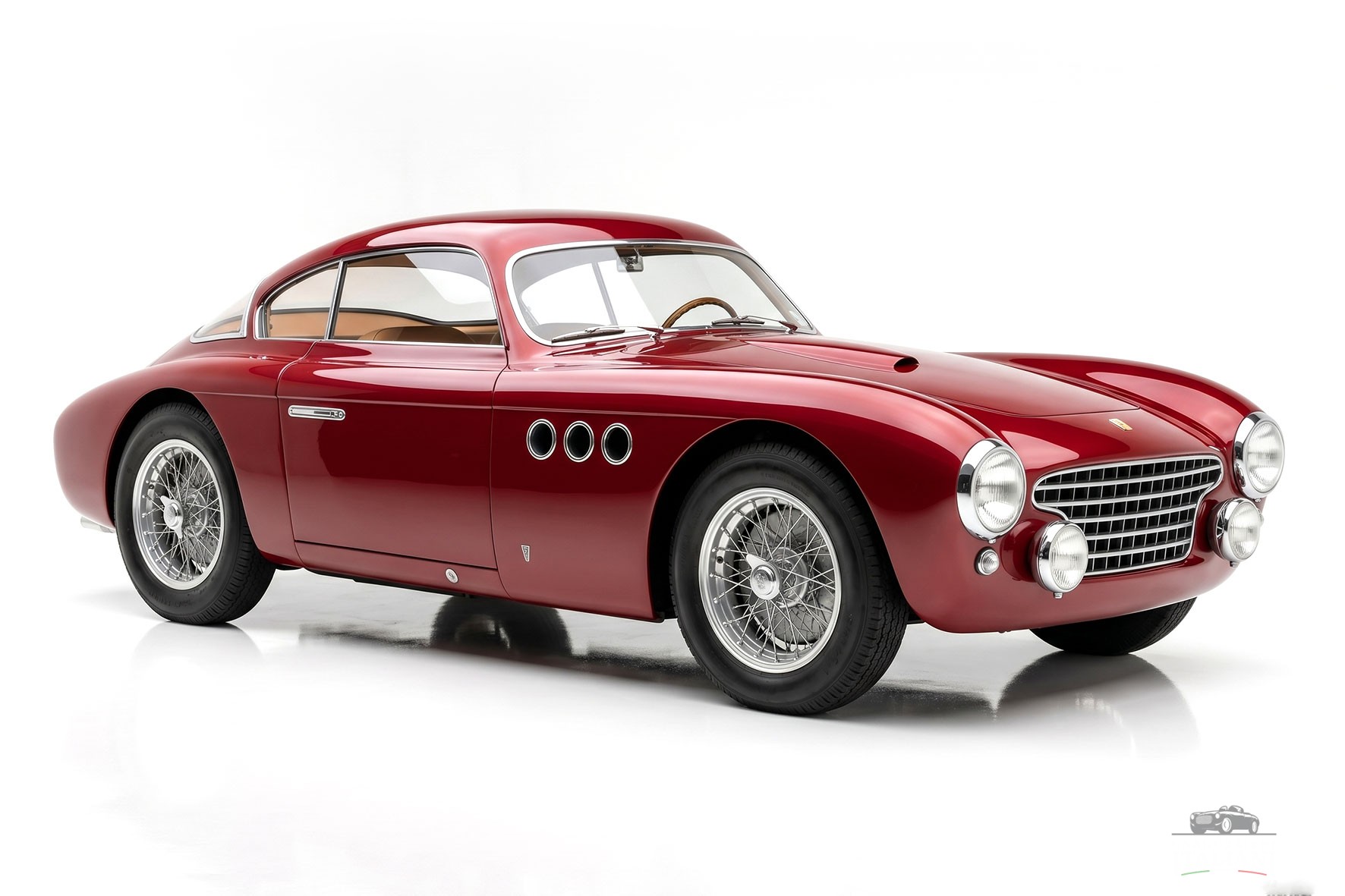
The Abarth 204 A Vignale was a name used for the first Vignale-bodied Abarth berlinettas of 1950. Although some period and later accounts called the coupé a 204 A, the surviving cars carry chassis numbers from the Abarth 205 series. The closed aluminium body was designed by Giovanni Michelotti and built by Carrozzeria Vignale. The designation should not be confused with the open Cisitalia-Abarth 204 A racing cars from which Abarth’s early activities developed.
Carlo Abarth founded Abarth & C. in 1949 after the financial crisis at Cisitalia, where he had been involved in racing-car development. The company initially competed with the open 204 A sports cars acquired from Cisitalia. In 1950 it introduced a small closed berlinetta, combining an Abarth-developed chassis with a lightweight, two-seat body. The chassis used sheet-metal box sections, while its suspension followed the general arrangement of the preceding 204 programme. The berlinetta was intended for competition and also provided the basis for a more fully trimmed road car.
Michelotti’s design had a low bonnet, an enclosed roof and a rounded rear section. Three circular ventilation openings on the sides of the front wings became a distinctive feature of Vignale’s small sports coupés. The body was made in aluminium, keeping the car compact and relatively light. Michelotti was responsible for the exterior design; Vignale built the coachwork, while Abarth developed the mechanical package. These are separate contributions to the finished vehicle.
The early competition berlinettas used a Fiat-derived 1,089 cc inline-four engine prepared by Abarth and coupled to a four-speed manual gearbox driving the rear wheels. Period descriptions of the competition specification include revised induction, twin Weber carburettors and a special exhaust. Power figures differ between accounts and individual engine configurations. They must not be applied indiscriminately to all three cars. The later road-oriented example also received changes in equipment and engine specification.
Three Vignale berlinettas are generally identified in the 205 series: chassis 205-101, 205-102 and 205-103. They did not all have the same competition history or specification. The 205-101 was the first racing car; 205-102 also competed in 1950 and later underwent substantial mechanical alterations; 205-103 was more luxuriously equipped. The distinct Abarth 205 A Berlinetta record covers the wider Vignale family and its later road-going development. The present 204 A title is retained to explain the older identification, not to add a fourth Vignale berlinetta to the production count.
Guido Scagliarini won the 1,100 cc class at the Coppa Intereuropa at Monza in March 1950 with the first berlinetta. Two Vignale-bodied cars entered the 1950 Mille Miglia: one retired, while the other, chassis 205-102, finished 31st overall. The cars’ early competition entries sometimes used the 204 A designation, contributing to the later confusion over their identities. The berlinetta appeared at the 1950 Turin Motor Show, and a more luxurious development was presented in 1951 under the 205 A name.
The title also needs to be distinguished from the Cisitalia 204 A Motto, an open racing car with different bodywork. A later Abarth chassis clothed by Ghia is likewise outside the three-car Vignale group. The period identification of a particular race entry or later sale must therefore be checked against its individual chassis, rather than attributed to every car carrying the 204 A or 205 A name. The history of Vignale’s work on the project is also covered in the history of Carrozzeria Vignale.
02 / TECHNICAL IDENTITY
03 / DESIGN, BODY & SUPPLIERS
Coachbuilder / Design studio
Founded by Alfredo Vignale in Turin in 1948, Carrozzeria Vignale produced bespoke sports and grand touring bodies for Ferrari, Fiat, Maserati and other manufacturers.
Explore record ↗Designer
Giovanni Michelotti was a prolific Italian automotive designer whose independent Turin studio produced coachwork and production-car designs for Vignale, Triumph, BMW and numerous other manufacturers.
Explore record ↗07 / GALLERY
CONTINUE EXPLORING
CONTINUE READING
The story of Carrozzeria Vignale represents one of the many somewhat forgotten success stories born against the backdrop of an Italy that was torn apart by the Second World War and which,…
Read story


THE CONVERSATION
Comments 0