Giovanni Michelotti
Giovanni Michelotti was a prolific Italian automotive designer whose independent Turin studio produced coachwork and production-car designs for Vignale, Triumph, BMW and numerous other manufacturers.
Explore record ↗
1950Coachwork by Vignale
THE VEHICLE AT A GLANCE
THE PEOPLE BEHIND THE CAR
Giovanni Michelotti was a prolific Italian automotive designer whose independent Turin studio produced coachwork and production-car designs for Vignale, Triumph, BMW and numerous other manufacturers.
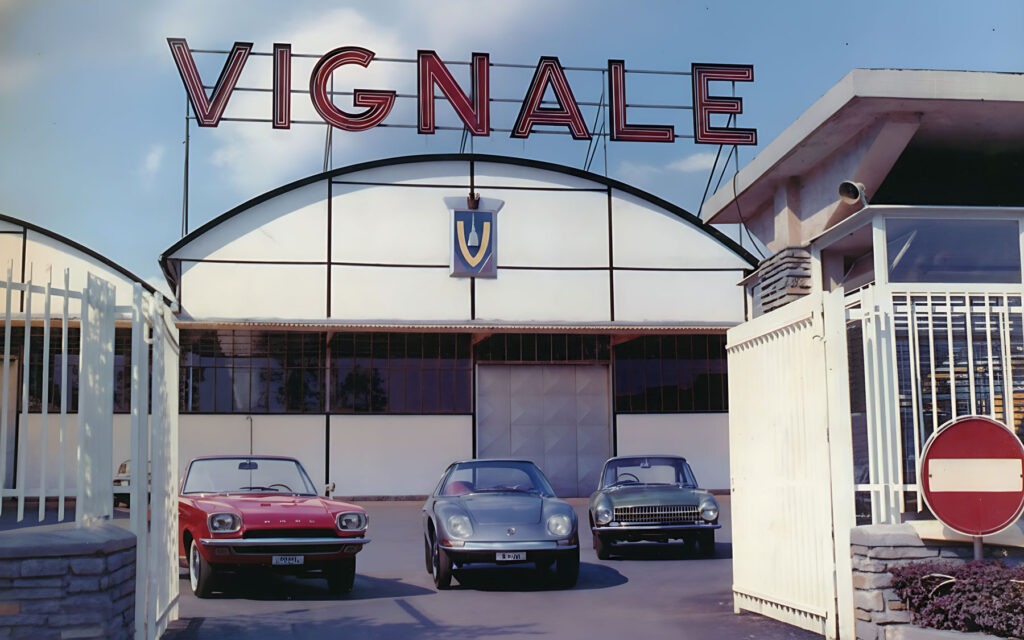
Explore record ↗Founded by Alfredo Vignale in Turin in 1948, Carrozzeria Vignale produced bespoke sports and grand touring bodies for Ferrari, Fiat, Maserati and other manufacturers.
Explore record ↗01 / THE STORY
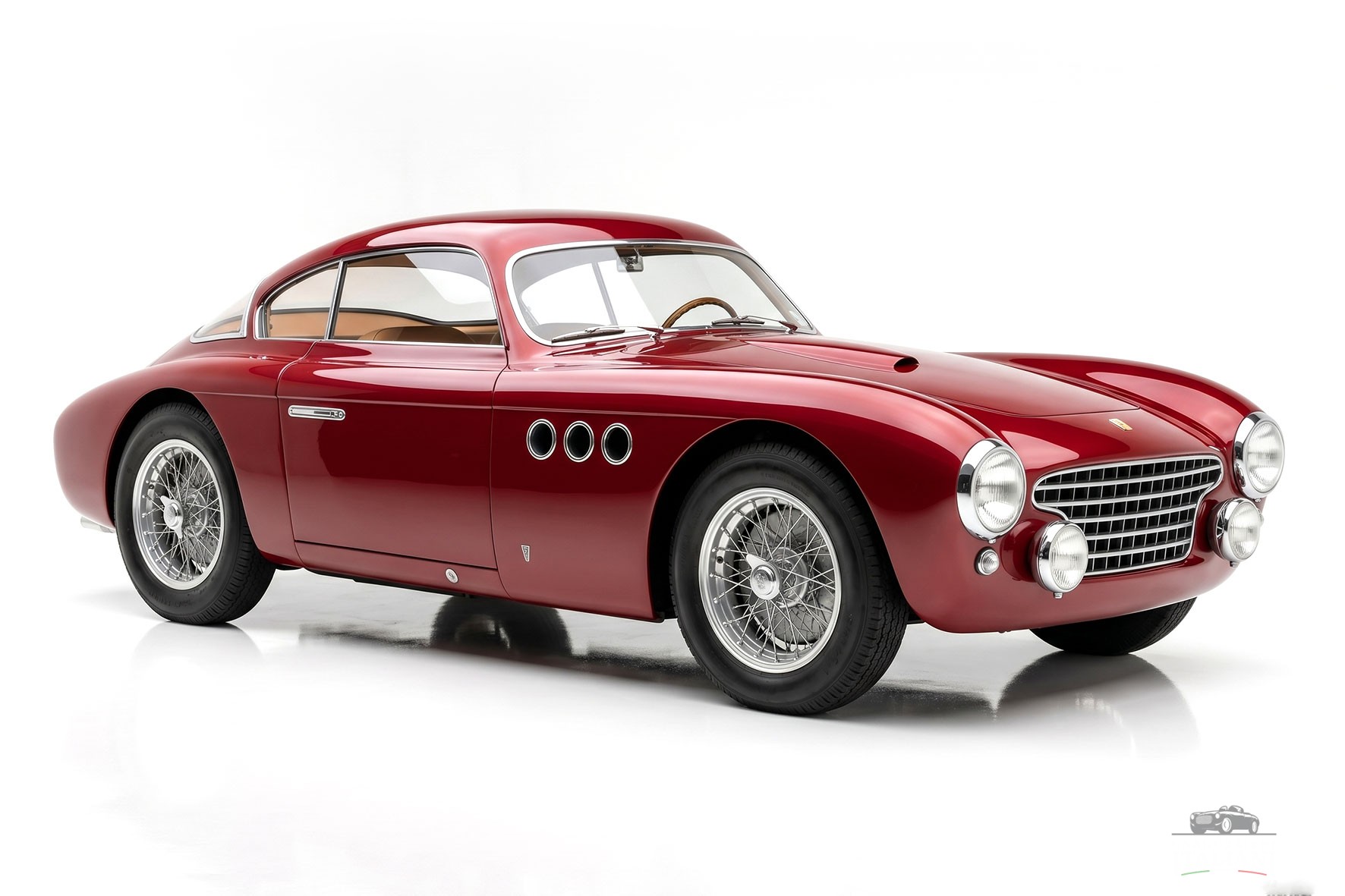
The Abarth 205 A Berlinetta was a small series of three grand touring coupés built in 1950–1951 by Carrozzeria Vignale to designs by Giovanni Michelotti. Developed by Abarth & C. shortly after the company’s foundation, the 205 combined a compact competition-derived chassis with a two-seat aluminium body. The three cars are identified by chassis numbers 205-101, 205-102 and 205-103. Some contemporary race entries and later histories called them Abarth 204 A, but the 205 chassis series is distinct from the open Cisitalia-Abarth 204 A racing car.
Carlo Abarth established his company in 1949 following the difficulties at Cisitalia, where he had helped develop competition cars. The early Abarth racing programme made use of Cisitalia equipment, whereas the 205 Berlinetta had its own chassis and new closed coachwork. Its steel box-section chassis carried a light aluminium body, with a low roofline, rounded wings, a shallow frontal opening and three circular vents in each front wing. Michelotti designed the body and Vignale constructed it; Abarth developed the mechanical package. The configuration gave the firm both a competition car and a more finished grand tourer for private customers.
The early cars used a Fiat-derived 1,089 cc inline-four engine prepared by Abarth, driving the rear wheels through a manual gearbox. Period and later accounts describe twin Weber carburettors, revised induction and other racing modifications. Power figures vary according to the car and state of tune, so a single horsepower figure cannot safely describe all three chassis. The aluminium coachwork likewise did not imply that the individual cars remained mechanically identical throughout their lives.
Chassis 205-101 was completed in March 1950. Guido Scagliarini drove it at the Coppa Intereuropa at Monza on 26 March, finishing first in the 1,100 cc class and fourth overall according to the specialist chassis chronology. At the Giro di Sicilia–Targa Florio on 2 April, the same car was entered as number 333 with Cornelio Maffiodo and finished fifth overall and second in class in that chronology. It later started the 1950 Mille Miglia as number 533, but retired. Its temporary aerodynamic nose and tail extensions have been attributed to Giuseppe Manera. These results belong to chassis 205-101, not to every Abarth 205.
A second Mille Miglia entry was chassis 205-102, number 630, which finished 31st overall in 1950. Racing records identify Carlo Scagliarini and Luigi Garrone as its crew, although other published accounts name Guido rather than Carlo. The third car, 205-103, had a more elaborate road-car interior, a black roof over red coachwork and, according to specialist histories, a larger engine. It was exhibited at the 1951 Turin Motor Show. The earlier 205-101 had appeared at Turin in May 1950, still sometimes described as the 204 A or Tipo Monza. These appearances belong to different chassis and must not be merged into a single show entry.
Each berlinetta has a distinct later history. Chassis 205-101 was damaged in a museum fire in 1981. Scott Emsley subsequently restored it, and the car received second place in its class at the 1989 Pebble Beach Concours d’Elegance, as recorded by specialist chassis histories. Chassis 205-102 underwent extensive changes after Austrian racer Helmut Fischer acquired it in 1964. Christie’s documented a replacement Alfa Romeo 1,290 cc engine, five-speed gearbox and altered nose in its 2004 catalogue. These changes describe chassis 205-102 as offered in 2004, not the original engine or body specification of the series. No individual chassis is singled out as the subject of this model-level record.
The related Abarth 204 A Vignale entry records the earlier designation, but the model discussed here is the three-car Vignale Berlinetta series. Its place in the coachbuilder’s early post-war work is discussed in the history of Carrozzeria Vignale, which also describes the distinctive vents in the front wings. Racing results, photographs, ownership records and later concours awards must always be assigned to the corresponding chassis.
02 / TECHNICAL IDENTITY
Become a Pro member to see the full details in this section.
Membership is not available yet.
View membership options03 / DESIGN, BODY & SUPPLIERS
Coachbuilder / Design studio
Founded by Alfredo Vignale in Turin in 1948, Carrozzeria Vignale produced bespoke sports and grand touring bodies for Ferrari, Fiat, Maserati and other manufacturers.
Explore record ↗Designer
Giovanni Michelotti was a prolific Italian automotive designer whose independent Turin studio produced coachwork and production-car designs for Vignale, Triumph, BMW and numerous other manufacturers.
Explore record ↗04 / CHRONOLOGY
05 / PEOPLE, COLLECTIONS & MUSEUMS
07 / CHASSIS REGISTER
08 / GALLERY
CONTINUE EXPLORING
CONTINUE READING
The story of Carrozzeria Vignale represents one of the many somewhat forgotten success stories born against the backdrop of an Italy that was torn apart by the Second World War and which,…
Read storyDiscover how Italy’s legendary coachbuilders like Pininfarina, Ghia, Bertone, Vignale, and Farina reused and adapted car designs across Ferrari, Fiat, Abarth, and more. A fascinating look at creativity, efficiency, and automotive elegance…
Read story



THE CONVERSATION
Comments 0