

Boano
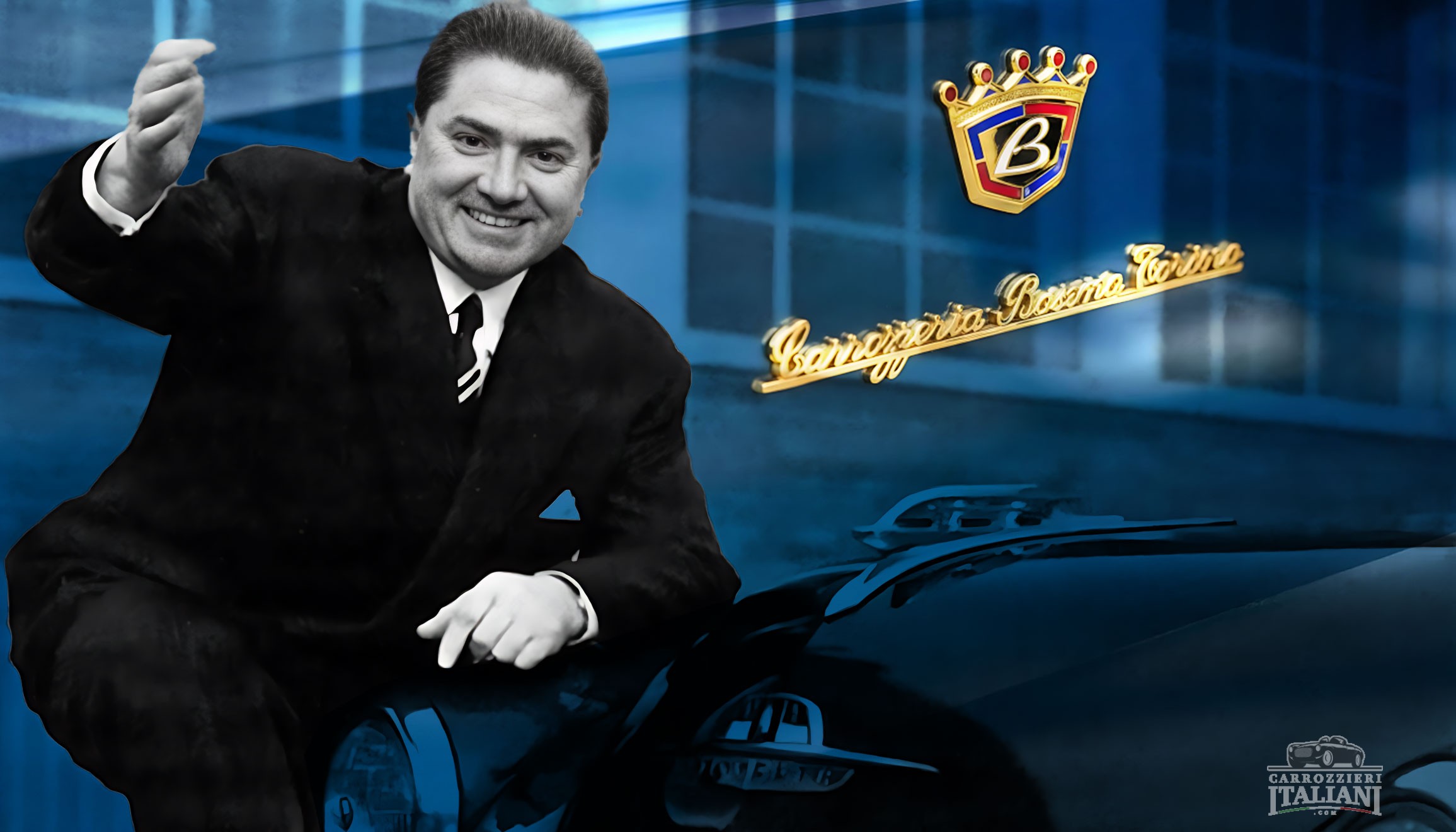
Carrozzeria Boano was a Turin coachbuilding enterprise associated with Mario Felice Boano, whose managerial and production experience connected the firm to Italy’s post-war tradition of bespoke GT bodies.
Explore record ↗
1955Coachwork by Boano
THE VEHICLE AT A GLANCE
THE PEOPLE BEHIND THE CAR
Carrozzeria Boano was a Turin coachbuilding enterprise associated with Mario Felice Boano, whose managerial and production experience connected the firm to Italy’s post-war tradition of bespoke GT bodies.
Explore record ↗01 / THE STORY
The Abarth 210 A Spider (1955) was a one-off, two-seat show car developed by Abarth with bodywork by Carrozzeria Boano of Turin. Presented at the 1955 Turin Motor Show, it used Fiat 600 mechanical components and an Abarth-prepared engine retaining the original 633 cc displacement. It was a separate project from the contemporary 207 A racing Spider and 209 A Coupé, which were based on Fiat 1100-derived mechanical components.
The Fiat 600 entered production in 1955, introducing a compact rear-engined platform that Italian coachbuilders soon adapted for special-bodied cars. According to the AISA historical monograph on Abarth, Fiat allocated an early Fiat 600 chassis to Abarth, which commissioned Boano to build the 210 A Spider. AISA identifies the car as a single example and records its presentation at Turin that year. The 210 A was not a series-production model or a documented racing entry.
The construction of the chassis is not described consistently in later accounts. AISA calls it a Fiat 600 chassis, whereas a separate history of special-bodied Fiat 600 derivatives describes a purpose-designed chassis. The evidence establishes the Fiat 600 mechanical basis but does not settle precisely how much of the original chassis structure was retained. No individual chassis or engine serial number has been verified.
Boano gave the car a low open body with a short windscreen, a single centrally positioned headlamp and small fins at the rear. The unusual front treatment distinguished it from both production Fiat 600s and the more conventional 207 A and 209 A designs. Photographs record the finished car’s two-seat cockpit and compact proportions, but the surviving documentation does not establish every detail of its original finish and materials.
AISA credits the design to Boano, referring to the coachbuilding firm rather than naming an individual stylist. There is insufficient evidence to identify Mario Felice Boano or Giovanni Michelotti personally as the designer of this specific car. The coachbuilder’s wider history is documented in The History of Carrozzeria Boano.
The rear-mounted, water-cooled Fiat four-cylinder engine retained its 633 cc capacity. A contemporary account of Abarth’s early Fiat 600 developments describes changes to the exhaust and inlet system and the use of a Weber carburettor, raising power to approximately 32 hp. Specialist technical catalogues list a four-speed manual transmission, a weight close to 410 kg and a maximum speed near 140 km/h. Other secondary histories give slightly different performance figures, so these values remain published estimates rather than independently established test results. Published length and height figures also vary and have not been adopted as definitive dimensions.
The 210 A preceded the wider Fiat 600-based tuning programme through which Abarth developed road and competition derivatives in larger numbers. Its Fiat 600 running gear contrasted with the front-engined chassis of the 207 A, 208 A and 209 A. Although its design was not developed into a production line, the 210 A documents Abarth’s early experimentation with the rear-engined Fiat platform in the year the 600 was introduced.
02 / TECHNICAL IDENTITY
Become a Pro member to see the full details in this section.
Membership is not available yet.
View membership options03 / DESIGN, BODY & SUPPLIERS
Coachbuilder / Design studio
Carrozzeria Boano was a Turin coachbuilding enterprise associated with Mario Felice Boano, whose managerial and production experience connected the firm to Italy’s post-war tradition of bespoke GT bodies.
Explore record ↗04 / CHRONOLOGY
07 / GALLERY
CONTINUE EXPLORING
CONTINUE READING
The untold story of Mario Boano and Carrozzeria Boano, from Ferrari 250 GTs to the Spiaggina, reshaping Italian automotive history.
Read story

THE CONVERSATION
Comments 0