
Pininfarina
Founded by Battista Pinin Farina in Turin in 1930, Pininfarina became one of the most influential Italian styling and coachbuilding houses, particularly through its work for Ferrari and other international manufacturers.
Explore record ↗
1994Coachwork by Pininfarina
THE VEHICLE AT A GLANCE
THE PEOPLE BEHIND THE CAR
Founded by Battista Pinin Farina in Turin in 1930, Pininfarina became one of the most influential Italian styling and coachbuilding houses, particularly through its work for Ferrari and other international manufacturers.
Explore record ↗Enrico Fumia is an Italian automotive designer associated with Pininfarina, the Alfa Romeo 164 and 916 GTV/Spider, Ferrari F90 and Lancia.
Explore record ↗01 / THE STORY
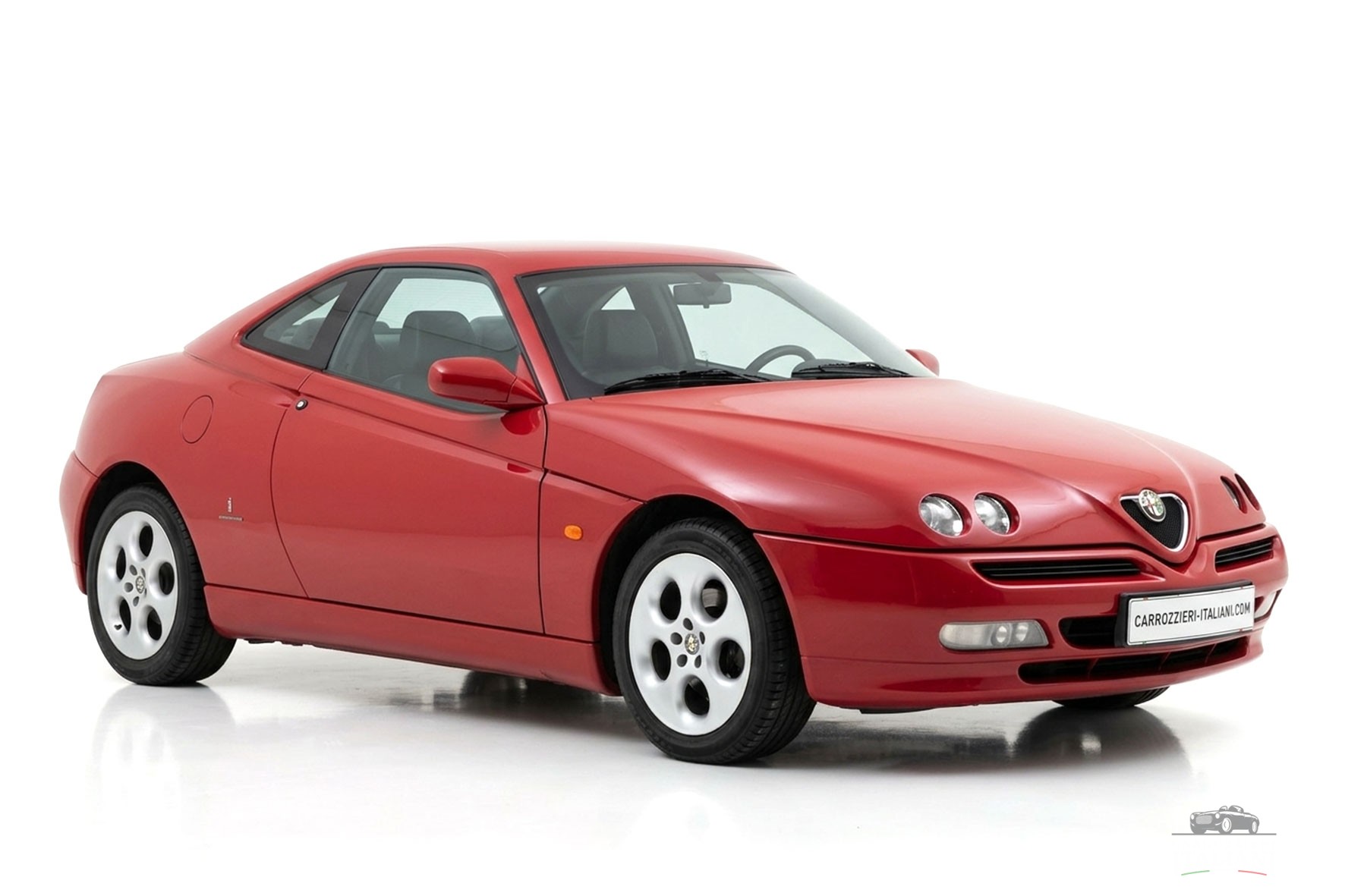
The Alfa Romeo GTV Pininfarina and its Spider counterpart were initially offered with two engine options: the 2.0 Twin Spark (TS) and the 2.0 V6 Turbo for the GTV, while the Spider came with either the 2.0 TS or the more powerful 3.0 V6 12V. The exterior design was completed in July 1988, and production began in late 1993 at the Alfa Romeo Arese Plant in Milan, starting with four 3.0 V6 Spiders. The first GTV, equipped with the 2.0 Twin Spark engine, rolled off the production line in early 1994. The official premiere for these models took place at the Paris Motor Show in 1994, and they were later launched at the Geneva Motor Show in March 1995, with sales commencing the same year. A distinctive feature of the V6 Turbo GTVs was the presence of two air intakes on the lower lip of the front bumper, one for the oil cooler and the other for the intercooler. In contrast, early V6 Spiders did not have additional intakes since their oil coolers were mounted in front of the radiator. The production of the Alfa Romeo GTV and Spider was divided into three distinct phases. Phase 1 cars were characterized by a black plastic grille in the nose of the bonnet, which lacked the chrome edging found in later versions. Additionally, these models featured black-painted sills all around the vehicle. The design and engineering of the Alfa Romeo GTV and Spider reflect the collaboration between Alfa Romeo and Pininfarina, resulting in a stylish and performance-oriented range of cars that garnered attention and admiration upon their release. The phased production approach allowed for continuous improvements and refinements, contributing to the enduring legacy of these iconic models.
02 / TECHNICAL IDENTITY
Become a Pro member to see the full details in this section.
Membership is not available yet.
View membership options03 / DESIGN, BODY & SUPPLIERS
Coachbuilder / Design studio
Founded by Battista Pinin Farina in Turin in 1930, Pininfarina became one of the most influential Italian styling and coachbuilding houses, particularly through its work for Ferrari and other international manufacturers.
Explore record ↗Attributed designer
Enrico Fumia is an Italian automotive designer associated with Pininfarina, the Alfa Romeo 164 and 916 GTV/Spider, Ferrari F90 and Lancia.
Explore record ↗04 / CHRONOLOGY
07 / GALLERY
THE CONVERSATION
Comments 0