
Zagato
Founded in Milan in 1919 by Ugo Zagato, the coachbuilding house developed lightweight aerodynamic bodies inspired by aircraft construction, creating distinctive racing and grand touring automobiles.
Explore record ↗
2025Coachwork by Zagato
THE VEHICLE AT A GLANCE
THE PEOPLE BEHIND THE CAR
Founded in Milan in 1919 by Ugo Zagato, the coachbuilding house developed lightweight aerodynamic bodies inspired by aircraft construction, creating distinctive racing and grand touring automobiles.
Explore record ↗Norihiko Harada is a Japanese automotive designer who worked at I.DE.A Institute under Ercole Spada before joining Zagato in 1994 as design director. His Zagato portfolio includes the Lamborghini Raptor, Aston Martin DB7 Zagato, Ferrari 575 GTZ and Alfa Romeo TZ3 Corsa, connecting Italian coachbuilding with international sports-car manufacturers.
Explore record ↗01 / THE STORY
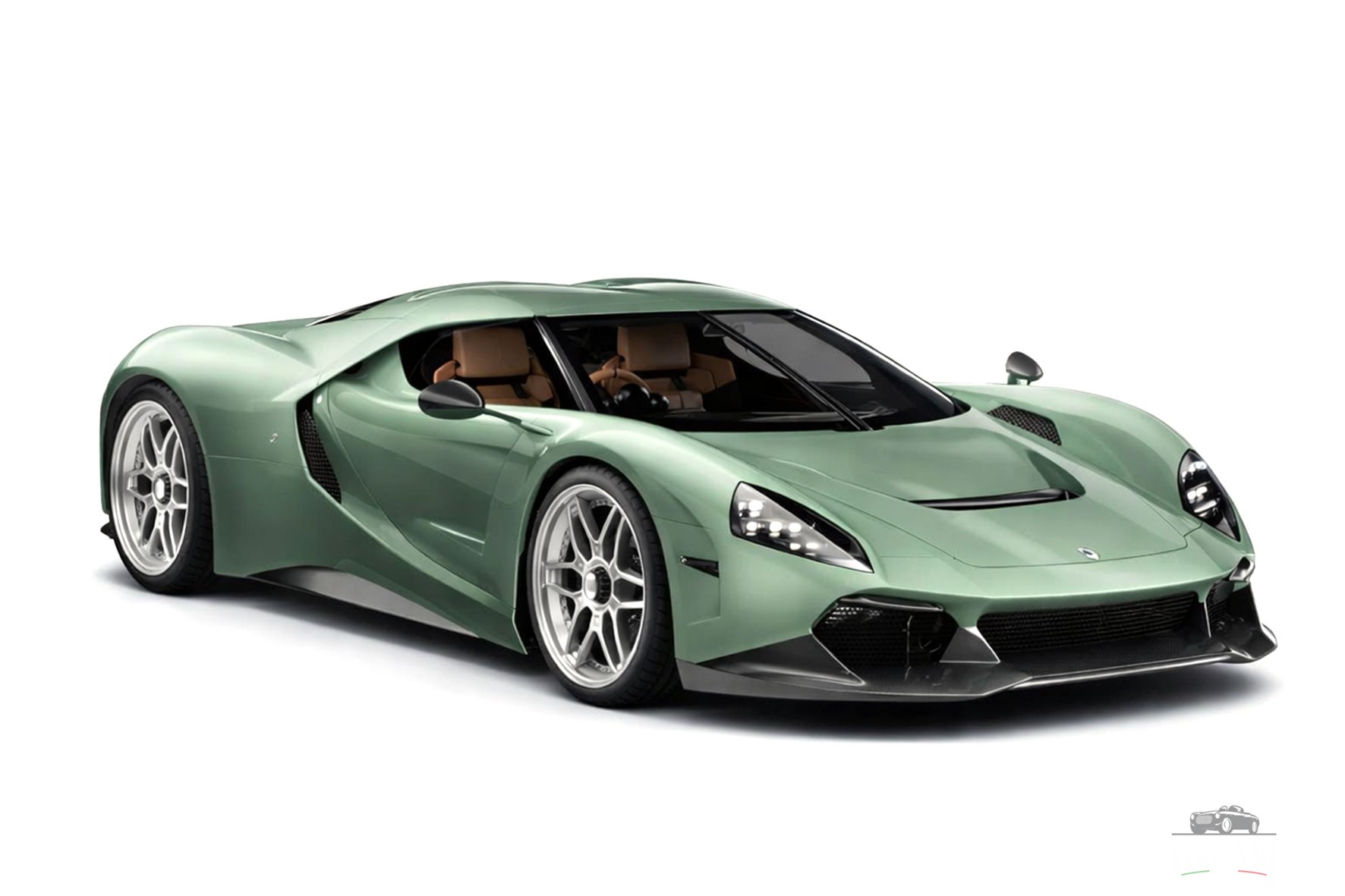
The Capricorn 01 Zagato made its public debut at the Zoute Grand Prix in Belgium in October 2025. It is the first hypercar to feature a body designed by Zagato, but the division of responsibilities matters: Capricorn Group engineered the vehicle, developed its carbon-fibre structure and builds it in Germany. Zagato’s chief designer Norihiko Harada led the exterior design under the creative direction of Andrea Zagato, while Capricorn’s own team developed the interior.
Only 19 coupés are planned, a reference to Zagato’s foundation on 19 April 1919. This is the announced production limit, not a verified count of completed or delivered cars. The body combines Zagato’s double-bubble roof with gullwing doors, fender-mounted mirrors and airflow passages integrated into the surfaces rather than a large rear wing. The monocoque, front and rear subframes, crash structures and body panels are made from carbon fibre.
Behind the two-seat cabin sits a Ford-derived 5.2-litre supercharged V8 extensively reworked by Capricorn. The manufacturer’s provisional figures are more than 900 PS, 1,000 Nm of torque and a 9,000-rpm limit. A CIMA five-speed dogleg manual gearbox sends power to the rear wheels. Capricorn quotes a dry mass below 1,200 kg, a 0–100 km/h time under three seconds and a maximum speed of 360 km/h; these remain manufacturer claims rather than independent test results.
Double-wishbone suspension with pushrod-actuated Bilstein dampers offers selectable settings, while Brembo supplies the carbon-ceramic brakes. The cockpit has three analogue instruments, integrated fixed seats and adjustable pedals, steering column and gear lever. Connolly leather and Alcantara are offered for bespoke interiors, and the front luggage compartment holds 110 litres.
Following the original Verde Knokke presentation car, a yellow second prototype appeared at Rétromobile in Paris in early 2026. The customer-commissioned Tutto Rosso, shown at Villa d’Este in May 2026, was the third development prototype, with red-tinted carbon fibre and matching cabin materials. It should not be counted as an additional production car or assigned to a specific chassis without a verified VIN.
The announced launch price was €2.95 million before tax, ex works—a new-car list price, not an auction result. Production was originally forecast for the first half of 2026, while later reporting moved the target to the second half. The number actually delivered remains unverified. For the original launch coverage, see our earlier Capricorn 01 Zagato feature.
02 / TECHNICAL IDENTITY
Become a Pro member to see the full details in this section.
Membership is not available yet.
View membership optionsBecome a Pro member to see the full details in this section.
Membership is not available yet.
View membership options03 / DESIGN, BODY & SUPPLIERS
Coachbuilder / Design studio
Founded in Milan in 1919 by Ugo Zagato, the coachbuilding house developed lightweight aerodynamic bodies inspired by aircraft construction, creating distinctive racing and grand touring automobiles.
Explore record ↗Designer
Norihiko Harada is a Japanese automotive designer who worked at I.DE.A Institute under Ercole Spada before joining Zagato in 1994 as design director. His Zagato portfolio includes the Lamborghini Raptor, Aston Martin DB7 Zagato, Ferrari 575 GTZ and Alfa Romeo TZ3 Corsa, connecting Italian coachbuilding with international sports-car manufacturers.
Explore record ↗04 / CHRONOLOGY
07 / GALLERY
THE CONVERSATION
Comments 0