
Pininfarina
Founded by Battista Pinin Farina in Turin in 1930, Pininfarina became one of the most influential Italian styling and coachbuilding houses, particularly through its work for Ferrari and other international manufacturers.
Explore record ↗
2004Coachwork by Pininfarina
THE VEHICLE AT A GLANCE
THE PEOPLE BEHIND THE CAR
Founded by Battista Pinin Farina in Turin in 1930, Pininfarina became one of the most influential Italian styling and coachbuilding houses, particularly through its work for Ferrari and other international manufacturers.
Explore record ↗Simon Cox designed the Cadillac Cien at General Motors' Advanced Design Studio in England. Unveiled at the 2002 Detroit motor show for Cadillac's centenary, the mid-engined concept combined angular bodywork with a prototype V12 developed by Cosworth and GM Powertrain, illustrating the studio's exploration of an American supercar.
Explore record ↗01 / THE STORY
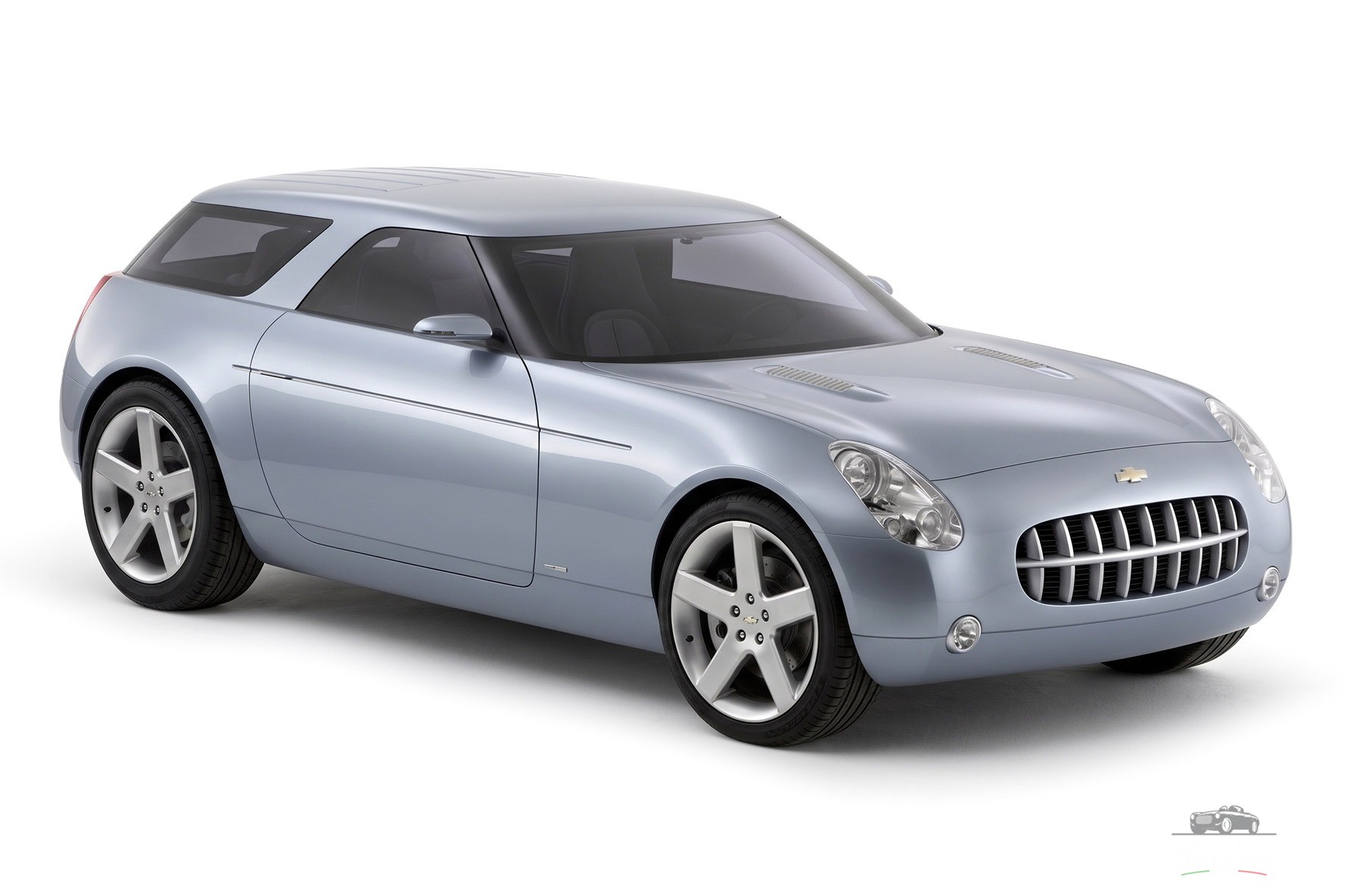
The Chevrolet Nomad concept, designed under GM’s British design director Simon Cox and assembled by renowned Italian coachbuilder Pininfarina, marked an ambitious revival of the iconic American station wagon. Unlike the large, generously proportioned Nomads of the 1950s, the 2004 concept, unveiled in Detroit embraced a compact design inspired by the success of the BMW Mini. It aimed to appeal to a broad demographic by combining the nostalgia of the original Nomad with modern features and a more accessible size. Pininfarina’s assembly of the Nomad in Italy, along the Saturn Curve, gave the project a truly international flair. Known for their expertise in crafting elegant, high-quality vehicles, Pininfarina helped bring the Nomad’s sophisticated styling to life. The concept car featured a blend of classic design cues and cutting-edge technologies. Signature elements like the ribs on the roof panel and chrome strips on the tailgate paid homage to the 1955 Nomad, while contemporary touches such as flush glazing, integral bumpers, and high-tech LED lighting showcased its modernity. Built on GM’s new Kappa platform, the 2004 Nomad was powered by a turbocharged four-cylinder engine, delivering an impressive 250 bhp. This engine was paired with a rear-wheel-drive configuration, rare for its segment, signaling that Chevrolet had driving enthusiasts in mind. The inclusion of GM’s HydraMatic transmission, which allowed both fully automatic and manual shifting modes, further underscored the car’s sporty nature. Though compact, the Nomad was designed with practicality in mind. It featured a removable rear roof panel, a folding tailgate, and a sliding cargo floor to make loading and unloading easier. Its large 20-inch wheels and ultra-low profile tires gave it a striking stance, though this detail leaned more towards aesthetics than utility. Despite its innovative design and production-ready potential, GM decided against bringing the Nomad to market. Instead, Chevrolet was repositioned as a budget brand, leaving the Nomad as an intriguing but unfulfilled vision of what could have been a stylish, modern interpretation of a beloved classic.
02 / TECHNICAL IDENTITY
03 / DESIGN, BODY & SUPPLIERS
Coachbuilder / Design studio
Founded by Battista Pinin Farina in Turin in 1930, Pininfarina became one of the most influential Italian styling and coachbuilding houses, particularly through its work for Ferrari and other international manufacturers.
Explore record ↗Attributed designer
Simon Cox designed the Cadillac Cien at General Motors' Advanced Design Studio in England. Unveiled at the 2002 Detroit motor show for Cadillac's centenary, the mid-engined concept combined angular bodywork with a prototype V12 developed by Cosworth and GM Powertrain, illustrating the studio's exploration of an American supercar.
Explore record ↗04 / CHRONOLOGY
07 / GALLERY
THE CONVERSATION
Comments 0