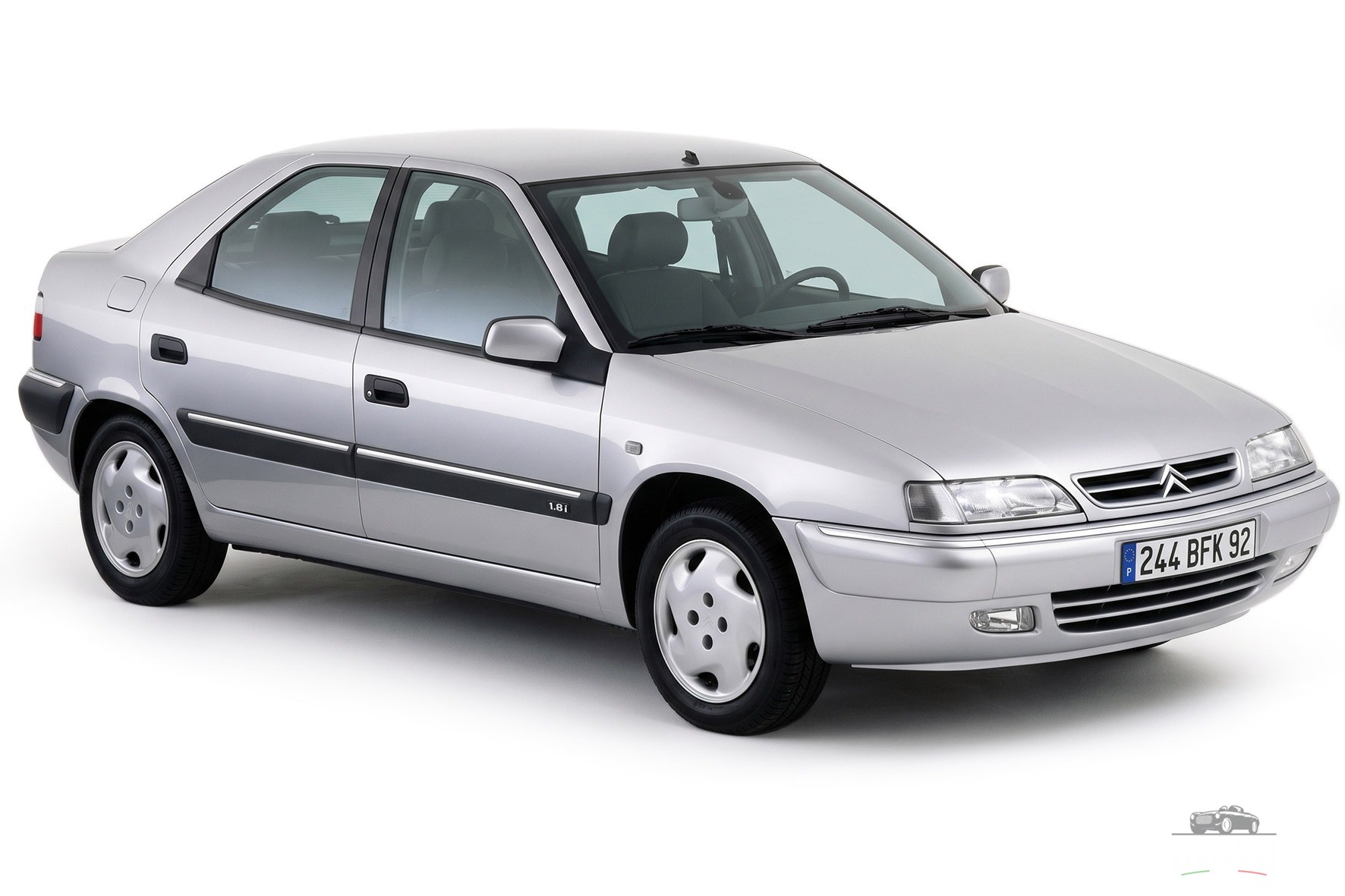
Introduced at the 1993 Geneva Motor Show, the Citroën Xantia succeeded the Citroën BX as the French manufacturer’s new medium-sized family car. Its five-door liftback body combined a low bonnet, a broad and restrained front end, and a short, gently descending rear section. Rather than a conventional three-box saloon, the Xantia adopted a distinctive intermediate form, balancing the practical advantages of a hatchback with the more formal proportions of an executive car. It entered a market in which Citroën sought to combine the character of its hydraulic suspension systems with improved finish and everyday usability.
Design: Bertone and Citroën
The Xantia emerged from a collaboration between the Citroën design centre and the Italian Bertone studio. Citroën’s own historical account identifies a proposal from Bertone as the starting point for the production design, which was subsequently finalized by Daniel Abramson within Citroën’s styling department. This distinction is important: Bertone contributed to the styling programme, but the production Xantia was neither a Bertone-built special nor a coachbuilt limited edition. Its design followed the visual direction established by the larger Citroën XM, translating a similar sense of geometric clarity into a more compact and fluid shape. The relatively slender lamps, restrained glazing and carefully controlled tail gave the car an identity of its own within the Citroën range.
Engineering and model evolution
At its introduction in March 1993, the five-door Xantia used front-wheel drive and Citroën’s hydropneumatic suspension architecture. Higher specifications introduced the electronically controlled Hydractive II system, which adjusted suspension behaviour in response to driving conditions. The initial European petrol range included 1.8-litre and 2.0-litre engines in different power outputs; diesel engines and additional petrol variants expanded the choice during the model’s career. These figures describe individual engine and market specifications, not the mechanical specification of a single Xantia. The Activa version, introduced in 1994, added an active anti-roll system, while a Break estate joined the range in August 1995. Citroën identifies Heuliez as the builder of the Break body, a separate manufacturing role from Bertone’s earlier design involvement.
Production and significance
Most Xantias were manufactured at Citroën’s Rennes–la–Janais plant. European production continued into 2002, although the model’s international history extended beyond that date, notably through later production in Iran. Citroën’s retrospective gives a worldwide total of 1,326,259 vehicles produced between 1993 and 2010; this figure covers the model family as a whole and should not be interpreted as a Bertone production total. The Xantia remains a notable example of a production car shaped through cooperation between an Italian design studio and a French manufacturer, while its suspension development represents an important final phase in Citroën’s long tradition of hydraulically suspended family cars.


THE CONVERSATION
Comments 0